

Reviews - Regional News | Connecting Wellington

Concerts

Mahler 7 | Regional News

Mahler 7

Presented by: New Zealand Symphony Orchestra

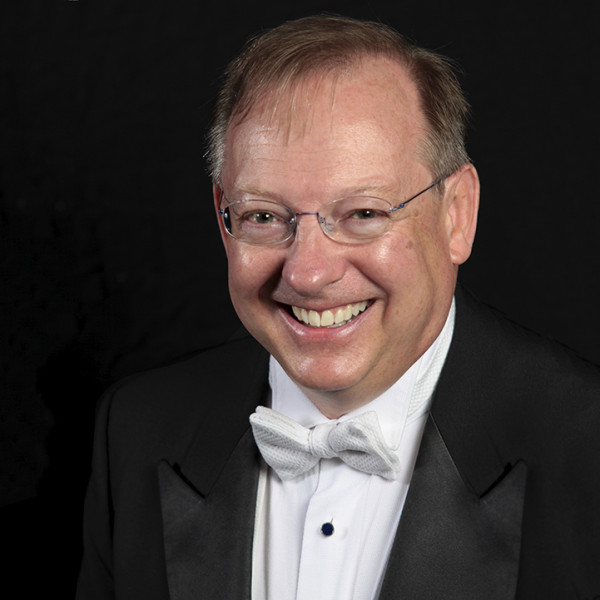
Conducted by: Edo de Waart

Michael Fowler Centre, 9th Nov 2018

Reviewed by: Tamsin Evans and Jennie Jones

A particularly wet and blustery end to the working week seemed to have markedly reduced the audience for Edo de Waart’s masterful command of the NZSO’s rendition of Gustav Mahler’s Symphony No.7 in E minor.

A big piece calls for a big orchestra, and this was one of those nights when it looked impossible to cram any more players onto the stage. And a big orchestra makes a big sound, with multiple opportunities for soloists and small groups to show us their skill. A couple of leading players were absent (first violin and cello) but, giving truth to the depth of talent in the orchestra, this did not affect the quality of the performance one iota.

The theme from the first few bars reappears at intervals during the work. The solid and perfectly pitched opening theme was heard again and again with different instruments, giving us distinctive reflections of mood and tone as we strode through the five movements.

The orchestra played straight through, allowing the audience the opportunity to immerse themselves in the music. Mahler’s narrative may never have been confirmed, but there is certainly a progression through the movements.

The first opens with solo euphonium giving way to a French horn duet with woodwind. It was a pleasure to watch the joyful double basses bringing melody and rhythm to the second movement with bow strikes and fierce pizzicato. A solo viola passage stood out in the third movement, and the thematically more complex violin part in the fourth was the culmination of all that had been building towards the exultant fifth movement in which it seemed everyone was playing everything and anything. The blend of a terrific timpani opening, the interplay of strings with brass and woodwind, then all brass together, delicate string quartet interludes, and then a combination of trombone and double bass resulted in a glorious finale of an unmistakeable masterpiece of the Romantic period.

The River | Regional News

The River

Presented by: Orchestra Wellington

Conducted by: Marc Taddei

Michael Fowler Centre, 27th Oct 2018

Reviewed by: Dawn Brook

Every year, Orchestra Wellington partners with a group of young string players from the Hutt Valley. Arohanui Strings is part of a world-wide programme designed to provide children from less privileged backgrounds with opportunities to learn an instrument and play in an orchestra. The audience took the young people – some very young – to their hearts as they joined Orchestra Wellington in Infinity Mirror, composed by Simon Eastwood specifically to allow beginning and highly skilled musicians to create music together. After a beautifully weird soundscape came more simple, strong lines for strings with lovely colour created by brass, wind and percussion. It was a serious bit of business, followed by some more relaxed collaboration including a spirited rendition of Poi E.

Works by Smetana, Bartόk and Dvořák followed. In Smetana’s wonderfully melodious The Moldau, the orchestra presented a rich flow of sound that was unmistakably a river forming, growing, and majestically travelling through a variety of landscapes. This was a disciplined performance with crisp rhythms and forward drive uncompromised by any temptation to over-milk the romantic melodies.

Bartόk’s Piano Concerto No 1 presents the piano as primarily a percussive instrument, rather than as the conveyor of complex melody and harmony. It is not to everyone’s taste and enormous technical and rhythmic challenges face both soloist and orchestra. The orchestra was undaunted by the difficulties and Christopher Park, the young German-Korean piano soloist was truly impressive in his mastery. By way of contrast, he played an encore that showed his ability to draw music of great delicacy and beauty from the piano.

The concert concluded with Dvořák’s Eighth Symphony. It is a work that teems with tunes – tune after tune after wonderful tune, particularly for the lucky cellists – without ever sounding as if the tunes are merely stitched together. The orchestra did the work justice.

Lars Vogt Plays Mozart | Regional News

Lars Vogt Plays Mozart

Presented by: New Zealand Symphony Orchestra

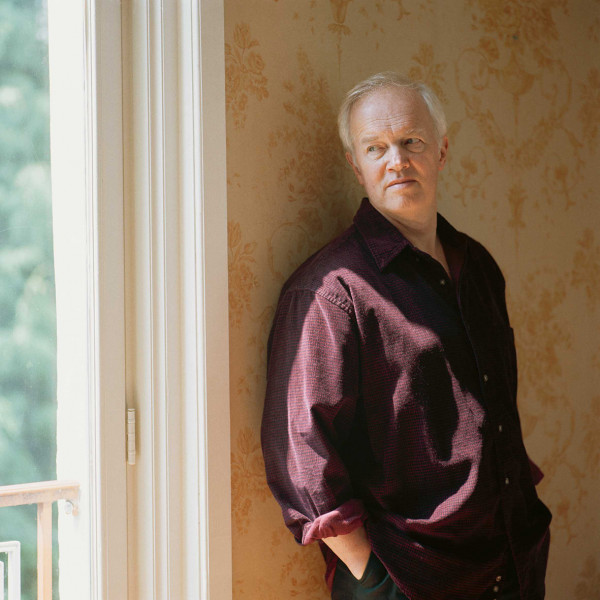
Conducted by: Lars Vogt

Michael Fowler Centre, 26th Oct 2018

Reviewed by: Tamsin Evans

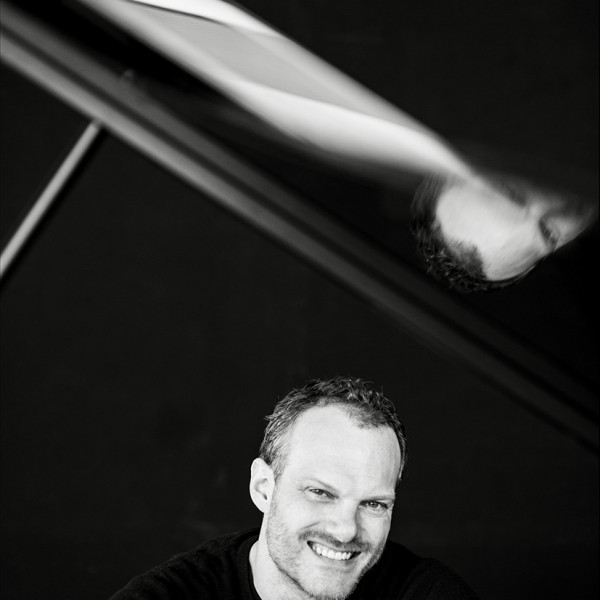
Who says men can’t multi task? Conductor pianist Lars Vogt showed us how he does it in this wonderfully lively programme.

The Beethoven Overture to The Creatures of Prometheus, Op. 43 opened with a bang. Years ago I played in a youth orchestra and because our conductor loved Beethoven, we played his music often. We became a little disrespectful and would ham up the last few bars to make the most of the ‘Beethoven ending’. The NZSO and conductor Lars Vogt also made the most of several of Beethoven’s musical signatures but in a much more professional manner. Crisp and balanced are the adjectives I’d use. (Not words I think our long-suffering parents would ever have thought of our efforts.)

Vogt really wowed us with his composure and musicality in Mozart’s Piano Concerto No. 21 in C major, K. 467. Conducting is an art in itself but conducting while playing the solo instrument adds another layer to the experience. The music was delightful, as Mozart often is, and the fine interplay amongst sections of the orchestra and between orchestra and piano reflected the counterpoint also heard in the earlier Beethoven. Nimble conducting and extraordinary playing on Vogt’s part added the flourish Mozart would have been looking for.

Part two began with Webern’s Langsamer Satz, Orch. Gerald Schwarz. After the spirited and animated Mozart, I found this a strangely different piece. It wasn’t so much the difference in the romantic and harmonious nature of the music (good programming ought to give the audience variety) as the oddly disjointed structure of the piece. The changes in the orchestration just didn’t seem to flow very well.

A return to Mozart for the finale, Symphony No. 36 in C major, K. 425, Linz was a welcome resolution. If you Google ‘Mozart playful’ you get about 1,020,000 results and this performance added another to that compendium.

Johannes Moser Plays Shostakovich | Regional News

Johannes Moser Plays Shostakovich

Presented by: New Zealand Symphony Orchestra

Conducted by: Peter Oundjian

Michael Fowler Centre, 13th Oct 2018

Reviewed by: Tamsin Evans and Jennie Jones

Coming off a week of performances, the NZSO hardly needed to warm up with Borodin’s Overture to Prince Igor, but it was a great start to a big Russian programme.

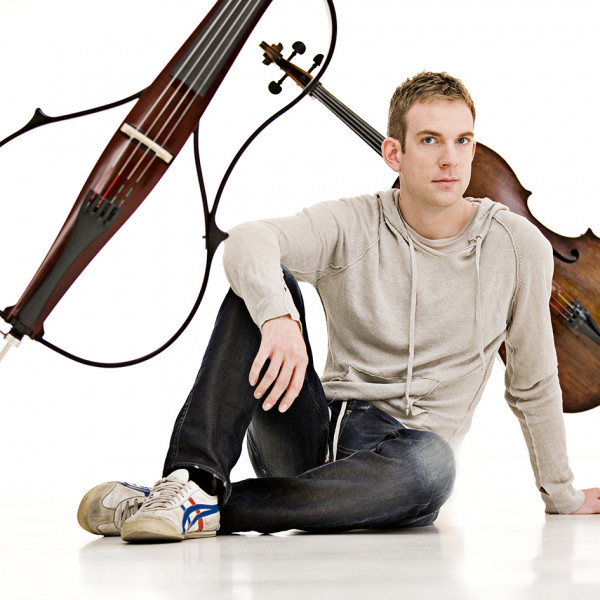
Conductor Peter Oundjian, cellist Johannes Moser, and the NZSO were all in superb form and it showed from the opening notes of Shostakovich’s Cello Concerto No.1 in E flat major. Like Mstislav Rostropovich, for whom Shostakovich wrote the concerto, Moser played the whole work from memory. And what a memory. It looked and sounded like a fiendishly difficult piece with a conventional concerto form (four movements) with unconventional elements. Moser stormed his way through the first two movements, well supported by a French horn as ‘assistant’ soloist building up to the third movement – a cadenza. Unusually the composer wrote a fully notated, very technically demanding cadenza and put it in place of the usual third movement. It was a brilliant opportunity for Moser to shine. Regrouping for the final movement, the orchestra led us – with prominent and high-powered cello – to an all-encompassing and energetic finale. It was a stunning performance.

In the second half, we heard a longer than usual selection from the ballet Romeo and Juliet by Prokofiev. Anyone with only a smattering of knowledge of the story would have been able to follow this highly cinematic piece. The narrative came through strongly and even the unfamiliar segments told their part of the story quite clearly.

Guest conductors always add an element of intrigue to the audience experience. The merits of one director’s style as opposed to another will obviously be more apparent to the players than the listeners. For this performance, even the audience could sense the orchestra and conductor were impeccably matched. Oundijan’s direction appeared sensitive, directive, explicit, and precise, and the orchestra responded beautifully. It was a long performance but one worth every note.