
Reviews - Regional News | Connecting Wellington

Concerts

Summer Nights | Regional News

Summer Nights

Presented by: New Zealand Symphony Orchestra

Conducted by: Gemma New

Michael Fowler Centre, 28th Nov 2025

Reviewed by: Tamsin Evans

Joyce DiDonato is a mezzo-soprano from Kansas with a sublime voice applauded in concert halls and operatic stages across the world, and she is a rockstar – there’s no doubt about it. 

With her incredible voice and stunning musicianship, she knows exactly how to work to raise the emotion, and then raise it again, exercising her power, technique, control, and perfectly placed gestures and body language. DiDonato has found the true sweet spot where her voice sounds deeply luxurious and effortless.

Of the six songs in Berlioz’s Les Nuits d’été, the first is about young love and innocence, moving through loss, grief, and longing to close with a sense of renewal in the sixth and final song. The third, Sur les lagunes: Lamento, was exquisite. Set in a minor key, DiDonato lifted it from melancholy to a superb and powerful expression of grief and sorrow. Her cry in the final lines, “How bitter is my fate! Ah! Without love to sail on the sea!” was heart-wrenching.

DiDonato commanded the stage with her presence but without ego, went on to dazzle us with her talent, and, after three encores and warm words of praise for New Zealand, utterly charmed a nearly full house in the Michael Fowler Centre.

The second half was as monumental as the first. Bruckner’s Seventh Symphony is his finest and possibly the gold standard of romantic orchestral music. Opening strongly, it felt as though all the emotion and energy the NZSO had been holding back in support of the first half had come rushing through. Gemma New harnessed this and brought it into wonderful balance. New made superb connections between her players and the score. We were sure we were hearing a performance by the whole, and certainly one greater than the sum of its parts.

The Artist Repents | Regional News

The Artist Repents

Presented by: Orchestra Wellington

Michael Fowler Centre, 22nd Nov 2026

Reviewed by: Ruth Corkill

Victoria Kelly’s Requiem opens the evening with music that feels suspended between worlds; ethereal, melancholic, and at times sublime. Each movement shares a similar contour, yet this sameness becomes a strength, feeding into the meditative atmosphere of a ritual or service. The text, drawn from five iconic Aotearoa poets, evokes vast internal and external landscapes, and moments where the language emerges clearly are deeply affecting.

Alexander Lewis ventures beyond his usual range, producing passages with a strange, sob-like fragility and, at other times, haunting strength. These moments are compelling, even if occasional raspy or overly quiet phrases suggest the challenge of the part. When the material sits comfortably, his expressiveness shines. Barbara Paterson has complete control of her soprano lines, and this precision, which feels like it could at any moment overbrim with grief, gives the work an avant-garde edge. The orchestra and chorus seem to flow out of her, extensions of her performance. The Tudor Consort excels in this spacious score; Kelly’s writing leaves air around the notes, allowing this renowned a cappella ensemble to resonate fully.

This concert closes Orchestra Wellington’s ambitious season-long tribute to Shostakovich. Pairing Requiem with Shostakovich’s Symphony No. 5 is a stroke of programming genius. This is the most familiar Shostakovich we’ve heard this season, but Kelly’s work casts it in a new light. The requiem’s ‘in memoriam’ quality primes us to hear the symphony as a tribute; to Shostakovich, and to endurance and survival. Our orchestra has spent a year immersed in Shostakovich’s works, and this pays off tonight: their playing is assured, and they navigate the tonal and emotional dexterity of the work brilliantly.

The iconic final movement is transfixing; a groundswell of brass and percussion driving toward tainted, devastating triumph. It is music wound tight, almost too fast, before slowing into a hymn-like glow. This symphony never loses its potency for me, and tonight it crowns an extraordinary season devoted to a composer whose voice still speaks urgently across time.

Symphonic Dances | Regional News

Symphonic Dances

Presented by: New Zealand Symphony Orchestra

Conducted by: Gemma New

Michael Fowler Centre, 20th Nov 2025

Reviewed by: Tamsin Evans 

Tabea Squire’s description of her Conversation of the Light-ship and the Tide as “an unmoving ship in the ever-moving sea” gives us a different view on the dance theme. The power and danger of the deep-water open sea are heard in the opening grumbling of timpani and brass. Further complex textures and tones convey the relationship between the light-ship’s industrial structure and the endlessly changing and constantly moving sea.

The opening bars of Alexander Glazunov’s Saxophone Concerto in E-flat Major sound like something sombre and very definitely Russian. But, after the strings had set that scene, the incredibly talented Jess Gillam led us through all sorts of wonderful dances. Gillam embraced her saxophone inside and out through her impressive breath control, amazing dexterity, and deep, deep musicianship. She sometimes produced sound as if her instrument was woodwind instead of brass, with none of the rasping harshness we might associate with the saxophone. She breezed flawlessly through the fast passages, played with emotion and drama without being cheesy, and carried us to a swooping, glorious finish.

Darius Milhaud’s Scaramouche is three movements with something different for the saxophone. The first, Vif, was full of rhythm and running, each note clear and distinct. The second movement, Modéré, was almost soothing, with lovely exchanges between players and soloist. Brazileira’s rhythms got sharper as it progressed, finishing with pizzicato strings and a saxophone samba.

The title work, Rachmaninov’s Symphonic Dances, closed the programme. The orchestra always sounds crisp when Gemma New is conducting. The first movement opened with an obviously Russian tone in the strings but switched neatly into the delicacy of glockenspiel, other percussion, and woodwind. The second movement was a slightly uncomfortable, expressive clash of brass and solo violin. The last movement has a part for the alto saxophone, played, of course, by the incomparable Gillam.

Cowboy Junkies | Regional News

Cowboy Junkies

The Opera House, 6th Nov 2025

Reviewed by: Graeme King

Billed as a 40-year celebration, this concert proved that this alternative country, folk, blues, and rock band formed in 1985 is still exciting to see live, while also regularly releasing vital new material.

Their first point of difference is lead singer Margo Timmins, whose lone voice alternates between ethereal lightness and rock-edged, and whose engagement with the mostly adoring audience made tonight’s concert extra special. Secondly, Cowboy Junkies contains three siblings including Michael Timmins (guitar), Peter Timmins (drums), and Alan Anton (bass). Jeff Bird, guest musician and multi-instrumentalist, has recorded and performed with the band since 1987!

On the small table to Margo’s side was a vase of red roses, which apparently eases her stage fright – which surprised me considering that she is very much the focal point and conduit to the audience. I lost count of the cups of tea brought to her throughout the two-hour-plus concert!

The first track Misguided Angel from the 1988 hit album The Trinity Session featured Bird’s plaintive harp and mandolin playing and set the tone for what was to follow. Prior to the poignant, powerful What I Lost, Margo described her sad journey with her ageing father’s dementia, which she thought might also strike a chord with many in the audience.

Anton’s silky bass, Peter’s powerful drumming, and Bird’s blistering electric harp all featured on the rocky A Common Disaster. The bluesy, meandering Forgive Me, featuring loud electric harp that at times drowned out the vocals, finished the set.

After a 20-minute interval, The Things We Do To Each Other opened the second half, followed by their grungy version of Lou Reed’s Sweet Jane, one of their most popular songs – ironic considering they’ve released 16 studio albums of mainly original music!

For the three-track acoustic set, the bassist and drummer then left the stage. Margo said that “as a Canadian band it is their duty to play a Neil Young song” to much audience laughter, before playing Powderfinger.

The full band were back for the bluesy Shining Moon, with their interpretation of the Elvis classic Blue Moon finishing the set. Encores, Waylon Jennings’ Dreaming My Dreams With You and Patsy Cline’s Walkin’ After Midnight, finished the night to ecstatic applause.

Legendary status intact.

Enemy of the State | Regional News

Enemy of the State

Presented by: Orchestra Wellington

Michael Fowler Centre, 18th Oct 2025

Reviewed by: Ruth Corkill

Orchestra Wellington’s Enemy of the State programme champions three composers whose works interrogate power and rebellion. The evening opens with John Psathas’ Next Planet, the 12th work in his ‘Green Piece’ series. This protest against billionaires’ obsession with space colonisation is rhythmically driven and texturally dense, broken by moments of foreboding stillness.

Like many in the audience, I came to this concert for the Shostakovich, but was delighted to also get a delicious work by one of his predecessors: Alexander Glazunov’s Violin Concerto in A minor. I hadn’t encountered this concerto before, and I am glad to have heard it first through soloist Benjamin Baker’s interpretation, which revealed its extraordinary richness and invention. At times, Baker’s violin seems to split in two, one voice singing sweetly while the other dances in counterpoint. In other moments, the instrument resonates with the two harpists on stage, or evokes the timbre of a balalaika, playful and percussive. Baker draws out the concerto’s romantic melancholy while maintaining the intelligence of the voice. The orchestra, under Marc Taddei’s direction, is in excellent form and well balanced. They provide a lush and responsive backdrop, allowing Baker’s phrasing to shine.

The final work on the programme is a selection of excerpts from Shostakovich’s Lady Macbeth of Mtsensk, the opera that nearly ended the composer’s career after Stalin’s infamous denunciation in Pravda. Taddei’s arrangement preserves the opera’s grotesque humour and tragic intensity while ensuring the soloist and orchestra remain in dynamic equilibrium. The extra heft and bite of Hutt City Brass is put to excellent use, adding snarling glissandi and abrasive, distressing, or eerie colour as demanded. Soprano Madeleine Pierard is magnificent as Katerina. Her voice is powerful and precise, navigating the opera’s demanding vocal terrain with apparent ease. She captures Katerina’s complex emotional colour shifts of desperation and defiance. The orchestra weaves around her in a compelling dialogue, before rising spectacularly to the annihilating rage and despair of the work’s most intense passages.

Gregory Porter | Regional News

Gregory Porter

St James Theatre, 17th Oct 2025

Reviewed by: Graeme King

There is a reason Gregory Porter was one of the headlining acts for 2025’s Wellington Jazz Festival: this two-time GRAMMY®-winning jazz vocalist, composer, and bandleader has captivated audiences worldwide for well over a decade with his soulful baritone vocals and stirring storytelling.

Strikingly tall and dressed in a white suit, Porter’s presence was formidable. The first song Holding On, featuring the blistering double bass of Jahmal Nichols, set the tone for the evening.

Strongly influenced by southern American gospel, at times Porter created an almost religious experience for his audience, who were often encouraged to clap and sing along – especially on Revival Song.   

If Love Is Overrated featured the sublime saxophone of Tivon Pennicott and Emanuel Harrold’s slick, energetic drumming.

Porter told the story of a bad teenage experience with a girlfriend’s father and how, 30 years later with his song Mister Holland, he was able to heal the wound that was in his heart since he was 15 years old. Powerful words that almost brought tears to my eyes.

Take Me To The Alley, with the audience singing on the chorus, featured the silky piano of Chip Crawford.

Then, with the rest of the band walking offstage, we were treated to a five-minute double-bass solo by Nichols that featured such classics as Play That Funky Music and My Girl (with Porter and the audience singing along!), Master Blaster (Jammin’) and Grandma’s Hands – before the rest of the band re-joined to play an enthusiastic Papa Was A Rollin’ Stone. Stunning.

Musical Genocide featured the uplifting, gospel-themed Hammond organ playing of Ondrej Pivec.

The last song of the set, No Love Dying showcased Porter’s sonorous, powerful, and gravel-edged vocals, and with his affable encouragement, some of the audience also joined in on the choruses.

There was no way the audience had finished with this superb band yet, so after a couple of minutes of stomping and cheering loudly, they were soon back for the first encore, Sting’s It’s Probably Me.

Hey Laura, featuring solos by all band members, was the perfect song to finish this vocal and musical masterclass. Come back soon.

Aotearoa Jazz Orchestra | Regional News

Aotearoa Jazz Orchestra

Meow Nui, 16th Oct 2025

Reviewed by: Graeme King

A national jazz orchestra of Aotearoa was the vision of the legendary Rodger Fox and, judging by the inaugural performance of the Aotearoa Jazz Orchestra (AoJO), he would have very much approved. This concert featured music by Duke Ellington, one of the true giants of jazz who, with his long-time collaborator Billy Strayhorn, recorded their interpretation of The Nutcracker Suite in 1960.

Described in the programme as “a masterpiece of swing, wit, and orchestral colour”, where “Tchaikovsky’s melodies and Ellington’s imagination meet in a timeless musical dialogue”, this adaptation by the Aotearoa Jazz Orchestra of Tchaikovsky’s beloved ballet, in eight parts, held the jazz-loving audience in its grip throughout.

The premiere performance of The Fox (a tribute to Rodger Fox) which followed, written by musical director and drummer John Rae, and arranged by concertmaster, saxophonist, and clarinettist Oscar Lavën, was simply sublime. The solo performances of all 17 musicians showcased the tremendous depth of talent within the orchestra, with most solos receiving loud applause by the appreciative audience.

Lavën’s playing, especially on clarinet, was superlative, and a special mention should also be given to Michael Taylor (trumpet section leader), Kaito Walley (trombone section leader), and the superb rhythm section of Rae (drums), Ben Wilcock (piano), and Alistair Isdale (double bass).

Rae’s shoutout to sound engineer James Goldsmith at the end of the concert, whose excellent sound mix had all the musicians balanced not too loud but clear, was well deserved.

The programme starting with the Emerging Artist Feature, the Evie Patterson Quartet, was an ideal way to showcase some local jazz artists of the future. Evie also held the emerging artist seat as one of the six saxophonists in the orchestra.

Originally the Salvation Army Citadel, with its amazing acoustics and stunning architecture, Meow Nui provides the perfect home venue for this new orchestra. Let’s hope this is the first of many similar concerts to follow.

Four Seasons | Regional News

Four Seasons

Presented by: New Zealand Symphony Orchestra

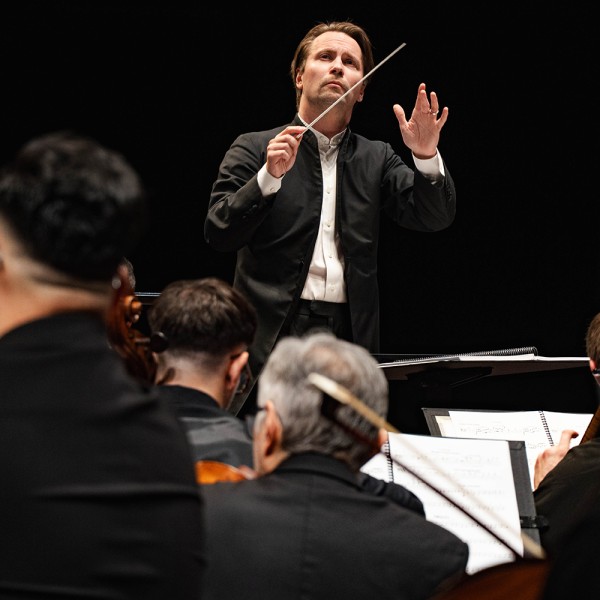
Conducted by: Pekka Kuusisto

Michael Fowler Centre, 9th Oct 2025

Reviewed by: Tamsin Evans

The fact that Pekka Kuusisto made the call to switch the order of the programme should not have been a surprise although it was as well he did. Kuusisto champions music written and performed by women and where possible his programmes are 50-50. Louise Farrenc, a successful symphonic composer and professor in the 19th century despite gender-biased society and establishment, fell into obscurity in the 20th century. Ironically, Antonio Vivaldi’s The Four Seasons was also forgotten soon after it was written but has been immensely popular since it was rediscovered in the mid-20th century.

From the first movement, Farrenc’s Symphony No. 3 has a very pleasing sound to it: a Classical feel with Romantic style. Melodies are shared across the orchestra and interesting rhythmic patterns run through the work. The Scherzo was a particularly good combination of speed and delicacy and effective changes of tone. There was a sense of a confident ‘whole’ of the orchestra and conductor.

Without the programme switch, Farrenc would have been overwhelmed by the weight of the audience’s anticipation and Kuusisto’s innovative, idiosyncratic interpretation of The Four Seasons.

Each season has three movements and by the end of Spring everyone knew this was going to be a unique year. Kuusisto took every opportunity to accentuate familiar features of the music and make them dramatic, whether by volume, balance, speed, technique, tone, or imitation. Towards the end of Spring we even heard bagpipes from the violins. (Proof bagpipes are unmistakable but violins – and anything except bagpipes – are more flexible.)

The Summer Presto was furiously fast and energetic, a perfect showcase for Kuusisto’s virtuoso violin playing. The later seasons were closer to the traditional sound, with refreshing presentation. The Autumn Adagio, just cello and harpsichord, was that beautiful simplicity that leaves you barely breathing. Winter had a realistic harshness, grey and gravelly, pizzicato like ice drops melting – and stunning violin from Kuusisto.

Rossini Stabat Mater: A mother’s love | Regional News

Rossini Stabat Mater: A mother’s love

Presented by: New Zealand Symphony Orchestra

Conducted by: Valentina Peleggi

Michael Fowler Centre, 2nd Oct 2025

Reviewed by: Tamsin Evans

Rossini Stabat Mater: A mother’s love put side by side two interpretations of the 13th-century Christian hymn that portrays Mary’s suffering during the crucifixion of her son. Each was quite different from the other and both were unlike traditional settings. Victoria Kelly’s Stabat Mater was commissioned by the NZSO as a response to Gioacchino Rossini’s Stabat Mater. Rossini’s piece strongly reflects his career composing operas in the bel canto style of virtuoso singing and elaborate vocal ornamentation.

Although the melodic and dramatic influence was there, it did not overwhelm the seriousness of the text which came through in the performance. Valentina Peleggi’s direction brought out the mood of each verse and the vocalists responded with feeling, especially when their solo voices were on display. Voices New Zealand Chamber Choir were excellent as ever. Led by music director Karen Grylls, their perfect diction, timing, phrasing, and dynamics are extraordinary and the best you will hear in Aotearoa.

The world premiere of Kelly’s Stabat Mater was an experience that lasted in my mind and body long after the performance. The music was profoundly emotional and somehow deeply, urgently visceral and beautiful all at once. In this Stabat Mater, Kelly’s reimagined Mary does not accept her son’s sacrifice, she does not weep nor mourn, but wields a sword and saves him. Kelly’s response to the eternal narrative of the suffering of women and mothers is a primal sense of rage and sadness expressed in an almost gentle, but powerfully nuanced and subtle simplicity.

Kelly wrote her own text and thanks to the vocal skill of Voices New Zealand, her perspective was plain to hear, as was the musical representation of Mary: a white crystal singing bowl, sometimes to the fore, other times absent.

Fittingly, the commission was funded by a consortium of female patrons, and honours for the evening went to a trio of women – composer, conductor, and choir director.

O Fortuna | Regional News

O Fortuna

Presented by: Orpheus Choir Wellington & Auckland Choral

Conducted by: Brent Stewart

Michael Fowler Centre, 28th Sep 2025

Reviewed by: Ruth Corkill

Nearly 300 performers take the stage for this epic collaboration between Orpheus Choir Wellington, Auckland Choral, a children’s chorus, the Wellington Brass Band, and outstanding soloists.

The concert opens with Leonard Bernstein’s Chichester Psalms, a lovely piece, full of unexpected turns and lyrical beauty that showcases Bernstein’s flair for blending classical structure with theatrical expressiveness. Bernstein composed Chichester Psalms in 1965, drawing on material originally written for West Side Story and an abandoned musical project titled The Skin of Our Teeth. In his solo passages, countertenor Coco Diaz masterfully draws out the jazzy, rhythmic vitality and melodic phrasing of the work. His performance is mesmerising, and his voice is smooth, pure, and richly coloured. However, the choir seems less confident, with moments of hesitancy and very little dynamic contrast.

No such hesitancy is to be found, however, once we are plunged into the epic tale of fate, revelry, and sensuality that is Carl Orff’s Carmina Burana. The full force of the Wellington Brass Band is on show from the first bars of the opening, and the choirs seem to swell and fill with colour to meet them. It is simply thrilling music.

What follows is a smorgasbord of moods and modes. Baritone James Harrison brings delightful comic flair to his performance, particularly in his drunken characterisation during In Taberna. His theatricality is matched by vocal precision, making his moments both funny and musically satisfying. Soprano Emma Pearson is faultless throughout; consistent, clear, and commanding. The Wellington Brass Band are wondrous, adding punch and texture to the already rich orchestration. Pianists Jian Liu and Diedre Irons, both elite soloists, anchor the performance with virtuosic clarity and stamina, their playing a masterclass in precision and expression. It feels like an extraordinarily rare treat to have two such exceptional pianists on stage at once. The heft and drama of the closing movement is hard to beat; monumental, visceral, and utterly absorbing.

Mahler 6 | Regional News

Mahler 6

Presented by: New Zealand Symphony Orchestra

Conducted by: Gemma New

Michael Fowler Centre, 5th Sep 2025

Reviewed by: Ruth Corkill

Mahler’s Sixth Symphony is a behemoth. It demands technical precision, psychological insight, and masterful expressiveness. Tonight, under the baton of Gemma New, the NZSO delivers a performance that lives up to those demands.

The stage is packed with over 100 musicians, including two harps and the infamous Mahler hammer, an enormous wooden box and hammer which looms behind the stage on the choir stalls. Mahler wanted the hammer in this work to produce a dull, hollow thud, which he intended to evoke two blows of fate striking down a hero. It’s not a standard instrument, so the NZSO built their own especially for this concert series.

The opening movement veers between martial rhythms and romantic lyricism. New favours clarity over indulgence, allowing the orchestra to breathe without losing momentum. Occasionally there is a gentle clang of cowbells, rustic and tonally indifferent to the fanfare around it.  

In the Andante, warm strings shimmer as the music unfolds almost organically. It is a welcome reprieve from the symphony’s otherwise relentless forward motion. In the Scherzo, Mahler’s sardonic humour comes to the fore. The woodwinds are sharp and brittle, their interjections biting.

The final movement is sprawling, fragmented, and devastating. The hammer blows land with theatrical precision, each one a brutal punctuation. Offstage, the cow bells echo again, as if pastoral realities are making one last attempt to break through the brass surges and the foreboding tones of the trombones and tuba. New navigates the movement’s emotional terrain with assurance, drawing out moments of despair, defiance, and fleeting hope.

The NZSO plays with conviction and sensitivity, horns melding with woodwinds and strings to create rich harmonic textures. The percussionists (two timpanists, snare drum, celeste, xylophone, glockenspiel, church bells, cowbells, and the hammer) are especially deserving of praise. Tasked with some of the symphony’s most dramatic moments, they are impeccable. Gemma New proves herself a formidable Mahler interpreter, drawing up the intellect and heart of his music.

Ascension: Schumann & Vaughan Williams | Regional News

Ascension: Schumann & Vaughan Williams

Presented by: New Zealand Symphony Orchestra

Conducted by: André de Ridder

Michael Fowler Centre, 9th Aug 2025

Reviewed by: Tamsin Evans

While Tāwhirimātea (Māori god of wind and weather) and Te Ihorangi (Māori god of rain) reminded us we are still looking forward to spring in Wellington, the NZSO lifted our spirits to remind us the blast of winter will give way to the new season soon in Ascension, the second concert of their Rumakina Immerse Festival.

Vesa-Matti Leppänen, playing the now, sadly, late Michael Hill’s own violin, took to the skies as The Lark Ascending, an early 20th-century English classic. The violin has a beautiful tone, bringing light and shade to the birdsong even when the lark was at his highest. We have skylarks in New Zealand too and Ralph Vaughan Williams’ evocation of English skies and rolling hills translates into our landscape and light.

Papatūānuku is the outcome of a remarkable collaboration between taonga pūoro expert Jerome Kavanagh Poutama and composer Salina Fisher. In his pre-concert talk, Poutama spoke of how his music is all held in his head, each piece bound to a memory of the time, place, and event of its creation. Fisher’s orchestration was written to wrap around and support Poutama’s melodies and there were some beautiful matches between traditional orchestral instruments and the many taonga pūoro (singing treasures) Poutama used to give voice to Papatūānuku, the Earth Mother. A wonderful instrumental rendition of the dawn chorus instantly reminded me of hearing that amazing natural phenomenon on Kapiti Island, a conservation reserve rich in birdlife. The fluttering, twittering, flurrying, and calling on stage was as close to the real thing as you could get.

In contrast, Robert Schumann’s Symphony No. 1 Spring is firmly of the classic Romantic era. Traditional in form and more familiar to the ear than Papatūānuku, the sound was perfectly balanced and expertly played. Conductor André De Ridder’s direction was joyful, directive but nuanced and engaging. We will all look forward to seeing more of him when he takes up the role of NZSO’s musical director from 2027. Haere mai, Maestro!