


Reviews - Regional News | Connecting Wellington

Reviews

Summer Nights | Regional News

Summer Nights

Presented by: New Zealand Symphony Orchestra

Conducted by: Gemma New

Michael Fowler Centre, 28th Nov 2025

Reviewed by: Tamsin Evans

Joyce DiDonato is a mezzo-soprano from Kansas with a sublime voice applauded in concert halls and operatic stages across the world, and she is a rockstar – there’s no doubt about it. 

With her incredible voice and stunning musicianship, she knows exactly how to work to raise the emotion, and then raise it again, exercising her power, technique, control, and perfectly placed gestures and body language. DiDonato has found the true sweet spot where her voice sounds deeply luxurious and effortless.

Of the six songs in Berlioz’s Les Nuits d’été, the first is about young love and innocence, moving through loss, grief, and longing to close with a sense of renewal in the sixth and final song. The third, Sur les lagunes: Lamento, was exquisite. Set in a minor key, DiDonato lifted it from melancholy to a superb and powerful expression of grief and sorrow. Her cry in the final lines, “How bitter is my fate! Ah! Without love to sail on the sea!” was heart-wrenching.

DiDonato commanded the stage with her presence but without ego, went on to dazzle us with her talent, and, after three encores and warm words of praise for New Zealand, utterly charmed a nearly full house in the Michael Fowler Centre.

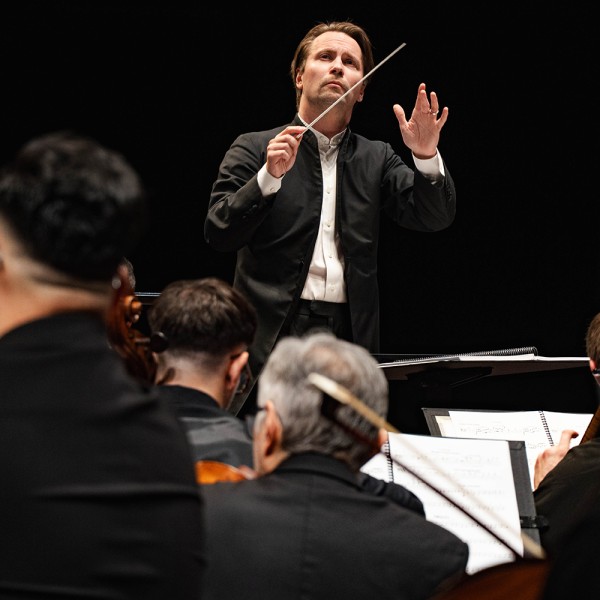
The second half was as monumental as the first. Bruckner’s Seventh Symphony is his finest and possibly the gold standard of romantic orchestral music. Opening strongly, it felt as though all the emotion and energy the NZSO had been holding back in support of the first half had come rushing through. Gemma New harnessed this and brought it into wonderful balance. New made superb connections between her players and the score. We were sure we were hearing a performance by the whole, and certainly one greater than the sum of its parts.

Superior Donuts | Regional News

Superior Donuts

Written by: Tracy Letts

Directed by: James Kiesel

Gryphon Theatre, 26th Nov 2025

Reviewed by: Stanford Reynolds

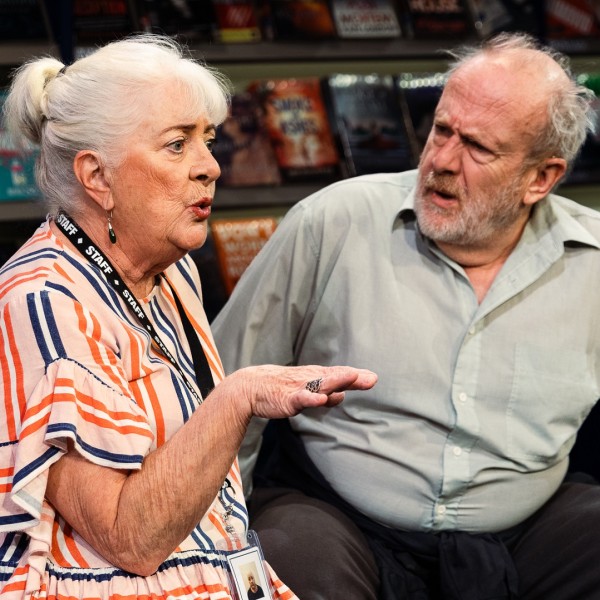
Superior Donuts arrives at the Gryphon Theatre with warmth, wit, and a surprising emotional punch. Tracy Letts’ script centres on the unlikely friendship between Arthur (Allan Burne), the weary owner of a rundown Chicago donut shop, and Franco (McKay Findlay), the young, energetic employee who storms into Arthur’s stagnant world with ideas, ambition, and a stubborn refusal to let the shop, or Arthur, stay stuck in the past. Their evolving connection is punctuated by Arthur’s quiet monologues, in which he slowly, hesitantly reveals the regrets and wounds that still haunt him.

The production design cleverly supports this dynamic. The donut shop set (design by Lucy Sinogeikas) is pulled forward on the Gryphon stage, creating an inviting, almost nostalgic intimacy while leaving enough space to glimpse the Chicago street beyond through the shop window. It feels lived-in, warm, and grounded. The small bell that chimes whenever someone enters or exits proves an unexpectedly charming detail, subtly reinforcing the rhythm of daily life in the shop.

There’s an easy humour throughout, particularly in the miscommunications between characters from different backgrounds. The play’s cultural collisions are handled with lightness, allowing the comedy to emerge naturally.

The cast inhabit their roles with infectious delight. Findlay’s Franco is all authenticity and vibrancy, an immediately compelling presence who lights up the stage and makes it impossible not to root for him. Opposite him, Arthur’s tentative, awkward courtship with local policewoman Randy (Sarah Dickson Johansen) provides some of the production’s sweetest moments, with the actors’ clumsy, halting exchanges creating tenderness.

At times, accents and some mumbled delivery cause key lines to blur, and occasionally actors seem to play moments inward rather than responding fully to each other. I am certain that throughout the season, the connection will grow and help the emotional beats land with greater impact.

The climax of the plot is an excellently executed fight scene. Sharply choreographed (fight direction by Janet Noble) and enhanced by bold, clipped lighting blackouts (lighting design by Emma Bell), the tension and believability of the blows is the best I have seen on stage.

This Stagecraft Theatre production captures the heart of Superior Donuts with warmth and humour, offering a charming, hopeful, bittersweet night at the theatre.

Gloria! | Regional News

Gloria!

(M)

106 minutes

(5 out of 5)

Reviewed by: Alessia Belsito-Riera

Where the voices of many women were silenced throughout history, Gloria! sings their stories from the rooftops. Screening as part of the 10th Italian Film Festival, the subtitled film begins in 1800 with the rhythms of everyday life in Venice’s Sant Ignazio College, a religious institution for girls overseen by stern priest Perlina (Paolo Rossi). Mute Teresa (Galatéa Bellugi) is at the centre of it all, a powerless servant girl trapped in a hostile environment who yearns to be the conductor of her own world. Longing to be a part of the all-women orphanage orchestra, she arranges the sounds that accompany her daily duties into drumlines and choruses. When Perlina becomes distracted by preparations for the arrival of the newly enthroned Pope, Teresa and a quartet of students begin secretly gathering each night to take turns on the piano they find hidden in the cellar, their clandestine sessions revealing hidden truths, giving birth to new compositions, and setting the girls on a new path towards autonomy.

Celebrating the lives of the many Italian women written out of the margins of music history, Gloria! speaks to anyone who has felt restrained, underestimated, and silenced. Teresa and her newfound companions Lucia (Carlotta Gamba), Bettina (Veronica Lucchesi), Marietta (Maria Vittoria Dallasta), and Prudenza (Sara Mafodda) fizz with a chemistry rivalling even the most practised quintet. Each a powerful presence in her own right, together they capture the magic of girlhood in a way that is both tender and tenacious.

Cinematographer Gianluca Palma and production designers Susanna Abenavoli and Luca Servino juxtapose shadows with highlights, giving the midnight corners more brilliance and comfort than the stark, gleaming halls of the daylight-flooded college. Director Margherita Vicario and Anita Rivaroli’s intentionally anachronistic script is sharp and scintillating, the story humming along adagio, accelerando into a crescendo that resounds with relief, vindication, and freedom.

It would be hard not to smile by the time Gloria! reaches its final note. The music that flows forth from Margherita Vicario’s directorial debut is not the dirge of a long-suppressed song but a joyous, revolutionary riot that dares viewers to shout along in solidarity.

Not Christmas, But Guy Fawkes | Regional News

Not Christmas, But Guy Fawkes

Written by: Bruce Mason

Directed by: Shane Bosher

Circa Theatre, 22nd Nov 2025

Reviewed by: Tanya Piejus

Not Christmas, But Guy Fawkes is the other half of Circa’s tribute to the solo work of Bruce Mason running in an alternating season called Every Kind of Weather. Having been blown away by The End of the Golden Weather earlier in the week, I was intrigued to see this lesser-known piece that also features some biographical content gleaned from an interview with Mason and the foreword to a publication.

Having enjoyed the gorgeous production design (Jane Hakaraia and Sean Lynch) of The End of the Golden Weather, I was pleased to see the same set, sympathetic sound design (Paul McLaney), and lush lighting employed in this work. Subtle change came with a different and more deluxe chair, pages of script strewn round the edge of the acting area, and performer Stephen Lovatt’s outfit. He’d swapped a linen shirt, cotton trousers, and bare feet for a 1950s combo of button-up polo shirt, patterned slacks, argyle socks, and brown leather shoes to recreate the delightful character of Mason himself, who bookended the show.

Lovatt’s performance and Shane Bosher’s direction were even more engaging in this piece, the Mason-scripted part of which mostly involves an 11-year-old’s relationship with a school bully, the ugly and intimidating Fergus ‘Ginger’ Finucane. Lovatt’s character-flipping skills are brilliant here with small changes in facial expression, voice, and posture being all that’s needed in the intimate venue of Circa Two to tell us who is speaking. His characterisation of Mason is equally expert, bringing to expressive life someone who knew he was an artist from the age of eight and described himself as “temperamentally, an overreacher”. Bosher’s delicate direction is especially effective in the final section of the piece as Lovatt simply sits in the chair directly facing the audience and is utterly engrossing.

I didn’t think it would be possible to top the first half of Every Kind of Weather. However, I was one of the many audience members on my feet at the end of this one. Just wow.

The Artist Repents | Regional News

The Artist Repents

Presented by: Orchestra Wellington

Michael Fowler Centre, 22nd Nov 2026

Reviewed by: Ruth Corkill

Victoria Kelly’s Requiem opens the evening with music that feels suspended between worlds; ethereal, melancholic, and at times sublime. Each movement shares a similar contour, yet this sameness becomes a strength, feeding into the meditative atmosphere of a ritual or service. The text, drawn from five iconic Aotearoa poets, evokes vast internal and external landscapes, and moments where the language emerges clearly are deeply affecting.

Alexander Lewis ventures beyond his usual range, producing passages with a strange, sob-like fragility and, at other times, haunting strength. These moments are compelling, even if occasional raspy or overly quiet phrases suggest the challenge of the part. When the material sits comfortably, his expressiveness shines. Barbara Paterson has complete control of her soprano lines, and this precision, which feels like it could at any moment overbrim with grief, gives the work an avant-garde edge. The orchestra and chorus seem to flow out of her, extensions of her performance. The Tudor Consort excels in this spacious score; Kelly’s writing leaves air around the notes, allowing this renowned a cappella ensemble to resonate fully.

This concert closes Orchestra Wellington’s ambitious season-long tribute to Shostakovich. Pairing Requiem with Shostakovich’s Symphony No. 5 is a stroke of programming genius. This is the most familiar Shostakovich we’ve heard this season, but Kelly’s work casts it in a new light. The requiem’s ‘in memoriam’ quality primes us to hear the symphony as a tribute; to Shostakovich, and to endurance and survival. Our orchestra has spent a year immersed in Shostakovich’s works, and this pays off tonight: their playing is assured, and they navigate the tonal and emotional dexterity of the work brilliantly.

The iconic final movement is transfixing; a groundswell of brass and percussion driving toward tainted, devastating triumph. It is music wound tight, almost too fast, before slowing into a hymn-like glow. This symphony never loses its potency for me, and tonight it crowns an extraordinary season devoted to a composer whose voice still speaks urgently across time.

Robin Hood – The Pantomime | Regional News

Robin Hood – The Pantomime

Written by: Simon Leary and Gavin Rutherford

Directed by: Simon Leary

Running at Circa Theatre till 11th Jan 2026

Reviewed by: Madelaine Empson

Robin Hood – The Pantomime opens its curtains (of the waterfall) with Lorde’s Royals, a song that summarises this madcap folk tale. In the torn-up town of Wellywood, Robin Hood (Kathleen Burns) and his Merry Men, Lil’ John (a beautifully bumbling Aimée Sullivan) and Friar Tuck (Bronwyn Turei, Ngāti Porou), are forced to squat in squalor while the Sheriff (Jackson Burling) lords it up from on high. Maid Marian (Natasha McAllister) detests the Sheriff’s latest tax scheme, while her handmaiden, Courtenay Place (Jthan Morgan, Ngāi Tāmanuhiri, Rongowhakaata, Magiagi, Sapāpali’i, Lotofaga), is recently bereft and dismayed by her new status as a poor (pronounced 'purr') lonely widow woman. And so, she sets her sights on He Who Must Not Be Named, the Sheriff, in the midst of his e̶v̶i̶l plans.

Spanning hits from the likes of Kelly Clarkson (Turei’s lead in Since U Been Gone is jaw-dropping) and Taylor Swift (Burns’ chorus of Look What You Made Me Do is my show highlight), Shania Twain (such a tender You’re Still The One from McAllister and Burns) and Meghan Trainor (Morgan does look good in that Versace dress) (costumes by Sheila Horton), music is a key component of Robin Hood – The Pantomime. Music director Michael Nicholas Williams’ stage-side presence is sorely missed, particularly his tinkering on the keys. While more instrumental music would help drive the momentum in the first half, his arrangements and magic medleys feature his signature flair and work in well with Oliver Devlin’s effects-laden sound design. Every beat is perfectly accentuated by McAllister and Morgan’s hip, ‘camp’ choreography, which hits the bullseye every time.

The cast’s consistent and charismatic audience interaction ties the show together in a bow (and arrow). Morgan is a standout here, making two friends to bring to her sausage sizzle. Wildly special mention to an exceptional Burling, who feeds on boos like Raz feeds on mustard.

When I think of the Kiwi summer, I think of Circa Theatre’s beloved annual pantomime. Robin Hood – The Pantomime is as gloriously silly as the silly season it celebrates and signifies. A fun, fanfare-filled, festive treat for all.   

Symphonic Dances | Regional News

Symphonic Dances

Presented by: New Zealand Symphony Orchestra

Conducted by: Gemma New

Michael Fowler Centre, 20th Nov 2025

Reviewed by: Tamsin Evans 

Tabea Squire’s description of her Conversation of the Light-ship and the Tide as “an unmoving ship in the ever-moving sea” gives us a different view on the dance theme. The power and danger of the deep-water open sea are heard in the opening grumbling of timpani and brass. Further complex textures and tones convey the relationship between the light-ship’s industrial structure and the endlessly changing and constantly moving sea.

The opening bars of Alexander Glazunov’s Saxophone Concerto in E-flat Major sound like something sombre and very definitely Russian. But, after the strings had set that scene, the incredibly talented Jess Gillam led us through all sorts of wonderful dances. Gillam embraced her saxophone inside and out through her impressive breath control, amazing dexterity, and deep, deep musicianship. She sometimes produced sound as if her instrument was woodwind instead of brass, with none of the rasping harshness we might associate with the saxophone. She breezed flawlessly through the fast passages, played with emotion and drama without being cheesy, and carried us to a swooping, glorious finish.

Darius Milhaud’s Scaramouche is three movements with something different for the saxophone. The first, Vif, was full of rhythm and running, each note clear and distinct. The second movement, Modéré, was almost soothing, with lovely exchanges between players and soloist. Brazileira’s rhythms got sharper as it progressed, finishing with pizzicato strings and a saxophone samba.

The title work, Rachmaninov’s Symphonic Dances, closed the programme. The orchestra always sounds crisp when Gemma New is conducting. The first movement opened with an obviously Russian tone in the strings but switched neatly into the delicacy of glockenspiel, other percussion, and woodwind. The second movement was a slightly uncomfortable, expressive clash of brass and solo violin. The last movement has a part for the alto saxophone, played, of course, by the incomparable Gillam.

The End of the Golden Weather | Regional News

The End of the Golden Weather

Written by: Bruce Mason

Directed by: Shane Bosher

Circa Theatre, 19th Nov 2025

Reviewed by: Tanya Piejus

Circa Theatre is celebrating the work of New Zealand icon Bruce Mason with Every Kind of Weather: an alternating season of his well-known and loved The End of the Golden Weather and the less-known Not Christmas, But Guy Fawkes. Both are performed as one-man shows by the incomparable Stephen Lovatt under the tender direction of Shane Bosher. COVID-19 put the kibosh on its original run in 2021, so it’s a special pleasure to be able to see it now.

Written to be performed solo, which Mason did himself almost a thousand times, The End of the Golden Weather is a deeply lyrical and quintessentially Kiwi story of a 12-year-old boy discovering how harsh the world can be. A classic tale of innocence enjoyed and lost.

Lovatt is an energetic, chameleonic, and highly engrossing performer to watch. From go to whoa, he immerses us in the characters and colours of small-town, Depression-era New Zealand. His many characterisations are finely on point and his portrayal of the mentally unwell Firpo is vivid but nuanced, walking carefully on the side of compassion rather than ridicule. Bosher’s respectful direction doesn’t get in the way of Lovatt’s performance and lets it breathe with singular clarity. The section devoted to Christmas Day is particularly entertaining, allowing Lovatt’s performance skills to glow.

The production design by Jane Hakaraia and Sean Lynch is simple but gorgeous with a crumpled sheet of brown paper tumbling down the back wall of Circa Two onto a square of warm brown floorboards. Other than that, one wooden chair is all that’s needed to set the scene. The changing of time and place is accentuated by beautiful lighting and delicate and evocative sound design (Paul McLaney) that brings the beach setting to gentle life in the imagination, alongside Mason’s melodic words.

A subtly modern and handsome rendering of Mason’s work, this version of The End of the Golden Weather is 85 minutes of pure theatrical joy.

Amélie The Musical | Regional News

Amélie The Musical

Written by: Craig Lucas, Daniel Messé, and Nathan Tysen

Directed by: Nick Lerew and Maya Handa Naff

The Hannah, 15th Nov 2025

Reviewed by: Tanya Piejus

Amélie The Musical is based on the award-winning and critically acclaimed 2001 French film Amélie by Jean-Pierre Jeunet and Guillaume Laurant. Its delightful whimsy made it one of the most internationally successful French-language films of all time.

The story centres on the titular character, an introverted waitress in Paris who finds meaning by making life better for strangers and friends while denying herself the same joy. However, she finally takes a leap of faith when she discovers an attraction to a young man on a quest of his own.

While the musical is inevitably more grounded in the reality of theatre, unlike the flights of digital fancy that were possible in the film, it makes a good stab at recreating the quirkiness of the original. Act two is the better half for standout songs, but The Girl with the Glass and Goodbye, Amélie are clear audience favourites in act one.

This WITCH Music Theatre production is staged with a beautiful and cleverly designed two-storey set (production design by Ben Tucker-Emerson) with atmospheric projections (Rebekah de Roo) that the cast flow around with practised ease. The second-half reveal of the sex shop is an unexpected delight and the Photomaton booth a wonder of utility.

Rachel McSweeney is a sweet and highly watchable Amélie and the cast form an excellent ensemble, each creating delightful characters of their own as well as contributing to a cohesive, vocally dynamic, and well-balanced whole. Special mention must go to William Duignan, whose versatility as Fluffy the fish and Elton John is astounding, and Jared Pallesen as the adorable Lucien with an enviable vocal range and passion for figs.

Imaginatively directed by Nick Lerew and Maya Handa Naff, accompanied by a small but mighty band led by music director Hayden Taylor, lit creatively by Alex ‘Fish’ Fisher, carefully dressed by Polly Crone and Dorothe Olsen, and unfussily choregraphed by Leigh Evans, this is another undoubted success from WITCH Music Theatre.