

Reviews - Regional News | Connecting Wellington

Reviews

Holy Cow (Vingt Dieux) | Regional News

Holy Cow (Vingt Dieux)

(M)

92 minutes

(4 ½ out of 5)

Reviewed by: Alessia Belsito-Riera

Cheese.

That’s all anyone had to say to get me seated in front of Holy Cow, a coming-of-age dramedy screening as part of French Film Festival Aotearoa. But it was not simply the promise of comté that filled my tummy with warm fuzzies – rather a certain je ne sais quoi only a sun-soaked, nostalgic French summer story can conjure that nourished my soul.

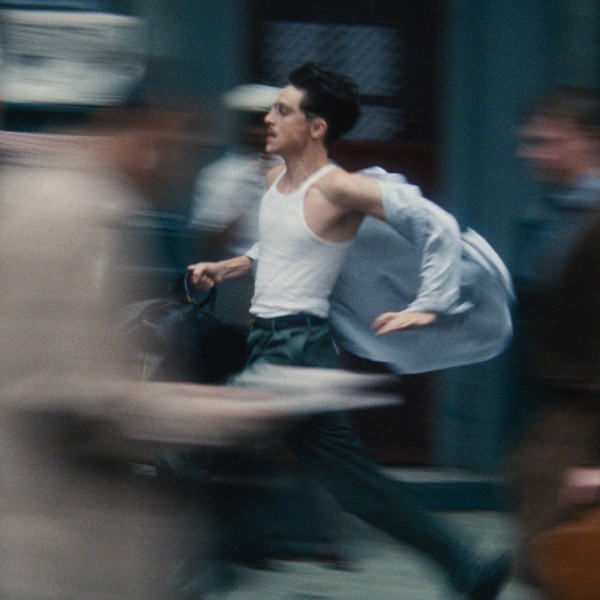
Holy Cow comes to Aotearoa hot on the heels of two wins at this year’s César Awards, over one million admissions in France, and an official Festival de Cannes Youth Award. The debut feature film from part-time farmer Louise Courvoisier curdles around 18-year-old Totone (Clément Faveau). He lives in the picturesque Jura region in south-eastern France – an area renowned for its dairy farms, agricultural festivals, and award-winning comté cheese – but he just wants to have fun with his friends, get drunk, and chase mademoiselles. However, after a devastating tragedy, he must grow up quick to care for his seven-year-old sister Claire (Luna Garret).

His solution to their dwindling funds? Follow in his family’s cheesemaking footsteps and win the €30,000 Comté Prize. The only problem is, Totone has never made cheese in his life.

At once delicate and coarse, Holy Cow’s hardened exterior gives way to a soft, gooey centre, a distinctive flavour oozing forth in morsels of cheeky charm as tender relationships form between Totone and his sister, friends, and Marie-Lise (Maïwene Barthelemy), a local dairy farmer. The young cast shine in a blunt, honest, and raw portrayal of character. Their authenticity shines through, appearing as comfortable on screen as at a summer fête and delivering a performance both fragile and complex. The long cuts (editor Sarah Grosset) between scenes allow the characters to live in each moment and for the audience to join them in their musings and mishaps.  

With what I can only describe as a banging summer soundtrack full of vigour and vivacity composed by Linda and Charles Courvoisier and hazy albeit saturated cinematography (Elio Balezeaux) that captures the intensity of the teenage experience, Holy Cow serves up the perfect bite of freshness, fun, fervour, and fromage.

Echoes of Home: Bartók & Dvořák | Regional News

Echoes of Home: Bartók & Dvořák

Presented by: New Zealand Symphony Orchestra

Conducted by: Gábor Káli

Michael Fowler Centre, 23rd May 2025

Reviewed by: Tamsin Evans

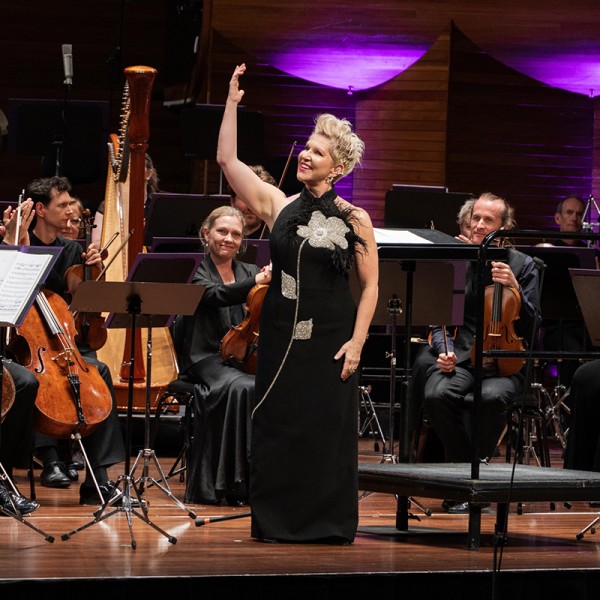
It doesn’t matter how long you have been away or where you have been, returning home is one of those emotions you feel more deeply than you can easily describe. Douglas Lilburn’s Aotearoa Overture has fleeting influences of his composition teacher, Ralph Vaughan Williams, but there is something distinctive in the tone which evokes the Aotearoa Lilburn was returning to. The violins led the drama, crisp with the jagged theme introducing the building sound of the orchestra. We are a laconic lot – sometimes it’s better to let our great musical interpreters tell the world how we feel about coming home.

Béla Bartók, and violinist Amalia Hall, wrenched at the heartstrings in Bartók’s Violin Concerto No. 2. Bartók incorporated folk music and classical traditions into his compositions and the concerto features great harmonic variety and demanding work for the soloist. Hall took it all in her stride and the cadenza was an excellent showcase for her skill, musicality, and energy. The orchestra, under the expert baton of Gábor Káli, swelled and flowed and burst through the violin to great effect.

Antonín Dvořák’s Symphony No. 7 in D Minor is dramatic, majestic, and intense. Káli led the orchestra brilliantly, finding every opportunity to bring melodies to the fore, guiding perfect execution of complex rhythms, changes in mood, dynamics, tempo, and tone. He managed an exceptional equilibrium, so the solos, pairs, and sections of the orchestra were perfectly clear and balanced and not in competition with each other. Some of this is down to Dvorák’s great composition but a conductor’s interpretation is what shapes the performance and the way the players follow the lead is what makes the experience on the night. By the end Káli had given his all and, utterly exhausted, supported himself on the podium for the final, deliberate, quickening, foot-stamping, big embrace of a homecoming in the closing bars.

Dial M for Murder | Regional News

Dial M for Murder

Written by: Frederick Knott

Directed by: Neil Brewer

Gryphon Theatre, 21st May 2025

Reviewed by: Ruth Corkill

Dial M for Murder, a play made famous by Alfred Hitchcock’s 1954 film adaptation, is a classic thriller that masterfully builds suspense and drama.

Chris O’Grady plays Tony Wendice, a former tennis champion who plans the murder of his wealthy wife Sheila (Sylvia McKenna). Sheila’s ex-lover Max (Ava Voci) is a vivacious American murder mystery writer, recently returned to London. Voci and McKenna are earnest and affectionate together, providing a counterpoint to the sinister undercurrents of the story.

O’Grady’s performance captures Tony’s duplicity, giving us his genial façade without ever quite letting us forget that there is a cold, calculating character beneath. He is especially brilliant when manipulating the quietly imperious Inspector Hubbard (Susannah Donovan), feigning distress and outrage in supposed defence of his wife.

Kevin Hastings gives an astutely observed performance as the fatally unscrupulous Captain Lesgate, an old schoolmate of Tony’s whose past makes him vulnerable to coercion. Hastings shares one pivotal scene with O’Grady that establishes the central conceit of the story, and his convincingly shifty Captain Lesgate grounds the action that follows. Hastings precisely renders the Captain’s rising unease as he realises the dreadful situation he’s in, and both actors make the most of the brilliantly crafted writing.

Devon Heaphy’s lighting design supports the shifting moods of this one-room drama, especially when lights are switched off in the flat and the glowing fireplace casts strange shadows. The action of the first act is perfectly paced, with pauses and quiet moments held just long enough to agonising effect. When Sheila is left alone in the flat for a quiet evening, pasting pictures in a scrapbook before turning off the lights and going to bed, the audience is intensely still, hardly daring to breathe as we anticipate what might happen next.

This Wellington Repertory Theatre production celebrates a classic play and captures the essence of a thriller. This is an evening of theatre that feels like curling up with a murder mystery by the fire, perfect for a winter night away from Wellington's dark and windy streets.

Sameena Zehra | Regional News

Sameena Zehra

Te Auaha, 21st May 2025

Reviewed by: Madelaine Empson

Sameena Zehra’s Homicidal Pacifist – Dust Off Your Guillotines is a one-hour, rage-filled, self-professed ‘unhinged rant’ premiering as part of the NZ International Comedy Festival. A charismatic and engaging performer, Zehra is at her strongest and most breathtaking when she intersperses her own stories and experiences through the show, which explores New Zealand and world politics, racism, humanity, and war, primarily the Gaza war.  

What starts as assured stand-up morphs into what feels more like a TED Talk than a comedy show. I mean this with no disrespect, and believe Homicidal Pacifist – Dust Off Your Guillotines has the potential to open up the conversation on what comedy can and should do. When it comes to the big stuff – and there is no bigger stuff than war, than senseless slaughter – I think comedy’s power lies in its ability to break down our barriers with laughter. In a past interview, comedian Pax Assadi put it to me that when someone’s mouth falls open to laugh, that’s when you can slip your message in. It’s like once those hard exterior walls come down, the interior softens. This show is anything but a softening. Let’s call it a reckoning!

From the ‘mmm’s murmuring through the gallery, it seems most of the audience are receptive to Zehra’s message and onboard with the political takes at play. While every person on this Earth can stand to learn and grow, if we already agree and no Wellingtonian here is likely to change their mind, does that make us the target audience or the opposite?

I do note that our laughter, at first exuberant, bubbles over into a subdued simmer by the second half – as if we know how we feel but not what to do about it or how to react. We’ve been softened by the gags, the brilliant personal anecdotes, the hilarious audience asides, the silly little songs (shout out to Spider-Man’s hand parkour) of the well-crafted first half. But as the second half builds in intensity to boiling point, it feels like there’s nowhere left to go. It’s a lot to take in, to experience, individually and collectively. Despite the show ending with a brief call to action and a moment of respite in the shape of a great joke (the gay thread is *chef’s kiss), I’m left with a sort of hopelessness. That, of course, may well be the point.

Guy Williams | Regional News

Guy Williams

Presented by: Live Nation and Jubilee Street

Te Auaha, 20th May 2025

Reviewed by: Tanya Piejus

Having studied political science at university, Guy Williams has made his name as a comedian with a strong political bent. So, it was no surprise that his set for the NZ International Comedy Festival, If you mildly criticise me I’ll say it’s cancel culture and turn to the alt right, focused heavily on white privilege – including his own – and the hypocrisy of those with right-wing views.

Beginning with a story about his own ‘undiagnosed ADHD’ excuse getting him off a speeding ticket, Williams leaned into the confidence of the mediocre white man. Leading on from this, the ACT Party’s disingenuous cover-up of Tim Jago’s charges of indecently assaulting two teenage boys in the 1990s quickly came under the spotlight before Williams contrasted this with the way his ex-partner Green MP Golriz Ghahraman was treated by the media and politicians following her relatively mild crime of shoplifting.

The dire state of New Zealand journalism, the suicidal grimness of Quest hotels, his mum’s anti-trans and weirdly racist views on immigrants (she’s Canadian), and his dad’s emotional reticence all get Williams’ scathing comedy treatment. The latter topic becomes a running thread throughout the show as Williams plays recorded video calls with his dad. The denouement from Williams’ ongoing project to cajole his dad into saying “I love you” is the emotional goal kick of the show.

Williams was unwittingly aided on this journey by a backrow, ‘dropnuts’ heckler he quickly dubbed Shane, who made his presence felt early on and became a naïve foil for Williams’ humour. Williams dealt to Shane’s interjections with funny reposts until he started bagging the Green Party’s social policies, at which point Williams switched into a highly erudite and non-comedic explanation of neoliberal versus progressive policy. Shane’s pathetic whine about how the current government was treating him then got the biggest reaction of the night from both Williams and the audience and almost made me believe he was a plant. If you’re going to heckle a political comedian, especially if you’re a self-confessed millionaire National-voting car salesman from Stokes Valley among a majority left-leaning audience, at least be good at it!

Barnie Duncan: Ooky Pooky | Regional News

Barnie Duncan: Ooky Pooky

Te Auaha, 15th May 2025

Reviewed by: Tanya Piejus

Self-described spicy boy Barnie Duncan is back in the capital for the NZ International Comedy Festival with his unique brand of surreal humour blended with a driving emotional undercurrent, this time of guilt. The incident in question happened during an improvised show in 2017 when Duncan kissed an unsuspecting female audience member on the lips in the name of comedy. She seemed OK with it at the time, but over the course of Ooky Pooky, Duncan’s discomfort with the patriarchal power dynamic he created becomes clear. Employing his mum’s favourite phrase for “male-adjacent grubbiness”, Duncan exhibits his own ooky pookiness in delightfully weird and wacky ways. As in his last show Bunny, he is accompanied by his sidekick, an LED screen that adds occasional commentary of its own.

Duncan’s personal grossness seems to have been his destiny, at least according to a droning British astrologer who recorded his life’s course according to the stars on a cassette tape in 1980 when Duncan was just a toddler. The astrologer’s name was Michael Jackson, itself a deep vein of ooky pookiness that Duncan has no hesitation in exploiting. The Gaza genocide – ‘FREE PALESTINE’ beams the LED screen – Russell Brand (on over-decorated hand towel), and David Seymour (what you get when a human breeds with a pencil) also come under the ooky spotlight. Less humorous is the creepy Indian guru that Barnaby James Ganesh Duncan met as a child when he and his mum spent 18 months in an ashram.

It isn’t all about the grubbiness, though. Duncan’s charming obsession with animals reemerges in the form of a moth hooking up with a butterfly at an office party, an impression of a stingray who can only see out of the back of its head, and an extended sequence about ecstatic dust mites. Add in an old marionette of Goofy, teabags, and a snow machine and you have what his promotional flyer accurately describes as “the blending of the physical with the cerebral in profoundly stupid ways”.

Ginge & Minge: House of Ick | Regional News

Ginge & Minge: House of Ick

Written by: Nina Hogg and Megan Connolly

Directed by: Mamaeroa Munn

Te Auaha, 14th May 2025

Reviewed by: Zac Fitzgibbon

In the state of delusion that comes from watching a show that starts at 9:45pm, we are presented with one of the most unhinged pieces of comedy I may ever witness. The comedy duo Ginge & Minge (Nina Hogg and Megan Connolly) open the doors to the House of Ick. Comprising a wide range of skits with outrageous yet relatable characters, this 50-minute sketch show is a rollicking good ride exploring all those things that give us ‘the ick’.

Hogg and Connolly play off each other’s energy excellently and are masters of physical comedy. They embody their zany characters with no holds barred. Not only are they great comedians, but they also show off many other talents – such as in their number featuring an interpretive tap dance to a poem simplified for the modern mind. Both are also strong vocalists.

Just when you think things have already reached the maximum level of mad, Hogg and Connolly push things even further. Not only does it get wilder, but it also gets messier. I have never seen such a messy show, and I do not envy whoever has to clean whatever ‘ick’ is left behind by this hilarious pair. This is a sensory experience – we see, smell, and hear many things that make us want to vomit (in the best way possible).

The set (designed by the duo themselves) also impresses. It provides a great backdrop for quick changes and houses the plethora of props used in the show for one comedic purpose or another. I’m still trying to process how these two manage to include so much comedy in such a short time.

As you exit the theatre a different person, House of Ick certainly leaves an impression. I mean that literally – the stamp they give the audience at the end of the show will stay on my hand for days. The ink is incredibly strong. See for yourself just what this crazy show can do for you.

Booth the Clown and Jak Darling: Delightfool | Regional News

Booth the Clown and Jak Darling: Delightfool

The Fringe Bar, 14th May 2025

Reviewed by: Ruth Corkill

Booth the Clown and Jak Darling’s Delightfool is an absurdist queer cabaret exploit, featuring stand-up, mime, musical comedy, magic, and flightless birds. Jak Darling is gorgeous, embodying the feminine in a series of elegant mid-century gowns and a Freddie Mercury-esque moustache. They bring sultry vulnerability, masterful storytelling, and piss gags. Booth presents as more of a crass uncle type, and their astonishing physical control and comedic precision allow them to make a meal out of simple jokes.

There is plenty of raunchy, shock-value comedy. But the more dreamlike and bizarre acts are what I find most effective. Booth’s sailor vs seagulls mime features a sublime and surprisingly beautiful underwater sequence, during which the character comes close to drowning. Booth utilises the audience’s growing concern for maximum comedic payoff. Later, in an act of supreme silliness, Booth and Jak wrap themselves in sheets and transform into a pair of white emus lip-syncing Delibes’ Flower Duet.

There are subtle undercurrents of grimmer themes; the story is set against the backdrop of an impending storm. Radio newscasts repeatedly warn that the situation is deteriorating, a motif that resonates with climate catastrophe and rising queerphobic hostility. This sits nicely in an Isherwoodian understanding of cabaret as a queer artform, and bastion of genderplay and joy. Eventually the storm builds to a cacophony of wind and noise (composer Kodi Rasmussen) that threatens to destroy the theatre and imperil the final act.

But Booth and Jak manage to pitch a tent, creating an opportunity for shadow play as their figures are backlit against the tent fabric. Through the darkest hours of the storm, the audience spy on their vulnerable soul searching before they emerge to announce that the storm has passed, and the magic tricks can proceed as planned.

Delightfool is delightfully silly, well crafted, and brilliantly executed. Booth and Jak are darlings, and well deserving of their 2025 NZ International Comedy Festival Billy T Award nomination.

Lily Catastrophe: Bottom Surgery | Regional News

Lily Catastrophe: Bottom Surgery

BATS Theatre, 13th May 2025

Reviewed by: Ruth Corkill

Lily Catastrophe, the multitalented comedian and cabaret aficionado, has gifted us with an encore season of her mesmerising one-woman show Bottom Surgery. From sultry stripteases to dramatic readings of diary entries, Lily uses every tool in her bedazzled box to keep the audience hooked as she shares the intimate, ridiculous, and poignant story of her medical transition and pursuit of bottom surgery in Aotearoa.

Lily’s outstanding crowd work has us eating out of her hand from the intro. Although mostly a solo show, Calum Redpath supports as stage manager, exuberant MC voiceover, and occasional reluctant side character. The show is a masterful blend of irreverence and earnestness, balancing humour with serious emotional punches. Lily navigates these contrasts through a series of cabaret numbers interspersed with skits, creating a dynamic piece with oodles of momentum. She doesn’t shy away from the more complex parts of her experiences – the times she felt doubt or the risks associated with the surgery – but she places this in a broader context and helps us to understand why trans healthcare is essential healthcare.

Lily’s use of props is fantastically funny and effective. The fundamentals of the surgical procedures are explained through the peeling and mushing of a banana, while the removal of gauze from a neo-vagina is demonstrated with endless red feather boas being drawn out of a heart-shaped box.

There are perfectly observed character acts too, such as when Lily takes on the persona of a rejection letter from the Ministry of Health. She nails the performatively caring and patronising tone, eliciting laughter and outraged gasps from the audience.

Towards the end of the performance, Lily makes an impassioned statement about the rising hostility towards trans folks, grounding the night’s absurdities with a sense of urgency and significance. Then she brings us home with a rousing singalong to Chapell Roan’s queer joy anthem Pink Pony Club.

Bottom Surgery is a testament to Lily Catastrophe’s talent, wit, and resilience. Her ability to blend humour, emotion, and social commentary makes for a powerful and unforgettable show.