


Reviews - Regional News | Connecting Wellington

Reviews

Hope | Regional News

Hope

Written by: Jenny Pattrick

Directed by: Lyndee-Jane Rutherford

Circa Theatre, 29th Jan 2025

Reviewed by: Tanya Piejus

In a scarily possible near future, a new government has favoured tax cuts for the middle classes over investing in the public health system, resulting in the Last Year of Life Bill. This sees people with terminal illnesses denied all but palliative care once they’ve been ‘classified’ as too far gone to be worth treating, so freeing up beds and medication for younger, more worthy patients.

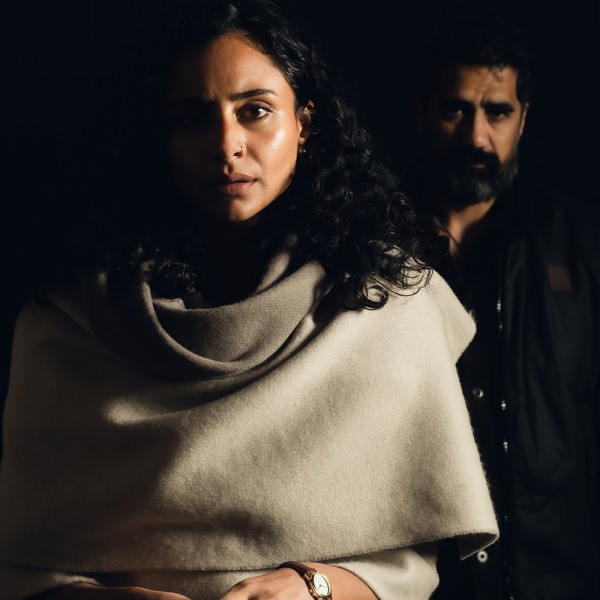
One of the classifieds is Irina (Perry Piercy), a Ukranian refugee who escaped before the ongoing war. Her two children, Yulia (Mel Dodge) and Daniel (Tāmata Porter), have very different attitudes to their mother’s plight. Yulia is a nurse who daily sees the effect of an ageing population on a struggling health system and believes the new law is saving lives, while Daniel procures and administers black-market cancer drugs to try to buy his mum more time. Also in the mix is Adam (Jack Buchanan), one of Irina’s former piano students whose own health issue has arrested his career as a maestro.

Starting with an attempted suicide and seemingly about a heavily doom-laden subject, Hope is surprisingly uplifting. That’s largely because it’s funny and this vein of humour as each character wrestles with the ethics of the appalling situation they find themselves in is what stops Jenny Pattrick’s finely balanced script being a buzzkill.

The cast is excellent, each clearly articulating their character and interacting with believable emotions and chemistry. They are supported by a lusciously coloured set (Ian Harman) that leans strongly into the mosaic motif that threads through the dialogue and anchors the hope within it. Marcus McShane’s lighting adds to the visual feast, with subtle practicals and shades that clearly pinpoint the time of day. The accompanying piano-based soundtrack (composer Briar Prastiti, sound engineer and designer Chris Ward) weaves beautifully around the action.

A call to action in a disintegrating world, Hope celebrates the deeper things that bring us together and make us live, love, and laugh.

The Man Whose Mother Was A Pirate – The Musical | Regional News

The Man Whose Mother Was A Pirate – The Musical

Written by: Nino Raphael

Directed by: Sara Brodie

two/fifty-seven, 22nd Jan 2025

Reviewed by: Zac Fitzgibbon

Sailing from the Welsh Dragon Bar to two/fifty-seven with a fresh new crew of scallywag actors is the updated The Man Whose Mother Was A Pirate – The Musical. Inspired by Margaret Mahy’s beloved children’s book and made with the consent and approval of her estate, this production features new songs with music and lyrics by Nino Raphael and even more audience engagement, including dancing in the playing area.

Each actor plays within the theatre-in-the-round so well, both vocally (musical direction by Hayden Taylor) and physically. Finlay Morris as Sam the Man stuns with his vocal prowess and smooth movement. Jo Hodgson (The Pirate Mother) fully embodies what it means to be both a mother and a pirate, delivering beautiful vocals. Aimée Sullivan keeps the audience in stitches with her many roles as The Rugged Pirate, while Stuart Coats’ expanded portrayal of Mr Fat delights with its depth and humour. Mike McKeon as the Rosy Pirate Captain is a superb narrator and commands the audience with his stage presence. Isobel Lee shines as Jenny, a new addition to the crew of characters, stealing every scene she is in. Every performer adds their own unique energy, and I almost choked with laughter at several moments.

The new songs add so much to the show’s charm, combining sea shanty vibes with Raphael’s distinctive style. The technical elements, like the simple yet effective lighting (Scott Maxim), enhance the setting without distracting from the action. The addition of retractable cutlasses and other props (Becka Tiongson) elevates the theatrical experience.

This version of The Man Whose Mother Was A Pirate – The Musical retains the magic of its Welsh Dragon Bar original, but blows it out of the water with its energy, humour, and creativity. It feels sharper, bigger, better, and is even more of a standout. It’s a fantastic story for all generations about setting sail from the ordinary to explore uncharted waters. I have no doubt that with the creative team behind it, future productions will raise the (rum) bar even higher. For now, I would fight off crews of pirates to watch it again.

Nosferatu | Regional News

Nosferatu

(R16)

132 minutes

(2 ½ out of 5)

Reviewed by: Reviewed by Alessia Belsito-Riera

Through plenty of eeks, amid lots of squeals, and with more time than I’d like to admit spent hiding under my sweatshirt, I made it through Nosferatu. Though I’m not a horror fan, I wasn’t going in completely unbiased to this new release of the classic vampire tale. I own a beautiful copy of Bram Stoker’s Dracula – a groundbreaking piece of literature that’s very dear to me. That being said… though this new treatment is aesthetically appetising and suitably scary, for me, it didn’t come close to the original.

Arthouse filmmaker Robert Eggers’ Nosferatu is the plot of Werner Herzog’s Nosferatu the Vampyre (1979), which is the plot of F.W. Murnau’s Nosferatu: A Symphony of Horror (1922) – itself Stoker’s novel with some name changes and minor tweaks to skirt copyright law. Herzog’s is an undeniable classic. Murnau’s is the pinnacle of German expressionist cinema. Eggers’ doesn’t really re-invent the wheel or make a particularly thought-provoking statement.

As a self-professed history buff and a former production designer, Eggers does deserve to be lauded for Nosferatu from the perspective of a period piece. Craig Lathrop’s design is suitably gothic, oppressive, and finely detailed – his vision something straight from a storybook. Cinematographer Jarin Blaschke is a wizard with his craft, bringing to life an eerie and desaturated world that slowly closes in on you. His lighting, colour, and framing choices are nothing short of award worthy. Louise Ford’s editing style, however, is not my cup of tea, with what I consider lazy transitions, though other critics disagree. Robin Carolan’s delightfully terrifying score though is what truly makes Nosferatu ooze with agony and dread.

Starring Lily-Rose Depp as lead Ellen Hutter alongside Nicholas Hoult as her hapless husband Thomas, the acting in Nosferatu is not something I’d deem particularly praiseworthy. With the exception of Willem Dafoe’s zany Professor von Franz (the equivalent of Van Helsing), Simon McBurney’s perfectly deranged Herr Knock (our Renfield), and, of course, Bill Skarsgård at his best in the disgustingly horrifying role of Count Orlok… though his incessant heavy breathing was more comical than frightening.

Inspired by the 1922 rendition at the age of nine, Eggers has been working towards Nosferatu his whole life. And you can tell! It is beautiful and clever and undeniably good. It’s just not great.

Messiah | Regional News

Messiah

Presented by: New Zealand Symphony Orchestra

Conducted by: Thomas Blunt

Michael Fowler Centre, 14th Dec 2024

Reviewed by: Tamsin Evans

Some things in life are reassuringly predictable. Every year seems to pass more quickly than the last, Christmas arrives before we are ready, and summer is later than we hope. The New Zealand Symphony Orchestra’s Messiah comes round every year too but, as this performance showed, familiar does not always mean as predictable as we might expect. The story, the music, solo voices, choir, and orchestra combine in a glorious whole. It’s magnificent, with so much scope for musical interpretation that this year’s concert was only predictable in its scheduling.

The Tudor Consort specialises in performing early music and their enduring reputation for excellence and meticulous attention to period detail were surely behind the very high bar Thomas Blunt set for his musicians. In what is generally thought of as a choral work, Blunt was not afraid to use his small orchestra of only 32 performers and lift them from liturgical accompaniment to equals in the storytelling. Surges in dynamics, unexpected accents, lyrical phrasing, shifting tone and tempo, and specific placement of performers on the stage gave this Messiah a refreshing and enjoyably different sound.

The four distinct styles of the soloists contrasted well with each other. Filipe Manu’s rich tenor soared operatically through Comfort Ye in a way that perhaps shouldn’t have worked but did. Anna Pierard’s He Was Despised was heavy with grief and sorrow without overly dramatic emotion. Madison Nonoa’s soprano voice has a surprising, delicate purity that lent more variety to this extraordinary performance. Hero of the hour, bass-baritone Samuel McKeever, did a remarkable job coming into this production at short notice to cover for the unwell Benson Wilson.

The NZSO was absolutely excellent and the star of the show was The Tudor Consort. Their precision, clarity, perfect diction (an essential part of the storytelling), and a flawlessly balanced and controlled sound produced too many perfect moments to name but many to remember. A glorious end to the year.

A Modern Hero | Regional News

A Modern Hero

Presented by: Orchestra Wellington

Conducted by: Marc Taddei

Michael Fowler Centre, 7th Dec 2024

Reviewed by: Dawn Brook

Orchestra Wellington crowned its year with Benjamin Britten’s War Requiem, a towering work of the 20th century, deeply felt by the pacifist Britten and full of emotional impact for contemporary audiences in the current global conflicts. It is an inspired, spine-tingling, heart-wrenching work and the assembled musicians did it proud.

The work uses massive resources. A large choir, soprano soloist, and orchestra perform the Latin mass for the dead. A smaller orchestra accompanies two further soloists – baritone and tenor – who thread through the mass the disillusioned and bitter words of the First World War poet and soldier Wilfred Owen. The contrast between the sentiments of each component could hardly be more stark. And adding to this dramatic contrast is a smaller choir of children’s voices suggesting the innocence so harmed by war.

The music was variously reverential, mournful, beseeching, and consoling. But the dramatic and terrifying sense of war and disillusionment were omnipresent. The opening Requiem Aeternam, for example, started with a soft choir joined by ghostly children’s voices. But then, suddenly, an angry tenor voice was injected asking “What passing bells for these that die as cattle?” That dramatic juxtaposition continued throughout the work.

The soloists were soprano Morag Atchison, tenor Daniel Szesiong Todd, and baritone Benson Wilson. Atchison’s voice was dramatic and soaring, while Todd’s and Wilson’s were more intimate and restrained. The Orpheus Choir, marvellously prepared as usual by their director Brent Stewart, sang infinitely softly when needed and elsewhere thundered angrily.

Orchestra Wellington’s current composer-in-residence, Eve de Castro-Robinson’s impressive Hour of Lead preceded the requiem. She said that she thought of the piece as a prelude to Britten’s work. It reflected Britten very well, contrasting warlike instrumentation (including the orchestra’s tramping feet) with two exquisitely sweet well-known hymns.

Thank you Orchestra Wellington and Orpheus Choir for a very memorable concert.

Wicked | Regional News

Wicked

(PG)

160 minutes

(3 ½ out of 5)

Reviewed by: Alessia Belsito-Riera

The long-awaited screen adaptation of the Tony-winning Broadway musical Wicked trades the Yellow Brick Road for a trip down memory lane, whizzing through the story of how the green-skinned woman Elphaba (Cynthia Erivo) and Ozian it-girl Glinda (Ariana Grande) came to be known as the Wicked Witch of the West and the Good Witch of the North. An adventurous tale that celebrates female friendship and champions standing up for what’s right, this magical musical is as whimsical as it is wondrous, as outrageous as it is off-kilter.

Like its Broadway predecessor, the film version is also presented in two acts, with Defying Gravity serving as a show-stopping ending to part one. In many ways, the screen adaptation remains faithful to the stage play, which in turn was based on Gregory Maguire’s 1995 novel that reimagines the characters from The Wizard of Oz books. Like the stage musical, Stephen Schwartz wrote the music and lyrics, while Winnie Holzman wrote the book, but the director’s seat is occupied by Jon M. Chu, who crafts a multicoloured, maximalist dreamscape alongside production designer Nathan Crowley and costume designer Paul Tazewell. Arm in arm with these wonderful world-building wizards, cinematographer Alice Brooks adds the icing on the emerald cake with her bold colour choices and sweeping shots. I just wish Myron Kerstein’s editing had featured slower cuts so we could take it all in better.

The story is an archetypal myth where good is pitted against evil, the comfort of the status quo juxtaposing the freedom of changing the world. Wicked does not reinvent the wheel in its saga of misunderstanding and alienation – even with its subplot of animal persecution. But the wheel isn’t broken, and with Erivo and Grande behind the reins it trots along nicely. Their excellent chemistry is made all the more enjoyable by their opposite vibes, while appearances from Michelle Yeoh as Madame Morrible and Jeff Goldblum as Oz add an extra layer of grandiosity. What begins as loathing between Elphaba and Glinda blossoms into love and mutual respect, and there is always room for more interactions that pass the Bechdel Test in Hollywood.

Fun and fantastical with more than a few Easter eggs for fans, Wicked is wickedociously, whimsifyingly wonderful.

Pip: The Musical | Regional News

Pip: The Musical

Book and lyrics by John Golder with Tanya Piejus, Talia Carlisle, and Katie Morton

Directed by: Tanya Piejus

Gryphon Theatre, 27th Nov 2024

Reviewed by: Stanford Reynolds

A new, locally written adaptation of Charles Dickens’ Great Expectations, this musical is a massive feat and obviously a labour of love. It features original music composed by Katie Morton, an 11-person strong orchestra (musical direction by Saar Cohen-Ronen), and over 20 committed performers.

Gryphon Theatre has been rotated so that the audience sits lengthways down the auditorium, allowing for a wide stage space. The band is visible behind the action on one side, while the other has been built up for a raised acting area. This orientation creates some challenges, as the acting space becomes thin, limiting the depth for the blocking of action and making it difficult to hear the dialogue over the lively large band when the performers are in one corner of the stage.

Dickens’ Great Expectations has a complex, drawn-out plot, which poses another challenge in adapting it to the stage. The show is close to three hours long, with much of the dialogue and lyrics leaning more into exposition than character development. Many technical elements are employed to tell the story, including sound effects (sound design by director Tanya Piejus), projections (AV design by Emma Maguire), smoke, and even a puppet. As the lighting (design by Jamie Byas and Brian Byas) uses colour creatively to set location and mood, the projections – which are tricky to see – feel superfluous to me. Wardrobe design by Wendy Howard assisted by Hayley Knight excellently captures the characters and time period. I would love to see more focus on the emotion in the acting and blocking over the use of technology, which I feel would help to lift the story (and music) off the page.

While an adaptation of this scale faces many challenges, when the full ensemble sings in harmony there is a fantastic sound and vibrancy. I hope to see future productions of Pip and commend Wellington Repertory Theatre for going all out on this ambitious project, dedicated to the memory of John Golder and his wife Alison.

The MILKYVERSE | Regional News

The MILKYVERSE

Presented by: Ruff as Gutz

Created by: Sean Burnett Dugdale-Martin

Directed by: Sean Burnett Dugdale-Martin

BATS Theatre, 26th Nov 2024

Reviewed by: Madelaine Empson

The MILK canon is rightly capitalised because it is very loud (like a canon, wow) and chaotic. “It’s like Wipeout but inside!”, creator Sean Burnett Dugdale-Martin yells in a press release, proving my point. MILK is long-form improv meets water balloons, whereby a group of players – in this case Salomé Grace Neely, Anna Barker, Sarah Penny, Adriana Dana Vasinca, and Ezra Prattley – create a story out of suggestions from the audience, who pelt them with projectiles whenever they want something onstage to change.

This could be as simple as a performer going from happy to sad, stoked about a hegg (hairy egg, of course) to grossed out by it, or it could be as dire and consequential as a death in the MILK family. This happens when a seemingly ordinary, secretly legendairy water balloon explodes, revealing its creamy contents and changing the course of the show forever.

In The MILKYVERSE, which MC Dugdale-Martin introduces in a fittingly hilarious and hectic manner (in fact, they even forget to tell us what to do with the water balloons) (all good, it’s pretty self-explanatory), our protagonist (Dana Vasinca) has moved out of Mum/Grandma’s (Grace Neely) home into a flat with an exceedingly hairy roommate (Prattley) whose mum (Barker) has a hernia, according to a doctor moonlighting as Chappell Roan (Penny). Tasked with clearing the hair out of the flat lest the Milkyverse combust, the protagonist travels to a different dimension where people (especially whoever Barker is playing at the time) can open doors with their minds! Only doors in their line of vision though! Still, impressive!

Special shoutout to design lead and technician Anne Larcom for a brilliant insertion of Enya’s Only Time in The MILKYVERSE, the third out of six milky seasons that I’ve seen. I love these fun and funny, silly and soggy shows and lean into each one harder than the last. In fact, as a fresher for 2022’s MILKOWEEN!, I threw no balloons! For my second encounter, Milly Monka’s MILK Factory (2023), I threw one! And for The MILKYVERSE, I threw 2(%)! Get it, like two-percent milk!

I will now officially sign off and leave the puns to the experts: Ruff as Gutz, who have churned out yet another udderly fantastic show. Whey to go! 

The Planets: Elgar & Holst | Regional News

The Planets: Elgar & Holst

Presented by: New Zealand Symphony Orchestra

Conducted by: Gemma New

Michael Fowler Centre, 22nd Nov 2024

Reviewed by: Tamsin Evans

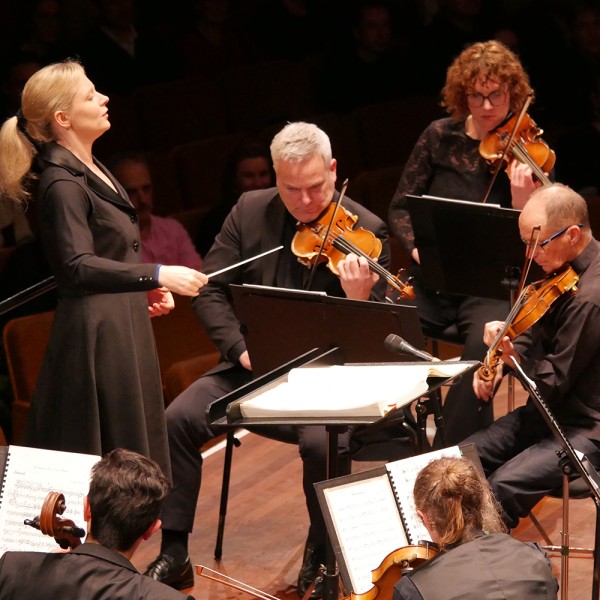
After a busy international season, principal conductor Gemma New is at home on the podium with the NZSO and it was a pleasure to see her expressive, expansive style again.

We know a lot about what the universe looks like, but the resonances of space have to be enormously augmented by technology before we can hear a sound wave in a vacuum. Music often settles in this absence of sound and Kaija Saariaho’s Asteroid 4170: Toutatis is unquestionably what my contemporary experience tells me space sounds like. Wonderful orchestration of slow and eerie sounds of strings and harps punctuated with blasts of brass and percussion left us in no doubt there is a lot to listen to in that vacuum.

Christian Tetzlaff tackled Elgar’s Violin Concerto in B Minor with absolute mastery. His rich, confident, emotional tone contrasted with technical excellence where the combination of speed, double stopping, and huge shifts with the bow didn’t faze him at all. After Toutatis, this was musically more Earth bound but also sky high.

Gustav Holst’s The Planets is epic, evocative, and vivid. New’s sense of drama is well suited to bringing these astrological characters to life. The quality of the interpretation between conductor and orchestra was absolutely on point. Holst’s composition, rhythm, and orchestration is of course critical and brings the characters to the stage – Mars, the Bringer of War; Saturn, the Bringer of Old Age; Neptune, the Mystic and so on – but the conductor and musicians must make them real. Musical excellence gave each of the planets their individual nature, the section principals were brilliant as usual, and the tone and volume of the Voices New Zealand Chamber Choir were flawless. There was also something extra going on in this performance. New somehow linked the heartbeats of the planetary cousins to create connection and an awe-inspiring sense of the whole universe.