
Nowhere
Written by: Khalid Abdalla
Directed by: Omar Elerian
Tāwhiri Warehouse, 5th Mar 2026
Reviewed by: Ruth Corkill
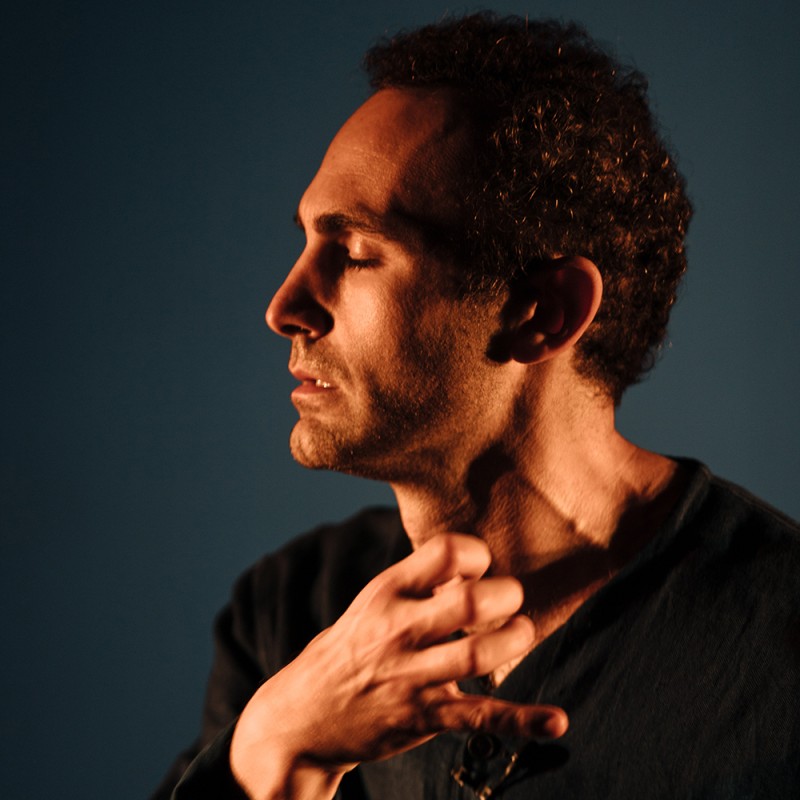
Khalid Abdalla’s astonishing solo work Nowhere melds the personal and playful into the roar of unbearable injustices across global and historic scales. Rooted in his involvement in the 2011 Egyptian revolution and the counter revolution that followed, Abdalla weaves parallel narratives of his patrilineal history, global colonial dynamics, and the friendship he formed with a fellow artist lost to pancreatic cancer.
A core value of the work is the reclamation of play and creativity, both as personal necessity and a force for resistance. Abdalla embodies this sense of possibility. His physicality is impeccable across naturalistic acting, stylised movement sequences, technical tricks, and gorgeous, bashfully vulnerable dance sequences (choreographer Omar Rajeh).
The production features the most cohesive integration of projections (video designer Sarah Readman), live filming, and shadow work (lighting designer Jackie Shemesh) that I have seen. Importantly, these techniques resonate in a story invested in documentation, filmmaking, visual art, and resistance through online content. This means the form does more than support the material, it enacts it, creating a highly functional and coherent storytelling world.
Surrealism threads through the piece, evoking the unbearable stagnation of political hopelessness, and creating strange-wondrous avenues of escape. Abdalla looms over landscapes, is crushed in his Cairo flat, and dwarfed by crashing waves. He is subjected to his viciously critical inner monologue on loudspeaker (sound designer Panos Chountoulidis) and plays his father and grandfather conversing with each other about political imprisonment alongside English subtitles.
Pacing is expertly managed, with lightness and quiet breaking up the intensity. At one point we are invited to look under our seats, where we each find an envelope containing a mirror, pencil, and paper. Abdalla encourages us to draw ourselves by looking only into the mirror, letting the hand roam without correction. Donated drawings will join drawings from audiences around the world as part of a wider art project.
Gradually, more didactic passages develop, but these feel earned. Alongside regimes, colonists, and genocides the work insistently holds space for beauty, grief, love, and play at the scale of the individual.
View more reviews:
« Click here