

Reviews - Regional News | Connecting Wellington

Reviews

Enemy of the State | Regional News

Enemy of the State

Presented by: Orchestra Wellington

Michael Fowler Centre, 18th Oct 2025

Reviewed by: Ruth Corkill

Orchestra Wellington’s Enemy of the State programme champions three composers whose works interrogate power and rebellion. The evening opens with John Psathas’ Next Planet, the 12th work in his ‘Green Piece’ series. This protest against billionaires’ obsession with space colonisation is rhythmically driven and texturally dense, broken by moments of foreboding stillness.

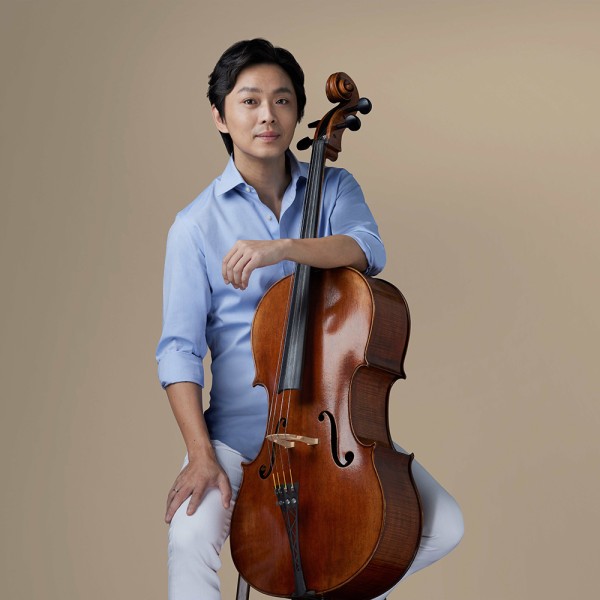
Like many in the audience, I came to this concert for the Shostakovich, but was delighted to also get a delicious work by one of his predecessors: Alexander Glazunov’s Violin Concerto in A minor. I hadn’t encountered this concerto before, and I am glad to have heard it first through soloist Benjamin Baker’s interpretation, which revealed its extraordinary richness and invention. At times, Baker’s violin seems to split in two, one voice singing sweetly while the other dances in counterpoint. In other moments, the instrument resonates with the two harpists on stage, or evokes the timbre of a balalaika, playful and percussive. Baker draws out the concerto’s romantic melancholy while maintaining the intelligence of the voice. The orchestra, under Marc Taddei’s direction, is in excellent form and well balanced. They provide a lush and responsive backdrop, allowing Baker’s phrasing to shine.

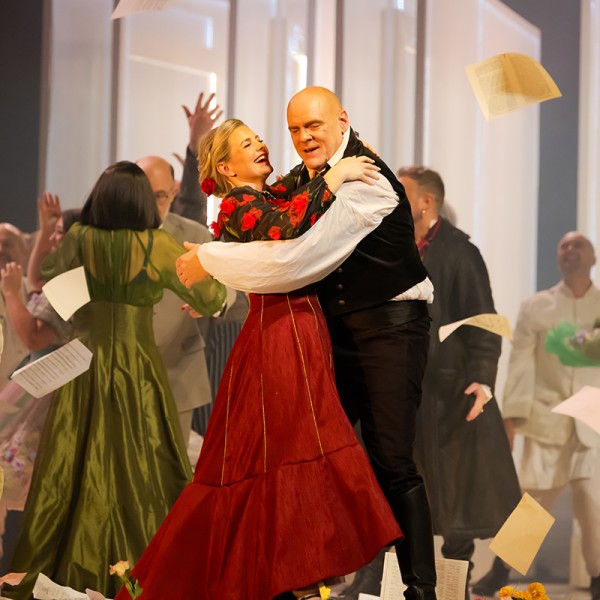
The final work on the programme is a selection of excerpts from Shostakovich’s Lady Macbeth of Mtsensk, the opera that nearly ended the composer’s career after Stalin’s infamous denunciation in Pravda. Taddei’s arrangement preserves the opera’s grotesque humour and tragic intensity while ensuring the soloist and orchestra remain in dynamic equilibrium. The extra heft and bite of Hutt City Brass is put to excellent use, adding snarling glissandi and abrasive, distressing, or eerie colour as demanded. Soprano Madeleine Pierard is magnificent as Katerina. Her voice is powerful and precise, navigating the opera’s demanding vocal terrain with apparent ease. She captures Katerina’s complex emotional colour shifts of desperation and defiance. The orchestra weaves around her in a compelling dialogue, before rising spectacularly to the annihilating rage and despair of the work’s most intense passages.

Gregory Porter | Regional News

Gregory Porter

St James Theatre, 17th Oct 2025

Reviewed by: Graeme King

There is a reason Gregory Porter was one of the headlining acts for 2025’s Wellington Jazz Festival: this two-time GRAMMY®-winning jazz vocalist, composer, and bandleader has captivated audiences worldwide for well over a decade with his soulful baritone vocals and stirring storytelling.

Strikingly tall and dressed in a white suit, Porter’s presence was formidable. The first song Holding On, featuring the blistering double bass of Jahmal Nichols, set the tone for the evening.

Strongly influenced by southern American gospel, at times Porter created an almost religious experience for his audience, who were often encouraged to clap and sing along – especially on Revival Song.   

If Love Is Overrated featured the sublime saxophone of Tivon Pennicott and Emanuel Harrold’s slick, energetic drumming.

Porter told the story of a bad teenage experience with a girlfriend’s father and how, 30 years later with his song Mister Holland, he was able to heal the wound that was in his heart since he was 15 years old. Powerful words that almost brought tears to my eyes.

Take Me To The Alley, with the audience singing on the chorus, featured the silky piano of Chip Crawford.

Then, with the rest of the band walking offstage, we were treated to a five-minute double-bass solo by Nichols that featured such classics as Play That Funky Music and My Girl (with Porter and the audience singing along!), Master Blaster (Jammin’) and Grandma’s Hands – before the rest of the band re-joined to play an enthusiastic Papa Was A Rollin’ Stone. Stunning.

Musical Genocide featured the uplifting, gospel-themed Hammond organ playing of Ondrej Pivec.

The last song of the set, No Love Dying showcased Porter’s sonorous, powerful, and gravel-edged vocals, and with his affable encouragement, some of the audience also joined in on the choruses.

There was no way the audience had finished with this superb band yet, so after a couple of minutes of stomping and cheering loudly, they were soon back for the first encore, Sting’s It’s Probably Me.

Hey Laura, featuring solos by all band members, was the perfect song to finish this vocal and musical masterclass. Come back soon.

Aotearoa Jazz Orchestra | Regional News

Aotearoa Jazz Orchestra

Meow Nui, 16th Oct 2025

Reviewed by: Graeme King

A national jazz orchestra of Aotearoa was the vision of the legendary Rodger Fox and, judging by the inaugural performance of the Aotearoa Jazz Orchestra (AoJO), he would have very much approved. This concert featured music by Duke Ellington, one of the true giants of jazz who, with his long-time collaborator Billy Strayhorn, recorded their interpretation of The Nutcracker Suite in 1960.

Described in the programme as “a masterpiece of swing, wit, and orchestral colour”, where “Tchaikovsky’s melodies and Ellington’s imagination meet in a timeless musical dialogue”, this adaptation by the Aotearoa Jazz Orchestra of Tchaikovsky’s beloved ballet, in eight parts, held the jazz-loving audience in its grip throughout.

The premiere performance of The Fox (a tribute to Rodger Fox) which followed, written by musical director and drummer John Rae, and arranged by concertmaster, saxophonist, and clarinettist Oscar Lavën, was simply sublime. The solo performances of all 17 musicians showcased the tremendous depth of talent within the orchestra, with most solos receiving loud applause by the appreciative audience.

Lavën’s playing, especially on clarinet, was superlative, and a special mention should also be given to Michael Taylor (trumpet section leader), Kaito Walley (trombone section leader), and the superb rhythm section of Rae (drums), Ben Wilcock (piano), and Alistair Isdale (double bass).

Rae’s shoutout to sound engineer James Goldsmith at the end of the concert, whose excellent sound mix had all the musicians balanced not too loud but clear, was well deserved.

The programme starting with the Emerging Artist Feature, the Evie Patterson Quartet, was an ideal way to showcase some local jazz artists of the future. Evie also held the emerging artist seat as one of the six saxophonists in the orchestra.

Originally the Salvation Army Citadel, with its amazing acoustics and stunning architecture, Meow Nui provides the perfect home venue for this new orchestra. Let’s hope this is the first of many similar concerts to follow.

Christy | Regional News

Christy

(R13)

85 minutes

(4 out of 5)

Reviewed by: Alessia Belsito-Riera

Standing at the crossroads between adolescence and adulthood, nearly too old for social care but not yet self-sufficient, Christy (Danny Power) finds himself kicked out of yet another foster home and moving in with his estranged half-brother Shane (Diarmuid Noyes), compassionate sister-in-law Stacey (Emma Willis), and baby niece Charlie just a few weeks ahead of his 18th birthday. As a viral video circulates of him beating up another boy, Christy ambles around his childhood neighbourhood on the northside of Cork, meeting family friends and relatives that remember him, tell him stories of the past, welcome him, try and lift his spirits, and attempt to lead him astray. As he begins to settle in and find a place for himself, Shane continues to remind him that his time here is only temporary.

Like its protagonist, Christy sits somewhere in between drama and comedy, realism and poetics, sensitivity and harsh truths. Music video director Brendan Canty’s debut feature film is one of duality, juxtaposition, and liminality, where Alan O’Gorman’s well-balanced story meets cinematographer Colm Hogan’s natural, raw style with a script that places as much weight on a half-cracked smile as an expletive hurled like a hand-grenade. Christy isn’t fluffed up by movie magic; it’s grounded in deep empathy and gritty realism that focuses on authentic storytelling over showmanship.

As Christy sidesteps between getting involved with his rough cousins or a gaggle of rollicking local kids and a family friend’s hairdressing studio, the stars’ acting chops really begin to show and Gorman’s script starts to shine. This teetering between paths, lives, worlds is a constant throughout the Berlin International Film Festival Grand Prix-winning film, but it’s never depicted with judgement, only compassion. Where one cohort leaves a knot in your stomach, they’re not presented as inherently bad. Similarly, the other group, though heartwarming, aren’t perfect either. Just two sides of the same coin.

Whether you’re in it for the bittersweet story or the cheeky Irish heart, Christy is an exquisite and sensitive slice of life – be sure to stick around through the credits for a grin-inducing homage to Canty’s music video days.

Monument | Regional News

Monument

Written by: Emily Sheehan

Directed by: Lyndee-Jane Rutherford

Circa Theatre, 14th Oct 2025

Reviewed by: Tanya Piejus

Edith Aldridge (Mel Dodge) comes from political royalty: the daughter of a former prime minister, now about to take the stage on her first day as a groundbreaking female prime minister. It’s early. She’s in her hotel room and has 90 minutes before making her inaugural speech to a waiting world. In walks Rosie (Tara Canton), a substitute makeup artist, more often seen working the cosmetics counter at David Jones but who’s been plucked from obscurity because she’s a whizz with a contour brush.

Over the real-time interchange between these two very different personalities, writer Emily Sheehan exposes the cultural norms expected of women, particularly those in leadership, and the increasingly blurred lines between politics and celebrity. There are shades of Jacinda Ardern’s premiership in the persistent social media abuse of Aldridge and careful curating of her look for a magazine. In Rosie, we see a younger generation of women, superficially independent and bravely critical but still vulnerable to the ingrained and unrealistic expectations of men.

Dodge and Canton have great chemistry that Lyndee-Jane Rutherford’s naturalistic direction gives room to breathe. They challenge and ultimately empower each other, and both have secrets that are revealed in the overly personal setting of a makeup session. Props to both actors for convincingly managing an entire makeover while delivering a huge piece of dialogue and its emotional ups and downs with ease and conviction.

Ian Harman’s set design is unusually fulsome for the Circa Two stage and convincingly creates a plushly beige heritage hotel suite augmented by Talya Pilcher’s subtle lighting design. Being a tech nerd, I particularly appreciated Chris Ward’s AV and sound design for the women’s cell phones that cleverly avoided the awkward trap of putting ringtones through a theatre speaker.

Monument is a slick production all round that makes a highly relevant statement about the place and perception of women in today’s world of double standards and identity-driven politics. Through lifting each other up, all women can succeed.

Four Seasons | Regional News

Four Seasons

Presented by: New Zealand Symphony Orchestra

Conducted by: Pekka Kuusisto

Michael Fowler Centre, 9th Oct 2025

Reviewed by: Tamsin Evans

The fact that Pekka Kuusisto made the call to switch the order of the programme should not have been a surprise although it was as well he did. Kuusisto champions music written and performed by women and where possible his programmes are 50-50. Louise Farrenc, a successful symphonic composer and professor in the 19th century despite gender-biased society and establishment, fell into obscurity in the 20th century. Ironically, Antonio Vivaldi’s The Four Seasons was also forgotten soon after it was written but has been immensely popular since it was rediscovered in the mid-20th century.

From the first movement, Farrenc’s Symphony No. 3 has a very pleasing sound to it: a Classical feel with Romantic style. Melodies are shared across the orchestra and interesting rhythmic patterns run through the work. The Scherzo was a particularly good combination of speed and delicacy and effective changes of tone. There was a sense of a confident ‘whole’ of the orchestra and conductor.

Without the programme switch, Farrenc would have been overwhelmed by the weight of the audience’s anticipation and Kuusisto’s innovative, idiosyncratic interpretation of The Four Seasons.

Each season has three movements and by the end of Spring everyone knew this was going to be a unique year. Kuusisto took every opportunity to accentuate familiar features of the music and make them dramatic, whether by volume, balance, speed, technique, tone, or imitation. Towards the end of Spring we even heard bagpipes from the violins. (Proof bagpipes are unmistakable but violins – and anything except bagpipes – are more flexible.)

The Summer Presto was furiously fast and energetic, a perfect showcase for Kuusisto’s virtuoso violin playing. The later seasons were closer to the traditional sound, with refreshing presentation. The Autumn Adagio, just cello and harpsichord, was that beautiful simplicity that leaves you barely breathing. Winter had a realistic harshness, grey and gravelly, pizzicato like ice drops melting – and stunning violin from Kuusisto.

Rossini Stabat Mater: A mother’s love | Regional News

Rossini Stabat Mater: A mother’s love

Presented by: New Zealand Symphony Orchestra

Conducted by: Valentina Peleggi

Michael Fowler Centre, 2nd Oct 2025

Reviewed by: Tamsin Evans

Rossini Stabat Mater: A mother’s love put side by side two interpretations of the 13th-century Christian hymn that portrays Mary’s suffering during the crucifixion of her son. Each was quite different from the other and both were unlike traditional settings. Victoria Kelly’s Stabat Mater was commissioned by the NZSO as a response to Gioacchino Rossini’s Stabat Mater. Rossini’s piece strongly reflects his career composing operas in the bel canto style of virtuoso singing and elaborate vocal ornamentation.

Although the melodic and dramatic influence was there, it did not overwhelm the seriousness of the text which came through in the performance. Valentina Peleggi’s direction brought out the mood of each verse and the vocalists responded with feeling, especially when their solo voices were on display. Voices New Zealand Chamber Choir were excellent as ever. Led by music director Karen Grylls, their perfect diction, timing, phrasing, and dynamics are extraordinary and the best you will hear in Aotearoa.

The world premiere of Kelly’s Stabat Mater was an experience that lasted in my mind and body long after the performance. The music was profoundly emotional and somehow deeply, urgently visceral and beautiful all at once. In this Stabat Mater, Kelly’s reimagined Mary does not accept her son’s sacrifice, she does not weep nor mourn, but wields a sword and saves him. Kelly’s response to the eternal narrative of the suffering of women and mothers is a primal sense of rage and sadness expressed in an almost gentle, but powerfully nuanced and subtle simplicity.

Kelly wrote her own text and thanks to the vocal skill of Voices New Zealand, her perspective was plain to hear, as was the musical representation of Mary: a white crystal singing bowl, sometimes to the fore, other times absent.

Fittingly, the commission was funded by a consortium of female patrons, and honours for the evening went to a trio of women – composer, conductor, and choir director.

A Big Bold Beautiful Journey | Regional News

A Big Bold Beautiful Journey

(M)

109 minutes

(3 ½ out of 5)

Reviewed by: Alessia Belsito-Riera

In the light of day, A Big Bold Beautiful Journey feels like a fever dream, but in the moment, in the darkness of the cinema, it feels like a portal to a world where reality is brighter, better, and unbound by the laws of physics.

Written by Seth Reiss (The Menu) and directed by esteemed film analyst and essayist Kogonada, A Big Bold Beautiful Journey begins unassumingly at The Car Rental Agency, where David (Colin Farrell) is renting a 1994 Saturn SL to get to a wedding hundreds of miles away. A rather persistent Phoebe Waller-Bridge and philosophical Kevin Kline strongly suggest he get the GPS. After meeting Sarah (Margot Robbie) at the wedding, then again at a burger joint, and again when her rented 1994 Saturn SL won’t start and his GPS instructs him to pick her up, they embark on a roadtrip through magical doors that lead to defining moments from their pasts.

Propped up by the consummate professionals that are Farrell and Robbie, the film is rich in symbolism, though it’s at times hard to grasp. Katie Byron’s production design is intricate, ethereal, enchanting, the cinematography (Benjamin Loeb) so vivid and alive it feels like you could reach out and grab the door handles yourself. Costume designer Arjun Bhasin’s colour choices definitely indicate something too, but I can’t quite put my finger on what.

I’d like to disclaim that when it came to the very divisive La La Land, I was in the ‘huge fan’ camp. I say this because I foresee A Big Bold Beautiful Journey experiencing a similar reception: either you love it, or you hate it. Why? Because it wades through the messy parts of life without balancing them out with redeeming character arcs or full-circle moments. It is firmly nestled into magical realism insofar that simultaneously nothing and everything happens; it seems to lead up to a big revelation and yet the story hardly progresses outside of pitstops and detours. If, in the paraphrased words of David, you hope to come to some grand conclusion about your life, you won’t like the movie, because, at the end, you’re left with very little except perhaps the feeling that you’ve just experienced something big, bold, and beautiful.

Split Bill: Friends to the End & The Lighthouse | Regional News

Split Bill: Friends to the End & The Lighthouse

Presented by: Wiremu Tuhiwai & Brendon Bennetts and PROTEA Impro

BATS Theatre, 30th Sep 2025

Reviewed by: Tanya Piejus

Two compact improvised performances come together as part of the New Zealand Improv Festival for a touching and entertaining hour of contrasting entertainment on the broad theme of friendship.

Created by PROTEA Impro from Tasmania and directed here by Jim Fishwick, Brenna Dixon and Benny Marama take the stage first for The Lighthouse, a charming and gentle tale of two lighthouse keepers who unintentionally find themselves sharing duties for 24 days when they were each looking forward to solitude. After an awkward introduction, they delicately explore each other’s personalities and dreams through deceptively simple questions about pets, kids, and favourite travel destinations. A mouse named Erik (with a K) who nests under the Weetabix becomes a cherished pet that binds them together when Chaffer eventually leaves.

The two performers are endearing and create beautiful existential portraits of two lost souls who find companionship and meaning. Beautifully simple mime and theatre tricks create their tight world, and the overall performance is deeply affecting to the extent it made the person sitting next to me cry.

Upping the energy and taking a more classic improvisational approach, Wiremu Tuhiwai and Brendon Bennetts bounce onto the stage with a Shaun of the Dead-inspired apocalypse story, Friends to the End. The audience-derived childhood-best-friends activity of playing with walkie-talkies, the Spice Girls’ song 2 Become 1, and an origami paper game selection of ‘reptiles evolve’ provided the parameters of the story. From there, they developed a hilarious narrative about BFFs Aaron and George dealing with the end of the world as lizards become sentient, lasso human hosts, and trample Godzilla-like over life as we know it.

Tuhiwai and Bennetts have great chemistry and their ability to create an instant story is whip-smart. The injection of a sub-plot about George sleeping with Aaron’s ex who then becomes the lizard queen is brilliant.

Accompanying both tales are Beans Wright on violin and Criss Grueber on keys, who provide appropriately lyrical and exciting music to support the diverse and equally enjoyable narratives.

Vividwater | Regional News

Vividwater

Written by: Jacqueline Owens

Four Elements Press

Reviewed by: Jo Lucre

She’s a “sellout bitch” to some, but to Alex Pym, her job as a mnemopath, a professional memory machine at the main water trading bureau WaiOra, is just a means to an end. With student debt high and no parents to fall back on, the job is a necessary evil. She’s there to remember the important stuff so others less competent don’t have to.

In Vividwater – the first of a three-part series – Wellington author Jacqueline Owens offers a fresh take on a dystopian tale. Aotearoa is a hydrosphere, one of the lucky few countries with enough drinkable water. The uniquely New Zealand setting and cultural references add to the gritty unrest, where decades of drought mean water is a highly guarded resource, scarce in the hands of many, plentiful in the hands of a few.

Alex’s job “finding new high-grade sources of crystalwater… even vivid water” is murky and morally ruptured. She’s looking for hydrocrimes, tracking hidden sources of water in people’s backyards under the premise of the common good. She’s whispering secrets and finding herself with a Platinum watercard. She’s part of a dog-eat-dog system, fractured between the haves and the have-nots, the upper classes rallying for water control and the bottom rung fighting for survival.

The reemergence of Alex’s ex-boyfriend Lawrence after 15 years in China spurs deep conflict within her and insightful reflection on the choices ahead. Her developing relationship with Lawrence is incongruous with the life she’s now living. Beneath every aqua transaction lies a human fragility and moral compass Alex must navigate carefully within a labyrinth of politics, corporate greed, and deception.

I liked the premise of Vividwater and Owens offers such an intricate and detailed preview of a future in which drought has rendered an Aotearoa that is difficult to imagine, where resources are scarce and all faces of humanity surface.

Though perhaps it’s not so difficult to imagine after all…

O Fortuna | Regional News

O Fortuna

Presented by: Orpheus Choir Wellington & Auckland Choral

Conducted by: Brent Stewart

Michael Fowler Centre, 28th Sep 2025

Reviewed by: Ruth Corkill

Nearly 300 performers take the stage for this epic collaboration between Orpheus Choir Wellington, Auckland Choral, a children’s chorus, the Wellington Brass Band, and outstanding soloists.

The concert opens with Leonard Bernstein’s Chichester Psalms, a lovely piece, full of unexpected turns and lyrical beauty that showcases Bernstein’s flair for blending classical structure with theatrical expressiveness. Bernstein composed Chichester Psalms in 1965, drawing on material originally written for West Side Story and an abandoned musical project titled The Skin of Our Teeth. In his solo passages, countertenor Coco Diaz masterfully draws out the jazzy, rhythmic vitality and melodic phrasing of the work. His performance is mesmerising, and his voice is smooth, pure, and richly coloured. However, the choir seems less confident, with moments of hesitancy and very little dynamic contrast.

No such hesitancy is to be found, however, once we are plunged into the epic tale of fate, revelry, and sensuality that is Carl Orff’s Carmina Burana. The full force of the Wellington Brass Band is on show from the first bars of the opening, and the choirs seem to swell and fill with colour to meet them. It is simply thrilling music.

What follows is a smorgasbord of moods and modes. Baritone James Harrison brings delightful comic flair to his performance, particularly in his drunken characterisation during In Taberna. His theatricality is matched by vocal precision, making his moments both funny and musically satisfying. Soprano Emma Pearson is faultless throughout; consistent, clear, and commanding. The Wellington Brass Band are wondrous, adding punch and texture to the already rich orchestration. Pianists Jian Liu and Diedre Irons, both elite soloists, anchor the performance with virtuosic clarity and stamina, their playing a masterclass in precision and expression. It feels like an extraordinarily rare treat to have two such exceptional pianists on stage at once. The heft and drama of the closing movement is hard to beat; monumental, visceral, and utterly absorbing.

If We Knew How to We Would | Regional News

If We Knew How to We Would

Written by: Emma Barnes

Auckland University Press

Reviewed by: Margaret Austin

“How many thoughts can you work into a single poem?” asks the back cover of If We Knew How to We Would. On starting to read the poetry therein, I found myself wondering if I could bear having as many thoughts as Emma Barnes!

The graphic quality of 72 pages of writing is what strikes you first. The opening poem Lineage has as its first statement: “The man with the sharp knife cuts the fat to tissue paper thinness and two people fold it into their mouths: a sacrament, like frills, like folds.” It goes on to elaborate on the theme set by the poem’s title: an intriguing combination of butchers, fate, and pigs.   

I especially like In your hands as it explores, with reference to the title’s ambiguity, that most controversial of subjects: love. “Your hand on my throat…” – and I’ll leave the rest to your imagination – recalls the title, but the reader is quickly relieved at the poet’s conclusion: “We’re all that’s happening now”: perhaps a philosophical remark, but at least we know they’re still alive!

The eponymously titled middle section of the collection comes with a warning to readers who may be wary of certain themes. On the day I found out you killed yourself is the most powerful example. Constantly repeating the words “believe” and “belief” as well as the poet’s violent denial of a reality effectively reminds us of our reaction to what we don’t want to accept.

Other poems in the same section echo similarly with grief and sorrow, expressed in mainly short sentences and powerful words, giving a staccato effect, very much the principal trademark of Barnes’ style.

One of the final poems I am is perhaps the best answer to the quoted question I started with. I just wish Emma an occasional rest from their thoughts and that they may take heart from the origami butterfly they refer to!

Over and Out | Regional News

Over and Out

Written by: Jackson Burling

Directed by: Simon Leary

BATS Theatre, 19th Sep 2025

Reviewed by: Tanya Piejus

Jackson Burling was told one thing: never become a truck driver. In Over and Out, part of the TAHI: New Zealand Festival of Solo Performance, he digs into the why of not following in his dad’s footsteps through an interview with diehard trucker Murphy, bringing us along for a joyous ride of emotional discovery.

Verbatim theatre has become an increasingly popular form in recent years for bringing authentic voices to the stage. Through Murphy, “a real guy being real”, we understand the hard and often-underappreciated life of New Zealand’s long-distance drivers. The hours are brutal, you’re always away from home and miss time with your kids, you subsist on junk food and V, you have to sleep in the back of your cab… There are many reasons not to choose this career, but it’s clear by the end of this 50-minute performance that those who do choose it love it with a passion that transcends the drudgery.

Burling is a superbly talented and highly engaging writer and performer. Under the expert guidance of director Simon Leary and with a stellar lineup of tech support, his tale goes far beyond the mere replaying of Murphy’s on-the-road interview. He jumps effortlessly between himself and Murphy with nothing more than a trucker’s cap as a prop. He also interacts with a projection screen (design by Rebekah de Roo and videography by Jacob Bowling) and perfectly timed sound effects (Oliver Devlin) to tell his own story of choosing performance over driving. I won’t spoil the surprise of what a very clever lighting effect (Jacob Banks) does to represent his dad. Even Burling’s cell phone is part of the multimedia brilliance.

All of this could have been self-indulgent, but it’s entirely not. At the core of Over and Out is the relationship between Burlings junior and senior and it’s one that is beautifully revealed over the course of a warmly funny and innovatively produced show about taking your own path in life.

2:22 A Ghost Story | Regional News

2:22 A Ghost Story

Written by: Danny Robins

Directed by: Peter Feeney

Running at Circa Theatre till 11th Oct 2025

Reviewed by: Madelaine Empson

If you love experiencing the pure adrenaline shot a good horror can inject, I highly recommend 2:22 A Ghost Story. Set in a rapidly gentrifying pocket of London, the play follows married couple Sam (Regan Taylor) and Jenny (a wholehearted Pamela Sidhu), who are raising a new baby in an old home that they’re renovating. Jenny believes in ghosts; Sam, a scientist, does not. At a dinner party with their friends Lauren (Serena Cotton) and Ben (Jack Sergent-Shadbolt), wine flows, heads butt, and tensions rise as the clock ticks ever closer to 2:22, when something unspeakable changes everything.  

Cotton’s performance as a psychologist intoxicated by both booze and love is a highlight, and I particularly enjoy the interplay between Sergent-Shadbolt and Taylor, who deliver a contemptuous relationship with quick wit, twinkling eyes, and comic levity – much needed in a script that sets up some heavy themes. While Danny Robins’ writing is eloquent and clever, his dialogue feels more scripted than natural in parts (particularly in the way Jenny speaks), stunting the moments of emotional depth the cast are clearly capable of reaching in their exploration of those themes.

On the horror front, 2:22 A Ghost Story more than delivers. Chris Reddington’s prop design and hyper-detailed set (that staircase is spectacular) work in tandem with costume designer Shiloh Dobie’s special effects to create a couple of show-stopping moments. I can’t get into specifics here for fear of spoilers, but anyone who’s seen the show will know the hot second I’m talking about. And if you haven’t yet – cards on the table, why not? Special mention also to the rain trickling down the glass backdoor, emphasised by Marcus McShane’s striking lighting design and Dan Elliott’s thunderous sound design.

Director Peter Feeney puts all the moving parts of the intricate puzzle together, ensuring each spooky moment is perfectly designed and timed for maximum effect. The result is the audience reaction straight out of every horror creative’s best nightmare: the shriek, followed by the nervous, jittery giggle. I leave feeling exhilarated.  


Caught Stealing | Regional News

Caught Stealing

(R16)

106 minutes

(4 out of 5)

Reviewed by: Alessia Belsito-Riera

Caught Stealing doesn’t come out swinging. In fact, it feels like it’s taunting you, yelling “Hey batter, batter” from the sidelines for the first 30 minutes, but boy does it hit a homerun into a grand slam eventually.

Pulsing with energy, Caught Stealing feels as though it’s teetering on a precipice as Hank (Austin Butler), a 30-something boozed-up and burnt-out bartender tormented by baseball and broken dreams, desperately tries to catch the curveballs life throws at him. The most recent comes in the form of cat-sitting for his dodgy English neighbour Russ – played by a mohawked Matt Smith in a role that is equal parts character foil and comic relief. As soon as Russ disappears, the directionless Hank finds himself embroiled in a dangerous struggle for survival amidst the criminal underbelly of 1990s New York City, forced to navigate the monsters of an underworld he never imagined and the demons from his past he thought he’d never meet again.

Based on the book of the same title by Charlie Huston, who also wrote the screenplay, Caught Stealing is saturated with director Darren Aronofsky’s signature brand of blackness. Seeping in from the sidelines before pooling into the corners, darkness (but not without comedy) drenches Hank’s world at an unexpected turning point, steering what seems like a predictable plot into an unhinged joy ride through chaos. Aronofsky’s long-time collaborator Matthew Libatique’s cinematography is precise and grainy – paired with Mark Friedberg’s grimy, gritty production design and fashioned by Andrew Weisblum’s sharp editing that dances between timelines to reveal more of Hank’s past – crafting an aesthetic that is cluttered and corrupt, echoing the inner workings of Hank’s mind that becomes increasingly unstable as he grapples with regrets, missed chances, and a progressively perilous problem. Match cuts and callbacks create satisfying circular moments, but not without character development tangled in between (balanced brilliantly by Butler). As the web of lies coils more tightly around Hank, simultaneously unravelling and sustaining him, he gears up for one helluva swing.

A chaotic car crash of a movie that comes careening around the corner at breakneck speed, you’re in for a wild ride if you choose to ride shotgun… just be sure to buckle your seatbelt.

Stargazers  | Regional News

Stargazers

Written by: Duncan Sarkies

Te Herenga Waka University Press

Reviewed by: Denver Grenell

While some forms of satire go for the jugular, wielding their themes and real-life precedents like a sledgehammer, Duncan Sarkies’ (Scarfies, Two Little Boys) third book, Stargazers, opts for a less caustic path and is all the better for it. And despite the Star Trek-like font and cover art, the book is no cosmic exploration of our place in the universe. Instead, using the relatively niche world of alpaca breeding as his lens, Sarkies humorously examines the political machinations that govern us, and how we deal (or don’t deal) with them.

The story revolves around a cast of Kiwi alpaca breeders, the governing body ABONZ (Alpaca Breeders Organisation of NZ) that oversees their activities, and its publication, the Alpaca News. When the results of ABONZ’s election are called into question, tensions escalate between the two dominant parties: The Breeders Party (big money, status quo, possibly corrupt) and The Reformers (progressive, less money, and less power). Add in a mysterious disease affecting the alpaca population, and the smouldering flames of discontent can’t help but ignite in a comically awkward fashion.

Sarkies’ characters range from those seeking justice, to people-pleasing pushovers, to the bullies at the top of the heap, like the controlling and unshakeable Shona Tisdall, alpaca breeder and producer of VitAl Paca Health Biscuits, which may have something to do with the declining health of the alpaca population. Opposing Shona is the caring but abrasive Willemijn De Vries, firmly set on her crusade to right the listing ship that is ABONZ. But, in some wonderfully written chapters, we also spend ample time with the creatures themselves, gaining crucial insight into the very animals the whole story revolves around.

Sarkies threads his tale with humour and pathos, ultimately painting a sobering, all-too-familiar picture: the status quo will ultimately reassert itself, and those fighting the good fight will be left to lick their wounds and regroup, hopefully stronger for the next round.

Mahler 6 | Regional News

Mahler 6

Presented by: New Zealand Symphony Orchestra

Conducted by: Gemma New

Michael Fowler Centre, 5th Sep 2025

Reviewed by: Ruth Corkill

Mahler’s Sixth Symphony is a behemoth. It demands technical precision, psychological insight, and masterful expressiveness. Tonight, under the baton of Gemma New, the NZSO delivers a performance that lives up to those demands.

The stage is packed with over 100 musicians, including two harps and the infamous Mahler hammer, an enormous wooden box and hammer which looms behind the stage on the choir stalls. Mahler wanted the hammer in this work to produce a dull, hollow thud, which he intended to evoke two blows of fate striking down a hero. It’s not a standard instrument, so the NZSO built their own especially for this concert series.

The opening movement veers between martial rhythms and romantic lyricism. New favours clarity over indulgence, allowing the orchestra to breathe without losing momentum. Occasionally there is a gentle clang of cowbells, rustic and tonally indifferent to the fanfare around it.  

In the Andante, warm strings shimmer as the music unfolds almost organically. It is a welcome reprieve from the symphony’s otherwise relentless forward motion. In the Scherzo, Mahler’s sardonic humour comes to the fore. The woodwinds are sharp and brittle, their interjections biting.

The final movement is sprawling, fragmented, and devastating. The hammer blows land with theatrical precision, each one a brutal punctuation. Offstage, the cow bells echo again, as if pastoral realities are making one last attempt to break through the brass surges and the foreboding tones of the trombones and tuba. New navigates the movement’s emotional terrain with assurance, drawing out moments of despair, defiance, and fleeting hope.

The NZSO plays with conviction and sensitivity, horns melding with woodwinds and strings to create rich harmonic textures. The percussionists (two timpanists, snare drum, celeste, xylophone, glockenspiel, church bells, cowbells, and the hammer) are especially deserving of praise. Tasked with some of the symphony’s most dramatic moments, they are impeccable. Gemma New proves herself a formidable Mahler interpreter, drawing up the intellect and heart of his music.

Joy, Full & Fearless | Regional News

Joy, Full & Fearless

(E)

55 minutes

(4 ½ out of 5)

Reviewed by: Alessia Belsito-Riera

I am pleased to announce that New Zealand children’s book author Joy Cowley is not only a national treasure, but an absolute icon. Oh, you already knew? Well, as someone who grew up overseas, I was not acquainted with this incredible woman until I saw the new documentary Joy, Full & Fearless and I have since decided that when I grow up, I would like to be like her: joyful and fearless.

Over the years, Cowley has had several opportunities to film a documentary about her life, always turning down the offer until Joy, Full & Fearless director Clare Burgess came along. Wise and wonderfully mystifying, Cowley must have somehow known that Burgess would handle the task with care and compassion, unrolling her trauma and triumphs out like a map through which to discover both her thousands of books and the great tale that is her life.

Her story is thoughtfully stitched by Burgess, editor Simon Price, and executive producer Pietra Brettkelly, who weave moments of her life together with excerpts from her beloved books to create a tapestry that is complicated and complete, lived and learned to the fullest. Presenting her life in a non-linear way allows Cowley to paint her own portrait. Past interviews, family videos, and animations of her stories juxtapose intimately captured moments from the present day to showcase not just where she is now but the river she sailed to arrive at the sea. Cowley narrates her own story, laying her experiences bare without hesitation or fear, and through this, she spins yet another tale to add to her collection – one that is just as delightful, real, and empowering as the many she has written for others.

At this particular screening, Cowley herself was present. The author has low vision, but thanks to the size of the screen at The Roxy, she was able to see her documentary, her life summed up in 55 minutes, for the first time. Cowley always seems to be looking at the world through a lens of childlike wonder and this occasion was no different. As the credits rolled, her face lit up, her eyes sparkled, and her joy for life shone bright.

I N P A T I E N T or How I Spent my Summer Vacation | Regional News

I N P A T I E N T or How I Spent my Summer Vacation

Created by: Sarah Andrews Reynolds

BATS Theatre, 2nd Sep 2025

Reviewed by: Zac Fitzgibbon

Content warning: mental health conditions, self-harm.

Intimate and confronting, I N P A T I E N T or How I Spent my Summer Vacation opens your eyes to serious mental health conditions and makes you face up to your views on them.

Writer and performer Sarah Andrews Reynolds provides a fictitious but grounded view of her lived experiences with mental illness. Through her stories, she normalises talking about mental health and forces us to sit with perspectives we may not have considered.

In this one-woman show, set during a group therapy session in a private psychiatric hospital in Walnut Creek, San Francisco, Reynolds plays many characters with various mental health conditions: schizophrenia, bipolar disorder, clinical depression, and more. Each characterisation is strong and distinct, proving this performer’s breadth of talent. The characters feel heartbreakingly real, reminding us that we need to be more aware of those living with mental health conditions around us.

Despite mental illness being a central theme, the show has many moments of comic relief, ensuring it never becomes dredging. Yet, by Reynolds’ account, psychiatric hospitals don’t sound like hospitals at all; they sound like prisons. Contrasting humour with the depiction of a harsh reality makes the work both devastating and compelling.

Many moments land as powerful, intense, traumatic, and uncomfortable all at once – such as Reynolds’ ‘Beautiful Girl’ monologue. You cannot relax in this show; you are forced to feel everything. At times, it is viscerally uncomfortable, especially with the makeup effects (BodyFX) depicting instances of self-harm.

As Reynolds aptly puts it, it is the end of the beginning when it comes to reframing how we view mental health conditions – not just in Aotearoa, but the world.

This is a necessary piece of theatre, shining a light on struggles that so many endure while many others remain oblivious. Come to The Studio at BATS Theatre and experience all the emotions this moving piece on mental health brings.

Instant Theatre | Regional News

Instant Theatre

Presented by: Instant Theatre

BATS Theatre, 30th Aug 2025

Reviewed by: Tanya Piejus

Instant Theatre is a fully improvised, character-driven performance of real people in real situations. With no scripts, no games, and nothing prepared, three performers (Sarah Ashill, Thomas Bauer, and Tony Yuile) spontaneously create new lives and their stories each night.

With just a prompt from the audience for two emotions – anger and ecstasy – to guide the direction of the narrative, these talented actors created the simple but beautiful story of a couple experiencing the 13-year itch and trying to rekindle the flames of romance on a dream vacation at a tropical resort. The wife, Angie, is keen for adventure and excitement while husband Tom just wants to do what they usually do on holiday – sit by the pool and drink cocktails. Jealousy raises its ugly head when Angie goes for surfing lessons with a hunky instructor, but these classes save the day when Tom finally decides to venture outside his comfort zone and steps into the waves alongside his wife. Angie’s best friend Janice also enters the picture secretly occupying the room next door, while Tom makes friends with the mysterious Charlie over drinks and chess.

Unlike other improv troupes, these actors don’t employ random props or silly hats to tell their tale. Their stories come from the heart with just four stools to provide some physical variations and well-timed blackouts from coach Ben Zolno on the lighting desk to shift the scene. This spareness of staging provides for authenticity, and audible ‘aahs’ from the audience accompanied the most heartfelt moments.

Like all good character-driven stories, I was left wanting more. Why did Angie feel the need to bring her bestie on a supposedly romantic getaway? Who is Charlie exactly and why does he come to this resort every year? Will the brief encounter between these two lead to anything? Of course, with limited time and a spontaneous story, these questions can never be answered, but it’s a testament to the rich layering these improvisers can achieve that I even considered such questions.