

Reviews - Regional News | Connecting Wellington

Reviews

Mel Parsons: Castle Hill Album Tour | Regional News

Mel Parsons: Castle Hill Album Tour

The Opera House, 5th Sep 2026

Reviewed by: Graeme King

Mel Parsons is an award-winning indie folk and alt country singer, songwriter, and guitarist based in Lyttleton. She is touring her seventh album Castle Hill, currently number one on the Official Top 20 Aotearoa Albums Chart.

This show, which included the whole new album and many older favourites, was a revelation. The interaction between Mel and the band and the audience was natural and encouraged. The vibe was fun! The superb band – drummer Jed Parsons, guitarist Josh Logan (also the album producer), and Aaron Stewart on double and electric bass – all provided impeccable backing vocals.

The first set of all 10 songs from Castle Hill opened with the hauntingly beautiful Grain by Grain. After the second song Not Enough, Mel said she was experiencing sound issues, but the sound balance was superb for the audience. After Caravan, she mentioned she had been trying desperately not to bring up the fact that the new LP went to number one, and that she had been absolutely insufferable!

Prior to Be Here Now, she described how she was trying to be more present with her children in these days of cell phone overuse. The tone became sombre with Don’t Leave the Light On, a heavy song about psychological domestic abuse. The upbeat Post High Slide, featuring full harmonies, finished the set.

Set two started with Alberta Sun from her 2015 Drylands album. The stunning 5432 featured haunting melodies. Then came Circling the City with its beautiful a cappella ending. A three-song semi-acoustic bracket followed, including Aaron’s gorgeous double bass on Down So Long, and the bluegrass vibe of True Story featuring a brief double bass solo!

After Jed’s solid drumming on Little Sadness, with its catchy chorus, Mel gave a huge shout out to the sound man, backstage crew, and everyone involved with the tour. Driving Man featured Josh’s very tasteful Mark Knopfler-esque guitar licks, followed by the upbeat and rocking Just ‘Cause You Don’t Want Me. The first encore was the mellow Don’t Wait, then sadly it was time for the last song Far Away, which sounded like an Irish reel, complete with loud audience clapping! A fun ending to the night’s sublime entertainment.

Rhythm & Dance | Regional News

Rhythm & Dance

Presented by: New Zealand Symphony Orchestra

Conducted by: Gemma New

Michael Fowler Centre, 4th Sep 2026

Reviewed by: Tamsin Evans

There couldn’t be a more apt programme title than Rhythm & Dance. It told me what to expect and describes what I took home.

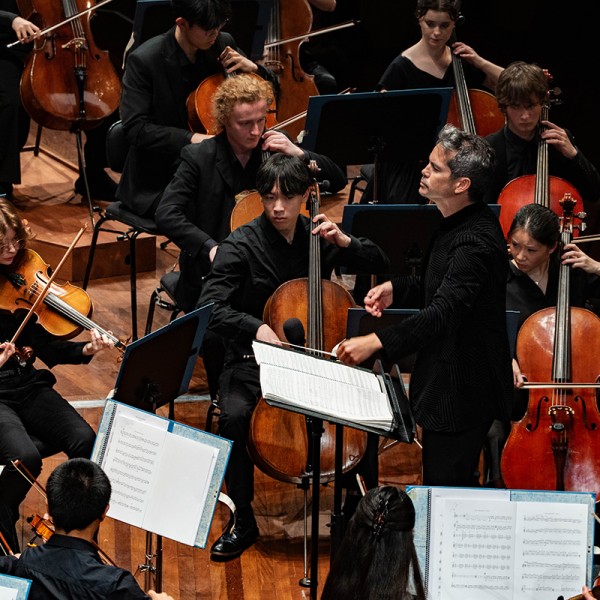
20th-century American music is one of my favourite genres and The Chairman Dances by John Adams is a great example of why. An ‘outtake’ from Adams’ opera Nixon in China depicting Chairman Mao dancing a foxtrot with his mistress could only have been written by an American during the 1980s while President Reagan was building a close relationship with the Soviet Union. Musically and politically clever, this was something majestic but also skewed, brought to life impeccably by Gemma New and the orchestra.

The first movement of Aaron Copland’s Clarinet Concerto is not easy to listen to. The mood is low, accentuated by shifting tonality and tightly woven clarinet and strings. That mood broke with the cadenza linking the two movements. Patrick Barry’s virtuoso clarinet playing was very clean, with a crisp, clear sound launching a jazzy liveliness, demanding energy and dexterity from the musicians. The eight bass players got to really strut their stuff with a great stomp.

Antrópolis by Gabriela Ortiz is a tantalising glimpse of Mexico City’s vitality and spirit. The surprising star? Timpani. In several brilliant, amazing solos, section principal Laurence Reese took centre stage like (but also quite unlike) the dancer who steals the floor and dazzles the crowd standing in the club.

New is celebrated for her attention to detail and texture, meticulous rhythmic control, and collaborative relationship with the orchestra. Leonard Bernstein’s Symphonic Dances from West Side Story demonstrated the extraordinary partnership between New and the NZSO. Together they brought us intense, hopeful teenage romance, energetic and vital dance in mambo and cha-cha, Cool young men circling, shouting, and posturing before the Rumble, and the tragic but powerful and emotional Finale. No words, outstanding musicians, great leadership. Unspeakably good.

Lucky Creatures | Regional News

Lucky Creatures

Written by: Joseph Trinidad

Te Herenga Waka University Press

Reviewed by: Tineke Buser

As the title suggests, Joseph Trinidad’s debut essay collection Lucky Creatures has proven to be an incredibly fortuitous read, nestling itself tenderly within my bookshelf and heart. Unfeigned and authentic, Trinidad’s writing provides a real rarity: familial intimacy. Adopting the reader as an honorary member of his pamilya, he dishes up a sensory medley. Prose-like in style, minutiae breathe life into the seemingly mundane. The age spots on Mami’s hands, Eleng’s salt-and-pepper hair, Papa’s foil pouch of prunes intertwine into a visceral image of family.

Immigrating from the Philippines at a young age whilst coming to terms with his gay identity, the author materialises his hardship with heartbreaking sincerity. “A graveyard almost convincingly dressed as a postcard”, his family bade goodbye to all the places they knew, “leaving everyone, the living and the dead”.

As a queer individual with an immigrant family, the nuances within Trinidad’s experience mirrored those of my own, verbalising struggles I have yet to put into words. To me, the most poignant aspect of this text is the portrayal of parental foreignness.

Moving during childhood is difficult, but a child’s identity is still unfinished. Their language is still forming, sense of belonging still taking shape. They can learn new words, new customs, new ways of calling somewhere “home”.

For the migrant parent, there is no such luxury. They are the ones who leave everything behind – their language, their culture, their community, the familiar contours of a life they once knew – so that their child can inherit a world larger than the one they were born into.

Growing up, I never considered what my parents had lost. That, much like the Trinidad family, identity had shifted from a physical location to the abstract. This type of isolation carries an inescapable weight, bearing “the same skin, the same voice, the same vices”, yet somehow feeling perpetually displaced.

There is a peculiar sadness in realising that your whānau is foreign. Not foreign to you, necessarily, but to the place they have been asked to call home. Perhaps that is the greatest fortune of Trinidad’s collection. It does not simply tell a story about immigration, queerness, or family; it gives language to the spaces between them.

The Missing | Regional News

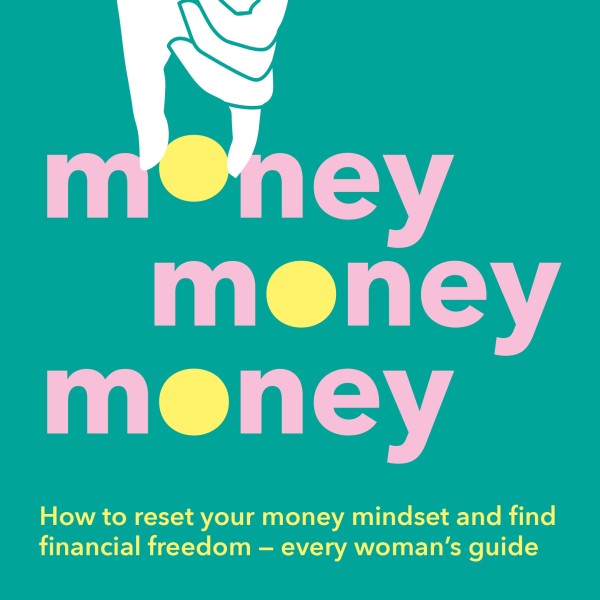
The Missing

Written by: Fleur McDonald

HarperCollins

Reviewed by: Denver Grenell

Fleur McDonald’s latest rural crime story The Missing invites the reader to tread the dusty streets of Kalgoorlie and its desert surroundings in Western Australia.

During Missing Persons Week, teenager Max disappears after a late-night party. Local detectives Angie Sullivan and Jack Higgins (from McDonald’s previous Kalgoorlie book The Prospect) are assigned the case, but come under pressure from Max’s parents and Lily, a tenacious radio show host who has been digging into the town’s growing list of unsolved missing persons cases.

The book tackles two timelines: the investigation into Max’s whereabouts and Max’s story leading up to his disappearance. The latter plot offers insight into Max and his desire to escape Kalgoorlie and his domineering father. It is interesting as it allows us to see Kalgoorlie from the perspective of the town’s youth, some of whom, like Max, yearn for something beyond the town’s borders.

Unfortunately, the main storyline, which takes up most of the book, is hindered by stock characters who are difficult to distinguish from one another. Angie and Lily have such similar backstories (both came to Kalgoorlie after broken relationships) that they seem identical, with only their job descriptions separating them. Jack also has a similar backstory, and while this points to the town’s transitory nature as a place where people come to escape their problems or forget the past, the sameness doesn’t do the lead characters any favours. McDonald, who pivoted from rural romance to rural crime in recent years, writes with a strong sense of place, particularly of outback Australia and the people who inhabit it, but this applies largely to the peripheral characters rather than the core cast.

McDonald's writing brings to mind Stephen King’s maxim that “the road to hell is paved with adverbs”, which I agree with. Coupled with a denouement that strains plausibility, The Missing missed the mark for me. But McDonald has sold over a million books and has another due out next month, so I am clearly in the minority here.

Brain Storm | Regional News

Brain Storm

Created by: Bryony Matthews

BATS Theatre, 2nd Sep 2026

Reviewed by: Stanford Reynolds

A live music experience that takes us through the story of musician Bryony Matthews’ traumatic head injury and years of recovery, Brain Storm is an immediately striking show. Against a sparsely decorated stage backed by mesmerising visuals (visual art by Nicholas Ahu, Storm music video by Harry Knight and Maria Webb, Recovery music visualiser by Spencer Hall), performers Matthews and Joshua Holmes create an unexpectedly rich and immersive world.

Matthews’ story unfolds through original songs interspersed with narration. In the narrated sections, the stage falls into darkness as Ahu’s visuals bring the story to life. The imagery is hypnotic and evocative, moving between recognisable places in Christchurch and dreamlike recreations. During the songs, the projection shifts into something more like a concert visualiser, with engrossing, otherworldly images that sweep us up in the music.

The sound design (soundscape by Holmes, sound engineering by Marcus Winstanley) is excellent. Every element is distinct and beautifully balanced. The two guitars, Matthews’ vocals, and the supporting tracks all have room to breathe. Reverb gives the music an affecting spaciousness, while driving drums and melodies provide momentum. The result is haunting, ethereal, and dreamlike, with Matthews delivering a clear and moving vocal performance throughout.

But it is Matthews’ story that gives Brain Storm its emotional weight. There is real vulnerability in what she shares, but also an unmistakable sense of gratitude. She speaks from a place of feeling fortunate, and this makes the experience feel less like a performance of hardship and more like an invitation to understand.

At its heart, Brain Storm asks us not to judge others too quickly, as we rarely know what someone else is carrying. It also offers a gentle challenge to our instinct to push harder when things become difficult. Sometimes, Matthews suggests, the answer is to “do less”, to accept rather than force.

It’s a thoughtful, beautifully crafted show, and I would love to see Bryony Matthews performing live again. Brain Storm travels to Hamilton and Auckland in October. Catch it if you can; I’ve already added the album to my playlists.

The Modern Dad | Regional News

The Modern Dad

Written by: Louis Davis 

Allen & Unwin

Reviewed by: Kerry Lee

Growing up is not easy, no matter when or where you were raised. Each generation has its own unique challenges, and the lessons we learn and that stick with us help us become the parents we want to be. 

TikTok star and one of New Zealand’s biggest online celebrities, Louis Davis explains what being a parent means to him in his new memoir The Modern Dad. Throughout the book, he explores his childhood in Te Tai Tokerau in New Zealand's Far North, the lessons he learned from his parents, and how he implements those lessons in his day-to-day life as a dad now.

I really liked this book and found it quite interesting. Despite his internet fame, Davis comes off as extremely down-to-earth, and his writing is easy and enjoyable to read.

There is one section in particular that I loved. Davis’ Māori heritage is extremely important to him, and he dedicates an entire chapter to breaking down the depiction of Māori fathers as violent and angry characters like Jake the Muss in Lee Tamahori’s Once Were Warriors. Davis explains that, traditionally, Māori men were playful, gentle, and friendly toward their children. In fact, many early missionaries to New Zealand noted what good fathers Māori men were – they were certainly not just warriors. Tackling the past and the present, this chapter dismantles the incorrect perception of Māori as bad fathers then and now. Davis sets the record straight, trying to dismiss a stereotype that circulated even before the movie came out in the 90s. 

Modern Dad would suit a reader either thinking about having kids or who has just had one and is looking for a little advice. Either way, it is a great read. Don’t go into it expecting a how-to manual though – I suspect they do not exist!

If you see this book, do not hesitate to pick it up. Modern Dad might be one of the best memoirs I’ve read all year.

Amarga Navidad (Bitter Christmas) | Regional News

Amarga Navidad (Bitter Christmas)

(M15)

111 minutes

(3 ½ out of 5)

Reviewed by: Isabella Smith

Pedro Almodóvar’s latest film contains many of the hallmark features that make his cinema so discernible: vibrant colours, eccentric and strong female protagonists, queer themes, politics of the gaze. This time, however, he turns the camera on himself to produce a scathing self-portrait that deals with the problem of vampirism in filmmaking.

The story intertwines two parallel plotlines set 20 years apart. Characters and events tug at and mirror each other and are influenced by Almodóvar’s own experiences, making the way life informs fiction not just a fact but the film’s mechanism.

Raúl (Leonardo Sbaraglia), a film director (his hair impossible not to recognise as a nod to Almodóvar’s own shock of silver) experiences creative crisis writing his new script in the apartment he shares with his devoted (but mostly ignored) partner Santi (Quim Gutiérrez). Drawing from his own situation and the life updates from Mónica (Aitana Sánchez-Gijón), his longtime PA – on sabbatical to care for her girlfriend whose son is undergoing a life-threatening surgery – he writes into being the anxiety-riddled indie film director Elsa (Bárbara Lennie) who has been reduced to making TV ads and can’t shake terrible migraine attacks. She meets her partner Bonifacio (Patrick Criado) at a hen’s night, where he performs a quintessentially Almodóvarian striptease to Grace Jones’ Libertango, after which she invites him to feature in an underwear advertisement.

She too largely ignores her partner (a revelation of the director’s own dwindling feelings about Santi) and is inspired to write a new script based on the lives of two bereft friends she is caring for on the Canary island Lanzarote. When Mónica reads Raúl’s script she immediately recognises herself and her partner.

The film explores the ethical problem and betrayal of repurposing another person’s trauma to propel a story while also highlighting the way fiction can pick and choose, stretch and bend those lived experiences. It is a self-conscious critique of Almodóvar’s own cinema which is filled with stories about the lives of women – though the women who populate his films are one of the reasons I go back time and again to his films.

While I’m always a fan of the cerebral, the cleverness sometimes got in the way of me experiencing any real affinity or depth of emotion toward the characters, and I still can’t work out the title. But that didn’t deter my enjoyment of getting to step foot in the colourful and strange world of Almodóvar.

Judy’s Encore | Regional News

Judy’s Encore

Written by: Ali Harper

Running at Circa Theatre till 26th Sep 2026

Reviewed by: Madelaine Empson

Judy Garland, “the greatest entertainer who ever lived – or probably will ever live” (Fred Astaire) made so many comebacks, “what more could you possibly want?” So quips a magnificent Ali Harper in Judy’s Encore, a night in concert with The Wizard of Oz star where the sequins are sparkling and the stakes are sky-high.

In August 1964, the stage and screen superstar was booed off the stage at Festival Hall Melbourne. Judy’s Encore imagines her redemption a few years later, before her death by barbiturate overdose in 1969. She returns to the venue to try to restore her reputation in this meta solo show where the audience is positioned as the sceptical Melbournites she is trying to win over.   

Culminating in a breathtaking Somewhere Over the Rainbow, Harper performs 18 songs accompanied by Francis Meria (piano) and Blair Latham (horns). With music direction and arrangement from Tom Rainey, Meria and Latham play Judy’s loving but long-suffering band, who try desperately to keep her on track and out of the booze bottle. The concert takes place on a striking, shiny stage (set design by Ian Harman) that puts on the ritz, especially when paired with Roz Willmott-Dalton’s costume design, which nods to the poppy dress Judy wore for her first Sydney appearance on the ill-fated tour.

Judy’s Encore sees our hero, already frayed, start to come undone. Comically downing half a bottle of whisky set atop a table in a sweet and silly moment of lightness from Latham, Harper’s Judy is sensitively portrayed. She is not the butt of the joke, nor is she the tragic heroine she so hated being called in her lifetime. She is a person, buoyed and torn down, devoured and spat out again, by other people.

The first-person format of the show does have its limitations: there’s only so much a public figure will ever divulge about themselves, so Harper can’t tell us lots about Judy’s life while playing Judy herself. The more you already know, the more Easter eggs you’ll enjoy. Like me, you’ll surely be inspired to go learn more about a woman who “gave so richly and so generously, that there was no currency in which to repay her” (James Mason, A Star Is Born).

Bug Songs Not Love Songs | Regional News

Bug Songs Not Love Songs

Written by: Phoebe Caldeiro, Lia Kelly, and Alayne Dick

Directed by: Alayne Dick

BATS Theatre, 25th Aug 2026

Reviewed by: Tanya Piejus

Welcome to Living Room Wall and the final concert by Bauble and Skump before the fumigators come to rid Rachel and Tim’s house of insects, these adorable ladybugs included. It’s a tragic premise for a delightfully entertaining show about bug life and human strife.

The music playing in the background (sound and lighting tech Jack McGee a.k.a. Moth) as we arrive and don pairs of antennae is appropriate – They Might Be Giants’ Doctor Worm and Owl City’s Fireflies are on the playlist.

Lia Kelly (Bauble) and Phoebe Caldeiro (Skump) are engaging and utterly charming performers, quickly bringing the audience into their world of insectoid musical magic. Their Flight of the Conchords-esque wit and lyricism (aided by co-writer and director Alayne Dick) is accompanied by adaptable and virtuosic playing skills as they flit between instruments and musical styles. Every song has us laughing out loud. It’s tough to pick a favourite but It’s Hard Being a Bug had me giggling insanely as Skump’s and, increasingly, Bauble’s obsession with lemons overtakes the existential dilemmas of arthropod life. Sadly, we don’t get to hear such bangers as Six Legs, Seven Things to Hold as the unfolding human conflict going on below – carefully scored on points by Skump – brings the fumigation ahead of schedule and we have to fast forward to crowd favourite Praying Mantis Wedding and a small-tear-inducing pair of songs about how the duo met and fell in love.

Kate Anderson’s set design particularly deserves mention as her backdrop evinces the top-down view of a suburban living room with simplicity and clarity. Her birthday card mini-set for It’s Your Special Day is inspired, has hilarious insect puns, and allows for funky head-bopping choreography from our performers.

From a clever homage to The Very Hungry Caterpillar, to the sub-plot of a failing human relationship, to the polished and clever anthems, Bug Songs Not Love Songs is entomological ecstasy from go to whoa.

Find Your Tribe | Regional News

Find Your Tribe

Presented by: Best on Tap

BATS Theatre, 19th Aug 2026

Reviewed by: Oliver Mander

The joy of improv theatre is that the unexpected can offer a great experience. It isn’t surprising that the experienced Best on Tap troupe deliver on that promise, but it is perhaps surprising that the story unfolding on stage reflected a drama built on well-realised characters and relationships, rather than mere comedic slapstick.

The performance is a gentle enquiry as to the nature of friendship and the different forms it takes. The audience is asked for only two prompts at the beginning of the show, and the story unfolds from there. The scaffolding might be minimal, but this was enough for this skilled troupe to create a coherent narrative.

The show’s title and theme Find Your Tribe lends itself well to an emotional journey and a reflective tone. I felt the performance began somewhat tentatively, but it didn’t take long for each of the five actors to develop distinct characters and relationships.

Wiremu Tuhiwai seemed to revel in creating outlandish cues for his fellow actors to follow (I couldn’t help feeling they were used to it). It resulted in drama punctuated with enough humour to provide contrast to its more reflective moments. Kate Whitaker added strongly to this emotional dynamic; we were taken from reflection to humour to sadness, and everywhere in between.

Improv theatre is inherently collaborative, and the performances and cues provided by Mary Little, Geoff Simmons, and Barry Miskimmin were all integral in adding further emotional depth to the show. By the end, the audience was fully invested in all the characters on stage.

Matt Hutton’s improvised live soundscape added further emotional context, responding deftly to the action on stage. My favourite sound moment was the beeping of hospital equipment somehow wrung from his Yamaha keyboard.

Quick-wittedness is a hallmark of improv theatre, and there was plenty of that on display from Best on Tap. Find your way to this show or their next for something beautifully unexpected.

El ser querido (The Beloved) | Regional News

El ser querido (The Beloved)

(M12)

135 minutes

(4 out of 5)

Reviewed by: Isabella Smith

I love books about writing and movies about cinema; they cut open the belly of the art form and expose its spleen and inner machinations. El ser querido (The Beloved) from Spanish director Rodrigo Sorogoyen does exactly this: a film set on a film set in 1930s Spanish-ruled Western Sahara, that is in fact being shot in Fuerteventura – another imperial outpost. This level of alienation plays out in other ways throughout, highlighting the power of cinema to deceive.

Javier Bardem plays Esteban Martínez, a controversial Spanish film director and celebrated Oscar and Cannes Palme d’Or winner who invites his estranged daughter Emilia Vera (Victoria Luengo) – whom he hasn’t seen for 13 years – to lunch and offers her a leading role in his upcoming film. The lunch is tense, setting the scene for what is to follow. Emilia accepts the role, but not without serious consideration of the trauma caused by her father’s drunken and often violent behaviour when she was a young girl – which Esteban flatly contests as fictions conjured up by her mother to pit her against him.

El ser querido might’ve been one of the best examples I’ve seen of actors having to act as though they aren’t acting. We see Emilia trying to keep it together when the camera is rolling. We witness Esteban’s controlling, anger-fuelled, and toxic manner on set, which is chillingly offset with sporadic bouts of charm that help maintain his mythic status among the crew.

While exploring a dysfunctional father-daughter relationship, it also lays bare the harsh and unglamorous realities of a film set, the power imbalances built into the industry, and the filmic devices that propel a story: narrative, scene composition, cinematography, sound. Scenes mirror or are pitted against each other (e.g. a tyrannical film director makes a film critiquing the Spanish Empire, built on the foundations of patriarchy). Fictive layers put reality on shaky grounds. The film switches between black and white, analogue, and colour, shifting mood and making the audience think about what function each camera serves. The sound at times is removed to strip a scene bare and home in on gesture and set. The same scene is performed over and over again. The sun scorches. The wind burns. The director always has the final say.

There were moments when the film lacked energy and I was hoping it would wrap up quickly. Whether this too was intentional, I wouldn’t be surprised.  

Myths & Legends | Regional News

Myths & Legends

Presented by: New Zealand Symphony Orchestra

Michael Fowler Centre, 15th Aug 2026

Reviewed by: Ruth Corkill

The driving rain of Wellington's dark streets is an appropriately dramatic prelude to tonight's concert. The previous evening, conductor Pietari Inkinen led the NZSO in an intense Wagner programme. I arrived expecting a gentler concert, only to find myself swept into an unexpected second epic.

With concertmaster Vesa-Matti Leppänen taking the role of soloist tonight, associate concertmaster Donald Armstrong stepped into the leadership of the first violins. Armstrong was the NZSO concertmaster throughout much of my childhood in Wellington, and it was a pleasure to see him leading the orchestra once again.

Sibelius' Pohjola's Daughter opens with the irresistible pull of a great tale, themes unfolding against a dramatic landscape of sound. Drawing on characters and stories from the Kalevala, a compilation of epic poetry from Finnish, Karelian, and Ingrian folklore, the music combines rich atmosphere with a sense of narrative momentum.

Following this with Lindberg's Violin Concerto No. 2 is an effective move. The more immediately accessible Sibelius provides a point of entry into a work whose contemporary language is often more dissonant and demanding, yet the two share enough musical whakapapa that clear lines of continuity emerge.

As violin soloist, Leppänen's playing is agile, vibrant, and entirely at home in the work's shifting terrain. His close relationship with the NZSO enables him to blend seamlessly into the orchestral texture before springing clear of it again. The passages shared between Leppänen and Armstrong are astonishing, their intricately intertwined lines evidence of the deep collegial understanding between these two outstanding musicians. Cellists Andrew Joyce and Ken Ichinose are similarly impressive.

The evening closes with Sibelius’ Lemminkäinen Suite, which draws on the same mythological source material as Pohjola's Daughter. The work also traces an indirect path back to Wagner, growing out of an operatic project that Sibelius conceived under Wagner's influence before ultimately charting his own course. Those musical and historical threads help to enrich the final leg of our journey, and send us back into Wellington's wet winter night feeling we have travelled further than we expected.

Radiance | Regional News

Radiance

Presented by: New Zealand Symphony Orchestra

Michael Fowler Centre, 14th Aug 2026

Reviewed by: Ruth Corkill

Always a welcome presence in Wellington, conductor Pietari Inkinen returns alongside tenor Simon O'Neill for an evening of Wagner excerpts, presented in association with the Wellington Wagner Society. While many audience members will know Wagner chiefly through the thunderous music of his Ring Cycle operas such as the iconic Ride of the Valkyries, this programme offers a chance to explore other corners of the composer's output through excerpts from two lesser-known operas, Tannhäuser and Parsifal.

One of the challenges of an excerpts programme is that it can feel disjointed, especially in a programme such as this that heavily features overtures and preludes from acts right across the seven hours of source material. Themes are introduced, tensions are established, and then we are whisked elsewhere before their full dramatic or emotional consequences have time to unfold. Fortunately, this is more than compensated for by the quality of musicianship on display.

Inkinen’s direction appears calm and focused. I’m always impressed by his ability to build a supportive relationship with an orchestra he does not routinely conduct, creating an environment in which musicians seem comfortable taking risks and responding to one another.

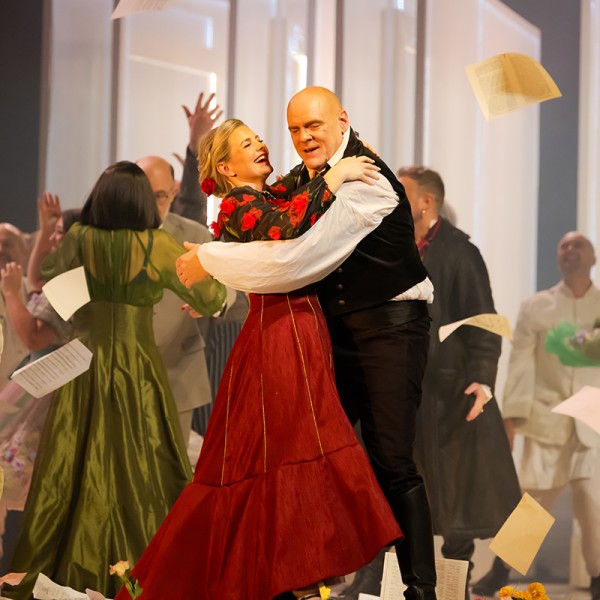
Tenor Simon O'Neill is so technically assured that his voice almost ceases to register as vocal production at all, feeling instead like spontaneous, emotionally motivated speech. Every phrase emerges naturally and cleanly, supported by an extraordinary mastery of the material. Particularly impressive is the subtle character work he brings to the excerpts. As he enters, he listens intently to the orchestra, creating the sense of a character absorbed in reflection before finding the impulse to speak. It is a generous choice, drawing attention to the music even as he establishes his own presence. He also creates a clear distinction between the impassioned Tannhäuser of the first half and the more reflective Parsifal of the second.

While the excerpts format inevitably leaves me wanting more, O'Neill's interpretive intelligence and Inkinen's assured leadership of an exceptional NZSO make a satisfying meal of these selections. More importantly, they send me away curious to seek out the complete operas for myself.

For the Love of Matthew | Regional News

For the Love of Matthew

Written by: Maria Di Leva

Altomare Publishing

Reviewed by: Jo Lucre

For the Love of Matthew is one mother’s story about her son Matthew. Maria Di Leva says she wants it to give hope to other parents out there who may be raising a child with special needs. In her memoir, Di Leva recounts Matthew’s story, from his early childhood right through to the 30-year-old man he is today.

What strikes me most is Di Leva’s heartfelt and deeply personal reflections of her journey as Matthew’s mother, as his friend, advocate, and lifelong champion. She gives an honest and unwavering account of Matthew’s life, from the life-changing diagnosis he received as a young child of severe autism with ADHD, to the independent, flourishing son she and his wider family know him as today.

In For the Love of Matthew, a strong and insightful Di Leva explores Matthew’s potential every step of the way, whether navigating the school years, a time on medication, or different plans and strategies – like supporting him to catch the bus on his own, which consistently and importantly grew Matthew’s independence and widened his opportunities.

It is very apparent throughout the book that Matthew is part of a tight-knit family and peer group. It is especially rewarding to read about how he has experienced the world his own way. He was selected for the 2023 Special Olympics World Summer Games in Berlin, where he proudly brought home a silver and bronze medal. He’s found a passion for hip-hop and a stable routine of keeping busy with work at New World and flatting independently.

Often, it is the people who stand behind you – who believe in you, fight for you, and push open doors that would otherwise remain shut – that make the intangible tangible. Matthew has achieved his own goals and independence, with the support of a loving family and a mother’s unwavering love.

By all accounts, the journey has not been easy. But Matthew’s mother hopes that this book “demonstrates that with faith and love, the impossible is possible.”


The Invite | Regional News

The Invite

(R16)

107 minutes

(4 out of 5)

Reviewed by: Isabella Smith

For anyone expecting a mature exploration of polyamory and non-conforming relationships, this film isn’t for you. For those wanting to laugh out loud, physically cringe, and immerse yourself in a tense, fast-paced comedy-drama testing what happens when a rocky marriage brushes up against the hot, atypical love between two eccentrics still in the throes of their honeymoon phase, then please go see The Invite.

Directed by Olivia Wilde, a decidedly unhappy married couple Angela (Wilde) and Joe (Seth Rogan) invite their upstairs neighbours Piña (Penélope Cruz) and Hawk (Edward Norton) to a dinner party. Destined from the start to be doomed, the evening doesn’t unfurl; it spirals, explodes, collapses, and drags itself exhausted to bed.  

Angela and Joe embody all the tropes of a marriage on thin ice (nit-picking, passive aggressiveness, complacency, blame) while Piña and Hawk flaunt their passion with loud banging and growling through the ceiling every night and lots of heavy petting on the sofa after dessert.

Cruz, as usual, is an onscreen magnetic force. Norton pulls off his moderately sleazy character effortlessly. Wilde is so tightly wound and anxious it makes you hold your breath. Rogan truly comes into his own in his spectacular performance of the down-and-out music teacher who was once in a rock ‘n’ roll band, undercutting the evening’s proliferating absurdities with incredulous one-liners that let a breeze into the claustrophobic atmosphere.

A four-piece chamber comedy, the simple premise makes for a film filled with dialogue, taking place in the intimacy of a few rooms in Joe and Angela’s recently renovated apartment. Nothing tells you that the audience is gripped more than hooting and hollering from somewhere out back of the theatre. The sharp command of tension had the audience at the film’s mercy, cleverly building and releasing in all the right moments. Pair this with the fact that everyone who has ever been in a relationship is most likely witnessing aspects of their own foibles on the big screen, and I imagine viewers come away feeling very seen – or rather – exposed.

I didn’t love the ending; it tied too neat a bow around the evening. At the same time, endings are hard and it’s difficult to know where to finish…

NOVA | Regional News

NOVA

Written by: Tim Corballis

Te Herenga Waka University Press

Reviewed by: Kerry Lee

From New Zealand author Tim Corballis comes this new novel NOVA, which explores issues we do not normally see in science fiction.

Set on a self-contained spaceship named Nova that is hurtling away from Earth and on its way to a new home on the star Telos, the novel explores the lives of the ship's inhabitants and the AI running everything, System. Nova is a generational ship, and the entire trip to their new home will take 60,000 years. This means that several generations will be born and die before they ever reach Telos. In NOVA, it’s been 300 years since the ship left Earth, and its inhabitants have completely lost touch with their original home’s roots.

Unlike other science fiction novels that see AI systems running amok or taking over the world, NOVA’s AI wants to understand the humans around it and struggles to do so at times.

A lot of novels treat supercomputers or AI as just machines, but System feels genuinely alive and, if I did not know any better, just as flesh-and-blood as the other characters. In fact, System became my favourite character. Its conversations with Kalla, a human with her own problems, make up the bulk of the story as they talk about topics and themes ranging from consciousness to the human condition.

While the other human characters are interesting and well written, it was Corballis’ rendering of System that made me think as no other science fiction novel has before.

Be warned: this is not Star Trek or Star Wars. NOVA will make you think about things you do not normally associate with science fiction, and that may put younger readers off. I believe it’s a novel for the more mature reader out there. I may have been in the Star Wars camp when I picked it up, but I stuck with NOVA and found it a fantastic read. 

Becoming an Anecdote | Regional News

Becoming an Anecdote

Written by: Mitchell Botting

Directed by: Mitchell Botting

BATS Theatre, 4th Aug 2026

Reviewed by: Numi Stössner

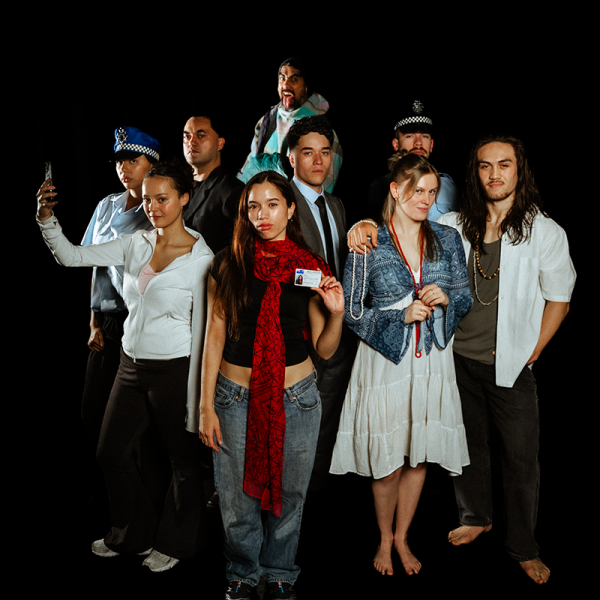
On entering the Dome in BATS Theatre, I immediately notice dozens of typed paper sheets hanging from the ceiling. They remind me of memories scattered throughout the mind. This first impression proves to be right, as the performance I am about to witness is, in short, a meditation on remembrance. It is my first time watching a solo performance and I’m not sure my attention will hold over 90 minutes with one actor alone. But how wrong I was.

Becoming an Anecdote is writer and director Mitchell Botting’s attempt to tell the tragic story of the death of his lost love. The second-person play is a recollection of Mitchell’s own memories spanning decades, navigating the complex relationship between himself (performed by Stevie Hancox-Monk) and “you”. Through time jumps between 2006, 2015, and 2024, Mitchell revisits selected moments before, during, and after “your” death, allowing the viewer to witness a defining period of his life. Next to these personal flashbacks, the performance also lets the viewer question the reliability of the narrator by showing how memories are shaped by humans and distorted by time.

This play manages to be as entertaining as it is heartbreaking. The reenactment of past conversations is supported by quotes projected on the wall, lighting effects, music, and interactive recorded voices. Hancox-Monk perfectly portrays the conflicting emotions connected to an impossible situation, captivating the awestruck audience until the end.

I leave full of questions and lingering thoughts, and I think that is exactly how I am meant to feel. All in all, this “fabricated memoir” is a brilliant interplay of heartfelt script and outstanding acting, showcasing the complexities of love, grief, and guilt. It is a beautiful homage to a long-lost love and also a reminder of the rippling effects of death on the ones left behind. This was a truly moving experience that I will not forget any time soon. If you have the chance to see it, don’t hesitate!

Geriatric Drift | Regional News

Geriatric Drift

Presented by: PopRox

Directed by: Nina Hogg and Mo Munn

BATS Theatre, 31st Jul 2026

Reviewed by: Zac Fitzgibbon

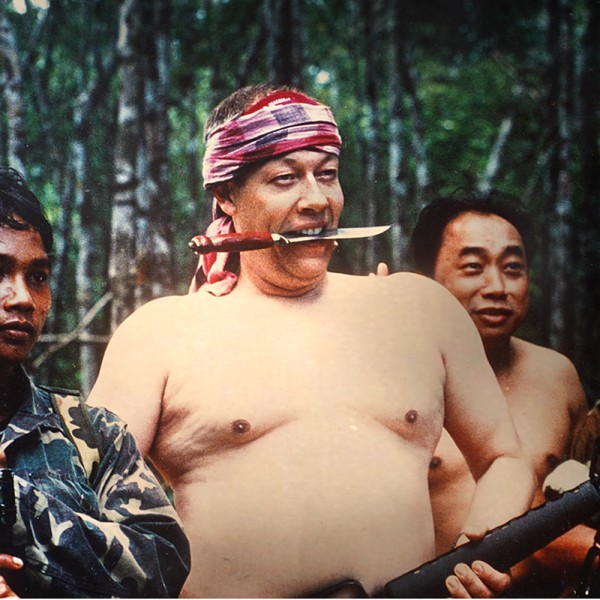
Being greeted by Shrewsbury-loving pensioners with a speedometer projected in the background (projection design by Nina Hogg) really sets the tone of Geriatric Drift. What follows is a story about four retirees on a journey to Northern Poland to obtain $20 socks, a rare and coveted item, for one of their great-great-great granddaughters.

Geriatric Drift is a parody of the global smash-hit franchise Fast & Furious, which, after 12 films, doesn’t seem to stop giving. What sets this show apart from these racer films is that this crew has lived long enough to be up to their 80th sequel.

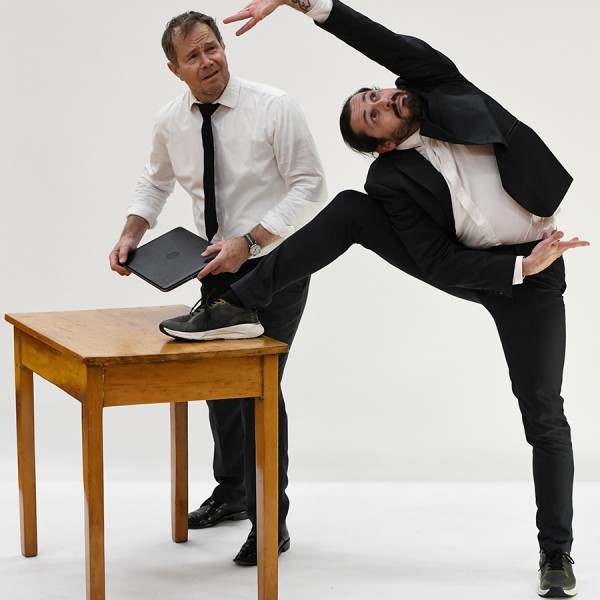
The show is completely improvised, with the cast asking for audience prompts to shape the story early on. All six performers – Hogg as The Rock, Dylan Hutton as Dominic Torretto, Tara McEntee as Letti, Jed Davies as Vince, Isaac Thomas as Paul Walker and others, and Austin Harrison as an additional character called Dmitri – have mastered the craft of improvisation. This results in a performance so cohesive, it feels like you genuinely are watching (yet another) Fast & Furious sequel.

Adding to the illusion that these characters are well beyond their ruby anniversary, ageing stage makeup (largely by Hogg) and costumes (individually sourced) truly transform the young cast into old-timers crossing the ocean to find socks.

Whilst these geriatrics are far from their rest home, they certainly know how to take the spotlight. The lighting design (Hogg) helps keep the focus on the characters, further immersing us in the comedy and highlighting the wild narrative. The design allows us to use our imagination to figure out all the crazy settings we’ve been transported to.

Geriatric Drift features hilarious improvisation that is sure to get you off your rocking chair. Watch out: things can get too fast, 2 Old, 2 Furious with quips that will make your false teeth fall out and a story that gets more chaotic and unhinged as it goes along. Here’s hoping these senior citizens hobble back to BATS ASAP.

Local Library | Regional News

Local Library

Written by: Dave Armstrong

Directed by: Conrad Newport

Circa Theatre, 25th Jul 2026

Reviewed by: Tanya Piejus

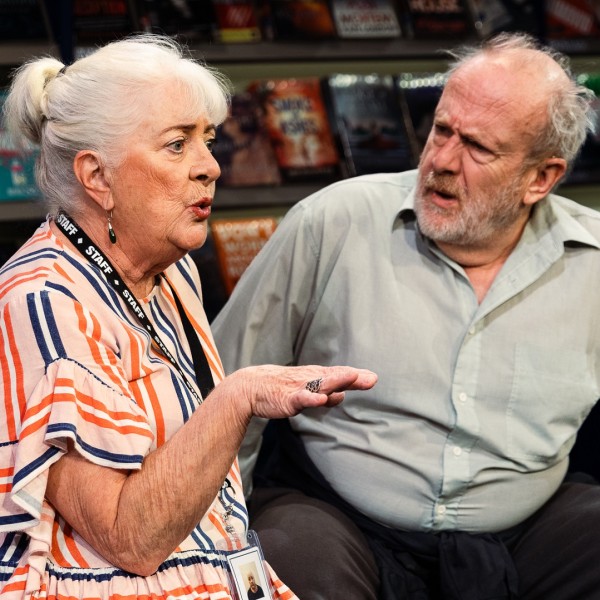
Dave Armstrong aptly describes his new comedy as a “love letter to readers, writers, and librarians” and has used a real story about his sister-in-law’s elderly neighbour as the launchpad for his narrative.

Local Library begins with conservative Boomer Paul Homewood (Peter Hambleton) having his book-borrowing rights suspended for hiding magazines to avoid paying the modest rental fee by stern senior librarian and social justice warrior Helen Nielsen (Jude Gibson). Initially poles apart in temperament, politics, and approach to life, over the course of Paul’s regular visits to the library, their battle of wills gradually thaws to an entente cordiale. They are united by literature and loneliness, discovering they have more in common than they would ever have thought.

Hambleton and Gibson are a charming pairing with great chemistry. Hambleton’s old-man shuffle and wonky tie (costume design by Sheila Horton) are a visual delight, while his butchering of “terrio Mowri”, stubborn northern English accent, and ridiculously anti-woke posturing are deliciously cringe-inducing. Gibson’s staunch librarian of 40 years’ standing, struggling not to be ousted from the best thing in her life, is believably vulnerable beneath her tough shell. They spark off each other beautifully and carry the 90-minute duologue with the panache of the seasoned pros they are. Conrad Newport’s delicate direction never gets in their way.

William Smith (lighting, set) and Azarael Ballard (sound) of Tungsten Projects Ltd have taken great care with the technical design. Their realistic setting has a suitably institutional feel with its community notices, stand of graphic novels, and neatly Dewey Decimalled books. The lights in the rows of shelves and above the issues desk creatively change the mood during scene transitions, accompanied by lively and suitably chosen music that bookends each chapter. The barking of Paul’s ever-changing company of dogs even comes from the right place behind the library entrance; attention to detail that will delight theatre nerds.

Witty and current with a deeper vein of meaning below the laughs, Local Library is bibliophilic bliss for anyone who loves a heartwarming story.
Mar Musa | Regional News

Mar Musa

(M)

97 minutes

(4 out of 5)

Reviewed by: Isabella Smith

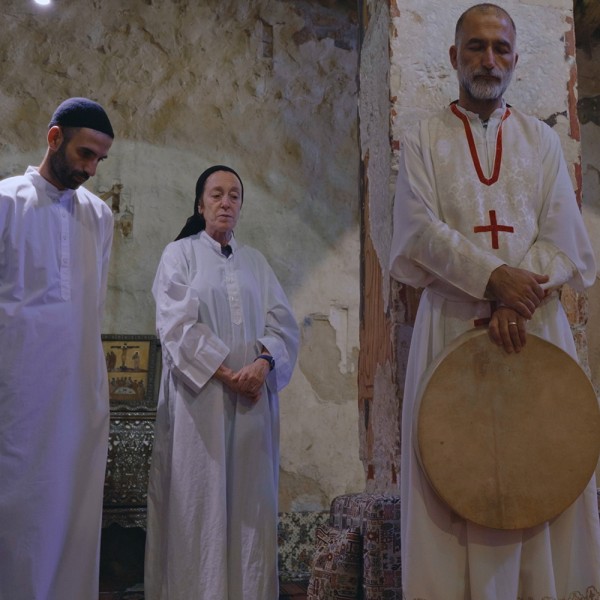
Mar Musa opens with the pastel colours of dawn sweeping across a vast desert landscape. Built into the side of a rugged, treeless mountain, the ancient monastery Deir Mar Musa al-Habashi looks more like a citadel, camouflaged save for the architectural straight lines that give it away.

The monastery’s history is deeply tied to the economic, political, and social fate of Syria, beginning in the 4th century. Mar Musa, directed by Shahab Kermani, follows the monks and nuns living in the monastery through intimate, observational storytelling as they navigate post-war devastation in Syria. The monastery’s key tenets are to practice and promote interfaith dialogue between Christians and Muslims, provide radical hospitality to all faiths, and close the distance between the two religious groups to move towards a more peaceful and mutual life.

We see the community sharing meals together with visitors of both faiths, smiling and laughing as they discuss profound theological questions and the horrors of war. Their faith is resolute, and love and understanding is at the heart of the gatherings. This is despite the grave personal losses and trauma experienced by everyone. Including the abduction of community founder Father Paolo Dall’Oglio by ISIL and the destruction of the 1,500 year old Mar Elian monastery in a nearby town.

The cinematography is spectacular, cutting between landscape, daily life, and interviews. Inside the monastery we get an intimate portrait of prayer and contemplation against the backdrop of Byzantine iconography, lit up by votive candles and columns of light coming through small openings near the ceiling.

The community visit nearby towns completely ravaged by war. The footage of street after street lined with rubble was some of the most shocking scenes of destruction I’ve ever seen – made all the more profound in the strength of the people that have chosen to remain.

The documentary is slow and meditative with a hypnotic score that won Best International Sound award at the Doc Edge Festival. I could’ve happily just watched the weather change on the desert below and listened to the monks, nuns, and visitors as they chatted over shared meals. Their lives are centred around healing the deep fractures within the country. The message of unity was poignant, and as the credits rolled, I could only wonder what the future holds for the place.