
Reviews - Regional News | Connecting Wellington

Shows

Rites of Passage | Regional News

Rites of Passage

Written by: Long Cloud Youth Theatre

Directed by: Ben Ashby and Shania Bailey-Edmonds

Te Auaha, 15th Nov 2022

Reviewed by: Tanya Piejus

A downstairs space at Te Auaha that I didn’t even know was there has become the intimate venue for Long Cloud Youth Theatre’s latest self-devised work. With its 16-year history of providing a development hothouse for the next generation of writing and performing talent, the company has created a raw and authentic piece based on each performer’s real-world experience of a rite of passage in their own lives, centred around the Head Boy’s end-of-school party.

The white-box space fronted by glass is cleverly employed as a traverse stage with some of the action happening behind the glass or in the next room above the opposite side of the stage. Excellent use is made of light and shadow by set and lighting designers Grace Newton and Hollie Cohen. Initially covered by a fabric screen, the action behind the glass is humorously revealed to not always be what it seems later in the performance. As the party ebbs and flows, we smoothly transition between what’s going on inside and outside the house.

Starting with an angst-ridden discussion about cannabis giving you orange wee, this is an often-funny rollercoaster ride of teenage dramas about breakups and makeups, breakdowns, grief, toxic masculinity, self-consciousness, first dates, inebriation, crushes, and relationships old and new. It’s the exquisite pain of growing up to which we can all relate in some way, presented mostly literally and sometimes more figuratively with movement and dance (choreographed by Nadiyah Akbar).

The stage floor is interestingly covered in patches of carpet and other soft textures with loose white sheets laid on top. I fear that these sheets will be tripping hazards but the cast all having bare feet seems to mitigate the risk and, by the end of the performance, the carnage of tangled cotton neatly reflects the emotional chaos we have witnessed on stage.

Long Cloud Youth Theatre always comes up with something uniquely their own and Rites of Passage is no exception.

Olive Copperbottom | Regional News

Olive Copperbottom

Written by: Penny Ashton and Charles Dickens

Circa Theatre, 9th Nov 2022

Reviewed by: Tanya Piejus

Penny Ashton is back in style at Circa Two with her trademark fridge magnets for a riotous, boisterous, and side-splittingly funny take on all things Dickens.

With a minimal set of a wooden trunk, barrel, and chair, the stage very much belongs to Ashton as she takes us through the life of poor waif Olive in Victorian England. Her mother’s dying advice is for Olive not to be at the mercy of men and their need for “fleshy carnival rides”, which Olive takes to heart as she makes her way in the world. In fact, misogyny – both Victorian and modern – is a strong theme throughout the performance and adds an extra layer of spice and freshness to Ashton’s witty narrative.

Ashton’s energy is unparalleled and for nigh on 90 minutes she flits between multiple larger-than-life characters with whom Olive’s colourful life is peppered. There’s Mrs Sourtart, keeper of the government-funded orphanage where Olive spends her youth; Edward “fill me with your love spores” Goodsort, Olive’s long-time besotted friend and eventual husband; Betsy Sozzle, the one-eyed tavernkeeper of the Cock and Swallow; Tiny Tommy Tidbit, the crippled orphan who turns out to be impossibly related to one of the other characters, and many more.

Littered with quotes, tropes, and the titles of just about every novel Dickens wrote, this is a satirical homage to the literary great that seeks out and exploits the best moments of his biting humour and sense of social justice. Ashton’s songs add an extra layer of fun and props to Michael Bell and his band who recorded the music specially – the quality is noticeable.

Technician Tom Smith’s straightforward lighting prettily colours the action and provides spotlighted pools for Ashton to work in. His precise timing of sound effects with Ashton’s stage movement is brilliant and makes for hilarious fight scenes. A nod of sage approval must also go to Elizabeth Whiting for Ashton’s effervescent and multipurpose dress.

Don’t miss this extraordinarily entertaining dose of Dickens.

Bill! Bill! Bill! | Regional News

Bill! Bill! Bill!

Written by: Jeremy Hunt, Felix Crossley-Pritchard, and Georgia Kellett

Directed by: Jeremy Hunt, Felix Crossley-Pritchard, and Georgia Kellett

BATS Theatre, 8th Nov 2022

Reviewed by: Finlay Langelaan

Produced by Dastardly Productions and Knot Theatre, Bill Bill Bill is a riotous, rollicking ride of absolute joyfulness. Three solo clowning performances are threaded together by moments of simple storytelling and physical comedy. Each new piece introduces a new character with a unique costume, and each delights in its own way. The show is almost entirely non-verbal, which only makes the emotional depth even more impressive.

Jeremy Hunt’s performance Papa is set in a train station as a young lad attempts to entertain himself. Hunt makes clever use of scale, reaching up to take his imaginary father’s hand, and embodies childishness perfectly. His audience interaction is excellent, prompting me to bowl him a cricket ball (which promptly breaks a window). I adore the simplicity of his set, a railway line produced from two stretches of hazard tape.

Treble in Paradise follows a self-obsessed conductor (Felix Crossley-Pritchard) who dies, goes to heaven, and learns to appreciate his orchestra. My personal favourite, Crossley-Pritchard manages to portray genuine remorse and remarkable character development in such a short piece. His sound design is impeccable, and the conductor’s miffed facial expressions at God’s mysterious ways are subtle enough to be hysterical.

The final solo is Georgia Kellett’s Piccup. It starts as a tale about Peek, a flightless bird reaching for the skies, but seems to abandon this narrative to instead focus on Peek trying to pick up a bar of soap to bathe. I’m a little disappointed not to see the costume pictured in the programme, which would have strengthened the piece enormously. Kellett shines during the interludes between solos, but Piccup feels held back by a weaker premise and distracting scenography.

Bill Bill Bill is a silly, endearing exploration into our world and beyond. All three performers demonstrate an absolute mastery of clowning and Kellett’s lighting design is crisp and evocative. The show’s Fringe awards are well earned, and it deserved a fuller house than it had.

Owls Do Cry | Regional News

Owls Do Cry

Presented by: Red Leap Theatre

Directed by: Malia Johnston

Circa Theatre

Reviewed by: Leah Maclean

Red Leap Theatre’s performative rendering of Janet Frame’s seminal novel Owls Do Cry is more of a commentary than a clear-cut adaptation. It tries to read between the lines of the evocative prose and lock onto its complexities and the things that are left unsaid. Did it work as a piece of multi-disciplinary theatre? It depends on who you ask, but I know that I left with complicated feelings.

Director Malia Johnston is a powerhouse in the arts world. Many will be familiar with her through her work on the World of WearableArt® Awards and her multimedia approach to performance. Going into a show with Johnston’s name attached guarantees a spectacle and a remarkable line-up of collaborators – from the performers through to the lighting (Rachel Marlow), sound (Eden Mulholland), and AV (Owen McCarthy). Owls Do Cry did not spare on any of those components but it may have muddied the premise. There was always something happening, whether it was broad physical theatre from the inimitable Ross McCormack, a magical display of light, or a gut-busting vocal solo by Hannah Lynch. It felt like your brain didn’t always get a chance to process the meaning.

Despite the sensory overload, the work exhibited a clever arrangement of dance, theatre, song, and design. Every element felt heartfelt, and each performer brought their own powerful presence. Margaret-Mary Hollins gave a delightfully understated performance as the troubled mother, and she was the one that I left thinking the most about. It was haunting, the way she seemed to float on the cusp of the action, there but not really there, acting as a silent witness. Then there were the handful of intimate duets performed by Hollins and McCormack, which transcended the physicality and inspired a deep, emotional response.

Owls Do Cry is a great example of what live theatre can be but for some it may sit in a mysterious realm of abstraction. While it might not be for everyone, Red Leap Theatre can be applauded for their bold interpretation of a New Zealand treasure.

Fab Beasts  | Regional News

Fab Beasts

Written by: Ryan Cundy and Catriona Tipene

Directed by: Catriona Tipene

BATS Theatre, 2nd Nov 2022

Reviewed by: Finlay Langelaan

Sitting in the stalls of The Stage, being serenaded by a pair of cheerful musicians (Joe Raea and Eddie Kerr), I can’t help but wonder what we’re in for. A unicorn had just welcomed us into BATS. A pink one, in a fluffy bikini.

The costumes, designed by Salome Grace, are nothing short of extraordinary. Five unicorns, played by Ryan Cundy, Kate Anderson, Brendan West, Katie Boyle, and Grace herself, take the stage, each a brighter colour than the last. The gang is threatened by God’s great flood, but only two can join Noah (Tom Kereama) on the Ark. Once I’ve wrapped my head around the premise, I can start to appreciate the sitcom style. The commentary on Wellington flatting is on the nose but still relevant and grounded by Victoria Martin.

Unfortunately, act one ends before the unicorn plot fully concludes. The musicians return and transition us to the second story, a Law and Order parody involving salami-related murders, but I’m left wondering whether the two narratives are independent or not. The songs are good fun with some excellent punchlines, but Raea seems to lack confidence. He has a fantastic voice that would benefit from higher energy.

My admiration of the show’s design is only magnified with the appearance of Boyle as the Loch Ness Monster in the second act. Somewhere between costume and set piece, the two-person ‘puppet’ towers above her friends and delights the whole house with her shenanigans.

Fab Beasts is almost brilliant. The actors themselves are excellent and I can’t compliment the costumes (and whatever Ness is) enough. However, the storyline feels like an afterthought, hastily pulled together to accommodate unicorns and the Loch Ness Monster. The scenography is a mixed bag. Some moments are clean and effective, especially the fire alarm gag, but the blackouts are painfully abrupt. With a little polish and a rejig of the script, this could be a truly fabulous beast of a show.

The Woman in Black | Regional News

The Woman in Black

Written by: Susan Hill and Stephen Mallatratt

Directed by: David Cox

Running at Gryphon Theatre until 12th Nov 2022

Reviewed by: Madelaine Empson

An old Arthur Kipps (Martin Tidy) has hired The Actor (Tim Macdonald) to help tidy up his five-hour manuscript, a story about an experience he had while visiting the small market town of Crythin Gifford some years ago. Kipps intends to read the manuscript to a small audience of friends and family, but The Actor has other ideas, employing a sound engineer and a host of special effects to bring the story to life.

The play switches between the actors in rehearsal and a dramatisation of the story, where Tidy as the real Arthur Kipps plays a host of different characters and Macdonald as The Actor plays a young Arthur Kipps. It sounds more confusing than it is! We are transported to Eel Marsh House, the ill-forsaken residence of the recently departed Mrs Alice Drablow. Kipps is Alice’s solicitor and must get her affairs in order, but is haunted by a spectre of a woman in black with a wasted face, whom the townspeople refuse to speak of.

Tidy and Macdonald rise to the challenge of a two-hour two-hander where neither actor is ever offstage. They are both marvellous. I hang off every word Macdonald says while Tidy shines as the reclusive Keckwick, with stellar accent work throughout. Another highlight of this Stagecraft production is Riley Gibson’s lighting design, an evocative interplay of smoke and shadow, darkness and vividity.

With an intriguing lack of music, Tanya Piejus’ sound design utilises silence and recorded sound to good effect, although opening night hiccups mean one important cue is unfortunately late. This is during the door scene in the first half, which I find jarring due to Macdonald’s sudden dramatic turn. There’s an expert build up of fear and thrill in the rest of his performance, and indeed, the production itself. Oftentimes, The Woman in Black is exhilaratingly scary. What fun it is to watch half a show between your fingers!

Pudgy Mediocre White Men Solve Your Problems | Regional News

Pudgy Mediocre White Men Solve Your Problems

Created by: Dylan Hutton and Austin Harrison

BATS Theatre, 18th Oct 2022

Reviewed by: Tanya Piejus

Welcome to the Hataitai Bowling Club and Dave and Bryan’s Improvaganza! They’ve just spent six weeks attending community “impro” classes (drop the V to be really cool) and will now solve your problems using their newfound passion and skills. As they claim, “There’s no issue you can’t ‘word at a time’ your way out of!”

Dylan Hutton (playing Bryan) and Austin Harrison (Dave) are veterans of the Wellington improvisation circuit and have created a cute premise and charmingly deliver a simple concept for an hour-long show that delighted its opening night audience. Dave and Bryan are indeed a bit pudgy in their colour-coordinated polo shirts and jeans, but the performers certainly aren’t mediocre as they bounce around their homely set and interact warmly with the crowd.

They’re ably assisted on keyboard by the oddly hirsute, 14-year-old Gabe (Matt Hutton) who needs to go home at 9pm and Scotty (Scott Maxim) who, with his trusty fire extinguisher Old Veronica, provides inspired lighting choices to elevate the action. His spotlighted diversions from the main scenes created some of the biggest laughs of the night.

Improv shows need a hook to distinguish them and in this case Harrison and Hutton turn audience members’ domestic and workplace annoyances into (somewhat dubious) life lessons by reinterpreting them through classic improv games and offering post-scene analysis to the problem’s owner. They achieve their aim of reframing issues such as a snoring girlfriend with varying degrees of success but always with a lot of laughter. They even manage to incorporate a couple of topical references, including the current stoush over funding for Shakespeare Globe Centre New Zealand’s University of Otago Sheila Winn Shakespeare Festival, and end with a sweet song about their friendship.

While improv is a common feature of Wellington theatre, Harrison and Hutton have created a show that is fresh and engaging with their own energy and problem-solving spin. And I now know why my cat has furballs (something to do with licking the carpet, apparently).


High Rise | Regional News

High Rise

Written by and performed by Cameron Jones

BATS Theatre, 14th Oct 2022

Reviewed by: Tanya Piejus

It’s the early 1980s and Henry Lewis, in a world of nobodies, wants to be a somebody. After a shaky start door-knocking to pitch property deals, he becomes a top real estate salesman, then successfully invests in stocks and shares. He finally achieves his dream of building New Zealand’s first New York-style, deluxe high-rise apartment building in Auckland’s Herne Bay, the Shangri-La (which is still there).

Described as a “solo adventure”, High Rise is a captivating one-man work of extraordinary physical theatre that started life as a Toi Whakaari student project and has grown and expanded into a fully fledged, award-winning tale of hubris and excess. It draws on the Ancient Greek myth of Icarus as Henry’s dubious moral choices lead him to fly too close to the metaphorical sun of financial affluence, causing him to crash and burn.

Cameron Jones uses little more than his body, a briefcase, swivel chair, hard hat, and a stack of papers, plus some well-placed lights and music, to tell Henry’s story. With clown work, self-created sound effects, and outstanding physicality, he brings us along on the road of ‘greed is good’ in an entirely original way. Anyone who remembers the 80s will revel in this yuppie character you love to hate, but this is one who can stand on his head on top of a briefcase holding a yoga pose while cheesy affirmations play.

Jones’ physical theatre prowess makes High Rise highly entertaining and fun, while posing interesting moral questions about the human desire for wealth and status. If you’re sitting in the front row, expect to be drawn literally into Henry’s world as Jones breaks the fourth wall and ad libs with the audience. The poignant ending to the story is a stab in the heart.

High Rise combines great storytelling with strong characterisation and unique presentation from an entirely committed actor to create a production that will leave you pondering the meaning of success long after you leave the theatre.

Sense and Sensibility | Regional News

Sense and Sensibility

Written by: Joy Hellyer and Paul Kay

Directed by: Joy Hellyer and Paul Kay

Cochran Hall, 13th Oct 2022

Reviewed by: Tanya Piejus

Jane Austen’s classic tale of restraint versus passion is given a freshen-up for the stage by zooming in on the thoughts of Elinor Dashwood in this new adaptation. The novel is written strongly from Elinor’s point of view, so it’s a logical step for her to become the narrator as well as one of the main protagonists. Joy Hellyer and Paul Kay have resisted the temptation to add much content of their own, a wise choice that allows Austen’s words and stories to shine.

As Elinor, who is on stage for almost the entire play taking part in or quietly watching the action, Amy Vines carries a huge responsibility. She manages it with dignity, grace, and strength as her reserve is offset by the bigger, more histrionic characters around her.

Hellyer and Kay’s decision to use a smaller cast and double several roles is an excellent one. The actors are highly capable and make the most of their opportunities to multi-task. Paul Stone’s boisterous Sir John Middleton and bilious Doctor Harris are a delight, and a moment of comedy gold is provided when Lee Dowsett morphs from the shy and awkward Edward Ferrars into his uncredited second character.

As Elinor’s sister Marianne, around whose love life much of the action revolves, Talia Carlisle is beautifully dramatic, her animated eyebrows deserving a credit of their own. The rest of the cast provide expert support and work together well as an ensemble without the urge to scene-steal.

The large costume team led by Meredith Dooley has done an outstanding job with a lush wardrobe that aptly suits the wealth and class of the characters. Amy Whiterod’s pretty set design, supported by Dave Soper’s lighting, is appropriately Regency as well as allowing the flexibility to house several locations through rearrangement of furniture.

Altogether, this is a successful adaptation and KAT Theatre production that will please Jane Austen fans and entertain those less familiar with her work.


Soft Carnage | Regional News

Soft Carnage

Created by: Brynley Stent

BATS Theatre, 11th Oct 2022

Reviewed by: Madelaine Empson

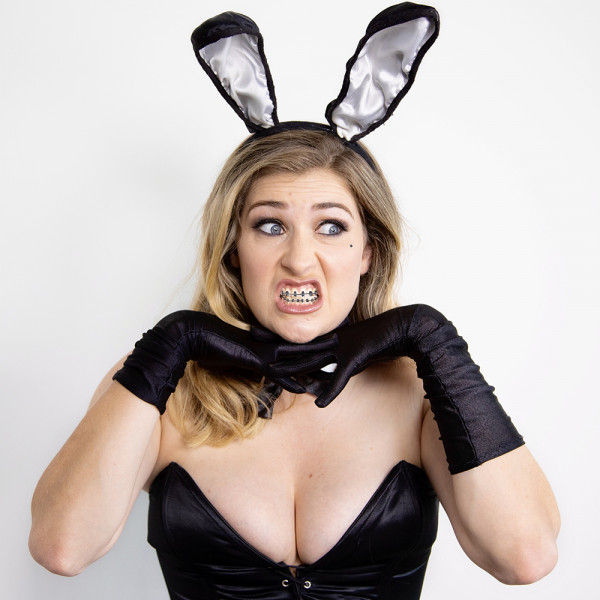
Brynley Stent’s got Mummy issues. The character, that is! The real Stent, a well-known New Zealand comedian and actor, plays a version of herself in this solo sketch comedy show, set in a therapist’s office over one painful session that costs $200-and-something but thankfully has a good outcome... in the end.

The whole premise of Soft Carnage is highly entertaining. We watch on as Stent uses humour as a coping mechanism, trying to avoid the hard questions by presenting comedy sketches that exasperate her therapist to no end but delight each of us in turn. Especially when we get handed a Cookie Time or bag of Mexicano Corn Chips. Pro-tip: sit in the front row.

As my plus one points out, solo sketch comedy is hard. Stent nails some sketches with massive energy (particularly when she does parkour), slick transitions, and an excellent incorporation of technology, from projections to sound effects to voiceovers by both automated voices and people with voices that sound automated. The best sketches feature super relatable content, like the torturous process of calling the IRD or getting rid of empty tech boxes. My favourites – which I’ve taken the liberty of naming here – are Peeing at Night, Throw it Away (Kids’ Edition), Bake Sale for Carol, and Mambo Italiano. As you can probably tell, this show is absolute chaos and I’m here for it.

Where I think Soft Carnage would really benefit is in the unpacking of some of the poignant themes within. I’d love to see Stent lean into the vulnerable moments, dive deeper into the big stuff. I absolutely get that humour as avoidance is a running theme of the show, so it’s clever that this literally plays out onstage. At the same time, I think the best comedy is the kind that makes you think, makes you feel, maybe even makes you cry as well as laugh. Stent hits the ball out of the park for the laughs, so I can’t wait to see her bounce the baby to the next level. Inside joke.

Why Are My Parents So Boring? | Regional News

Why Are My Parents So Boring?

Written by: Dan Bain

Directed by: David Ladderman

Tararua Tramping Club, 4th Oct 2022

Reviewed by: Tania Du Toit

What a fun silent show for the kids! My four-year-old (going on 40) son absolutely adores the characters and laughs from his belly as the cast members Laurel Mitchell, aka Mum, and Riley Brophy, aka Dad, start engaging the audience even before the show starts by looking for their oh-so-bored son, portrayed by Damon Manning. The kids all get involved in the hunt and their reactions are so funny.

This KidzStuff Theatre for Children production is suitable for all ages and has every child and parent laughing and participating. It really paints the picture of boring parents and an active, imaginative child. There are some unexpected surprises and tricks that keep you engaged – so much so, that my poor potty-training son almost didn’t go to the loo during the show, because he didn’t want to miss out on anything!

The costumes and props, created by Amalia Calder and David Ladderman, are great and well designed to change with the scenes. Amalia and Chrysalynn Calder did a great job with the sound effects and music, which bring the actions of the characters to life. I also have to mention that the theatre itself is very welcoming and upon entering, you get a whiff of freshly popped popcorn for sale as well as some lollies, and you get a very warm greeting from Tom Kereama. The seating area is versatile, and you have a choice of sitting in rows, along the wall, or even on the carpet right in front of the stage.

I loved asking my son what his favourite part of the show was. He answered that the kite was his favourite. It was pure magic to him, and based on the reaction of the other children, it definitely made an impression.

Why Are My Parents So Boring? is well worth a watch these school holidays!

A Boy Called Piano | Regional News

A Boy Called Piano

Written by: Fa’amoana John Luafutu and Tom McCrory

Directed by: Nina Nawalowalo

BATS Theatre, 4th Oct 2022

Reviewed by: Madelaine Empson

I’ve been staring at a blank screen most of the day and still can’t find words that would do A Boy Called Piano justice. How do you write a review when you’re speechless?

This Conch production follows three boys, Piano (Matthias Luafutu), Wheels (Rob Ringiao-Lloyd), and Piwi (Aaron McGregor), who are made wards of state and sent to Ōwairaka Boys’ Home in Auckland 1963. As director Nina Nawalowalo says, “this is the first time the experience of those in state care has come directly to the New Zealand stage told by a man who lived it” – Fa’amoana John Luafutu, whom she calls both a master storyteller and a survivor. I couldn’t agree more.

The Conch’s award-winning documentary feature A Boy Called Piano – The Story of Fa’amoana John Luafutu is woven throughout the show. Aural excerpts are intermingled with Mark Vanilau’s exceptional live piano playing, while shots from the film are projected onto three white fabric panels to great effect. Many of the scenes – especially conversational ones that lean towards realism – take place in front of the panels, while dream or symbolic sequences often unfold behind them. Hāmi Hawkins’ lighting design works in breathtaking synergy with both the performers and projections, particularly when creating dream states, flashbacks, and speckled light that filters down through the recurring theme of water.

The performers go where I’ve not seen many go. Luafutu deftly shifts between adult and child, bringing a gut-wrenching vulnerability to the latter. Ringiao-Lloyd is our vital comic relief and does it brilliantly, translating humour into a coping mechanism for his character, and McGregor gives his all to express unspeakable trauma.

In A Boy Called Piano what’s left unlit, unsaid, unsung still bruises. The volcano erupts and the lava is cooled by humour and restraint before bubbling to the surface again. Nawalowalo sculpts it all together with a featherlight touch or strong hands when needed, only adding to the power, the force, of this landmark work.