Reviews - Regional News | Connecting Wellington

Shows

Big Low Dream | Regional News

Big Low Dream

Presented by: Footnote New Zealand Dance

Choreographed by Jessie McCall

The Hannah, 10th Sep 2026

Reviewed by: Tanya Piejus

Footnote New Zealand Dance always delight and surprise with their boundary-pushing productions and Big Low Dream is another fine example of that ethos. Described as “an unorthodox homage to Dreams by The Cranberries”, this work is an imaginative reinterpretation of the sentiments expressed in that song’s lyrics. In addition, the pulsing soundtrack by 2025 Wellington Theatre Awards Sound Designer of the Year Thomas Lambert is cleverly constructed wholly from the instrumental and vocal layers of the song.

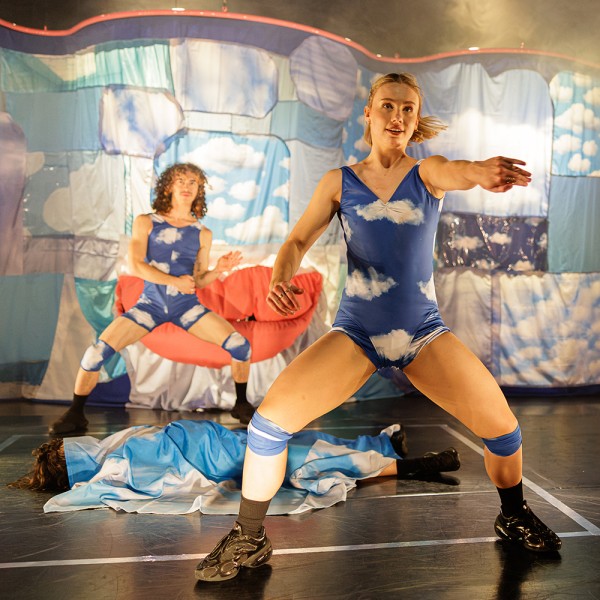
Four young dancers (Airu Matsuda, Sasha Matsumoto, Caleb Heke, and Millie Maden) open with an appropriately 90s set of spunky dance moves to the introductory bars of the song, but these are abruptly cut short by a blackout (lighting design by Tony Black). Then, we are launched into a dream world of moving clouds, drifting smoke, floating gold helium balloons in the shape of letters, and a giant, pink mouth that frequently spits out the performers into new movements and tableaux. The gorgeously patchworked backdrop by Anne de Geus holds this plump-lipped orifice, which the dancers operate to excellent effect.

The four dancers work seamlessly together and apart in a series of short segments, while the handful of floating gold letters spell out reconstituted words: DEATH, DREAM, TEAM, MATE, ART, and so on. These are a creative cue to the vibe and intention of many of the segments and sometimes become part of the choreography as they gently dance above the performers or form part of their tableaux.

The hard-working dancers manage all the other simple, recycled props too. Perspex triangles start as teeth inside the sinisterly gaping mouth, are taped together to become a crown, and are used as daggers. A square of the same stretchy material the dancers’ outfits are made from is a superhero’s cape, a portable backdrop, and finally a shroud.

Like dreams themselves, this new dance work is ever-changing, surreal, and sometimes hilarious. So, slip on your virtual pyjamas and drift into the land of the Sandman with Footnote Dance.
Dinner’s Getting Cold | Regional News

Dinner’s Getting Cold

Written by: Mamaeroa Munn

BATS Theatre, 9th Sep 2026

Reviewed by: Tanya Piejus

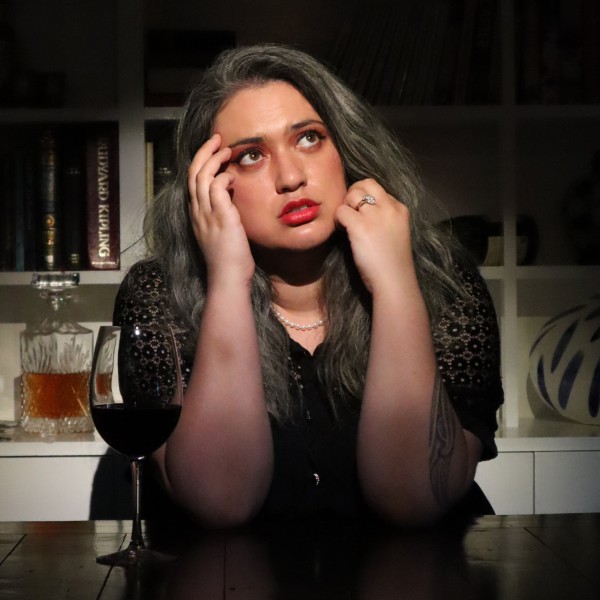
A solo psychological thriller with lashings of dark humour, Dinner’s Getting Cold concerns a woman somewhere in the past played by the production’s writer Mamaeroa (Mo) Munn (Ngāi Tahu, Ngāpuhi) waiting for her husband to come home for dinner.

She starts off confidently telling us about the whirlwind beginnings of their relationship where John swept her off her feet after their eyes met across a smoke-filled office. Romantic dates, gooey compliments, and lavish gifts preceded a quick marriage, house buying, and domestic bliss. This all seems like an unreachable dream come true for “a Maōri girl” who’s always been a klutz and told she’s a disappointment. As the evening wears on, wine is swilled and we learn the twisted truth about the nature of their relationship and why John still hasn’t come home.

Munn is a gifted comedian and able to skilfully draw out the emotional depths of the situation her character is swamped in, both in her writing and her performance. Decades of trauma and abuse are unravelled in seemingly throwaway lines and the sudden realisation of the enormity of what has happened to John occurs through a simple and otherwise innocuous question. Her final image is a uniquely delicious moment of comedy horror.

The semi-realistic setting (production by Quentin Potts (Ngāti Kahungunu), Aroha Faletolu (Ngā Puhi), and Ralph Hilaga) is a retro fanatic’s delight of mid-20th century gorgeousness. Furniture and appliances suggest 50s, pop music suggests 60s, and cultural references suggest 70s. The nebulousness of the exact time we’re in feels deliberate, revealing how trapped within this world our protagonist is and that this story could belong to any woman.

Tough themes often hit hardest when their truth is revealed through cleverly pitched comedy and that’s clearly the case with Dinner’s Getting Cold. Without the laughs, this hour of storytelling could be emotionally torturous for its audience. The healthy dash of mystery also propels it forward to its seemingly inevitable ending.

Blackpill | Regional News

Blackpill

Written by: Rachel McLean

Directed by: Rachel McLean

BATS Theatre, 9th Sep 2026

Reviewed by: Tanya Piejus

Part of the TAHI Festival of Solo Performance, Blackpill is a confronting verbatim play taken from the online forums of the manosphere where incels preach their violent and dogmatic ideology, express profound hatred for women, and share their pervasive loneliness. 

Anyone who has watched Adolescence or Louis Theroux’s Inside the Manosphere on Netflix will have some idea of what to expect. However, Rachel McLean’s play goes to a deeper level of toxic masculinity – and emasculinity – by taking her text straight from the pernicious anonymity of the internet. What results is a brutal exposé of a sub-culture that is extraordinarily warped in its view of life.

Zachary Klein is a devastatingly effective performer. Starting with simulated masturbation, he brilliantly embodies the diverse facets of the incel world from the clichéd basement-dweller to the looksmaxxing poser to the severely depressed, socially isolated loner contemplating suicide as the only solution to his entirely joyless existence. It is this last persona that hits hardest, along with the realisation that these men hate each other, and themselves, as much as – or maybe more – than they hate women.

Rachel McLean’s direction is as accomplished as her scriptwriting, making the visual presentation of a solo performance constantly interesting. And I’m always excited when I see Rebekah de Roo’s name on the crew list. Her production and AV design more than meet my high expectations. A multi-panelled, monochrome screen behind Klein becomes a canvas for a complex and ever-changing, equally monochrome kaleidoscope of imagery, helpful definitions of the language of inceldom, distorted videos of Klein, and hate-filled rants from the chatrooms. Lucas Neal’s lighting design is also superb with highly effective use of practical lamps and subtle colour tones to complement and highlight the action. Ben Kelly’s liminal sound design rounds out the production’s netherworld between reality and the limbo of cyberspace.

Like its glossy Netflix cousins, Blackpill is blisteringly truthful, painfully revealing, and will leave you wondering where and why it all went so horribly wrong.

Flight Club | Regional News

Flight Club

Written by: Zody Takurua

Directed by: Ahi Karunaharan

BATS Theatre, 9th Sep 2026

Reviewed by: Zac Fitzgibbon

How do you hold what you are given when someone passes away? Is being needed the same as being loved? How does loneliness impact our actions? These are some of the many questions that Flight Club, written and performed by Zody Takurua (Ngā Rauru, Te Kāhui Rere), poses. Directed by Ahi Karunaharan, the piece follows someone growing up in a fractured family, entering foster care, and making sense of what they carry as a result. Utilising the pūrākau of kuaka, the bar-tailed godwit, child of Tāne and great storyteller, the narrative is interwoven with an equally remarkable tale.

Heartbreaking, real, and relatable, this solo show could touch the innermost part of everyone’s wairua. Through design (mentored by Grace O’Brien) and Takurua’s performance and words, the idea of how difficult it is to hold what people leave behind particularly moves me. Flight Club challenges you to feel, connect, and consider so much in such a short time.

The motif of the heartbeat (sound design by Mannuel Caballero) pulsating through the space enriches the performance. It feels like the stone in the kuaka’s throat urging him to return to Aotearoa, but also a signal for yet another moving conversation. Lighting (Alexander Dickson) is dramatic and at times playful; the way it interacts with Takurua’s body creates a perfect partnership. I enjoy the inherent queerness of Flight Club, the beauty of it creeping into the softest of moments. I would love this to be explored more.

Takurua soars with outstretched wings. With tact and dexterity, they switch from thoughtful, tear-jerking remarks to proclamations of bountiful humour. Their movements flow like a manu gliding in the sky. Vulnerable points of human connection are poignant, particularly during audience interaction.

Touching parts of grief I didn’t even consider, I feel Flight Club helping to heal my wounds. Even if you see it multiple times (and I implore you to do so), you will collect new fragments of brilliant wisdom. Part of the TAHI New Zealand Festival of Solo Performance x BATS Theatre Residency for LGBTQIA+ artists, this show is filled with nothing but aroha and ātaahua. Arohanui Zody Takurua.

Brain Storm | Regional News

Brain Storm

Created by: Bryony Matthews

BATS Theatre, 2nd Sep 2026

Reviewed by: Stanford Reynolds

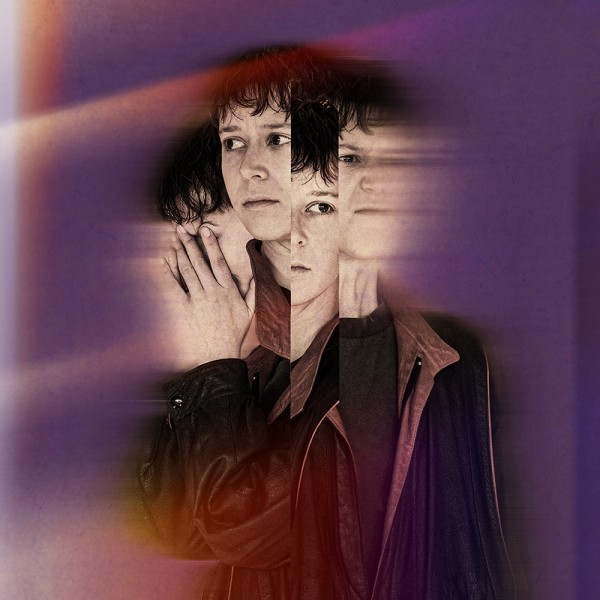
A live music experience that takes us through the story of musician Bryony Matthews’ traumatic head injury and years of recovery, Brain Storm is an immediately striking show. Against a sparsely decorated stage backed by mesmerising visuals (visual art by Nicholas Ahu, Storm music video by Harry Knight and Maria Webb, Recovery music visualiser by Spencer Hall), performers Matthews and Joshua Holmes create an unexpectedly rich and immersive world.

Matthews’ story unfolds through original songs interspersed with narration. In the narrated sections, the stage falls into darkness as Ahu’s visuals bring the story to life. The imagery is hypnotic and evocative, moving between recognisable places in Christchurch and dreamlike recreations. During the songs, the projection shifts into something more like a concert visualiser, with engrossing, otherworldly images that sweep us up in the music.

The sound design (soundscape by Holmes, sound engineering by Marcus Winstanley) is excellent. Every element is distinct and beautifully balanced. The two guitars, Matthews’ vocals, and the supporting tracks all have room to breathe. Reverb gives the music an affecting spaciousness, while driving drums and melodies provide momentum. The result is haunting, ethereal, and dreamlike, with Matthews delivering a clear and moving vocal performance throughout.

But it is Matthews’ story that gives Brain Storm its emotional weight. There is real vulnerability in what she shares, but also an unmistakable sense of gratitude. She speaks from a place of feeling fortunate, and this makes the experience feel less like a performance of hardship and more like an invitation to understand.

At its heart, Brain Storm asks us not to judge others too quickly, as we rarely know what someone else is carrying. It also offers a gentle challenge to our instinct to push harder when things become difficult. Sometimes, Matthews suggests, the answer is to “do less”, to accept rather than force.

It’s a thoughtful, beautifully crafted show, and I would love to see Bryony Matthews performing live again. Brain Storm travels to Hamilton and Auckland in October. Catch it if you can; I’ve already added the album to my playlists.

Judy’s Encore | Regional News

Judy’s Encore

Written by: Ali Harper

Running at Circa Theatre till 26th Sep 2026

Reviewed by: Madelaine Empson

Judy Garland, “the greatest entertainer who ever lived – or probably will ever live” (Fred Astaire) made so many comebacks, “what more could you possibly want?” So quips a magnificent Ali Harper in Judy’s Encore, a night in concert with The Wizard of Oz star where the sequins are sparkling and the stakes are sky-high.

In August 1964, the stage and screen superstar was booed off the stage at Festival Hall Melbourne. Judy’s Encore imagines her redemption a few years later, before her death by barbiturate overdose in 1969. She returns to the venue to try to restore her reputation in this meta solo show where the audience is positioned as the sceptical Melbournites she is trying to win over.   

Culminating in a breathtaking Somewhere Over the Rainbow, Harper performs 18 songs accompanied by Francis Meria (piano) and Blair Latham (horns). With music direction and arrangement from Tom Rainey, Meria and Latham play Judy’s loving but long-suffering band, who try desperately to keep her on track and out of the booze bottle. The concert takes place on a striking, shiny stage (set design by Ian Harman) that puts on the ritz, especially when paired with Roz Willmott-Dalton’s costume design, which nods to the poppy dress Judy wore for her first Sydney appearance on the ill-fated tour.

Judy’s Encore sees our hero, already frayed, start to come undone. Comically downing half a bottle of whisky set atop a table in a sweet and silly moment of lightness from Latham, Harper’s Judy is sensitively portrayed. She is not the butt of the joke, nor is she the tragic heroine she so hated being called in her lifetime. She is a person, buoyed and torn down, devoured and spat out again, by other people.

The first-person format of the show does have its limitations: there’s only so much a public figure will ever divulge about themselves, so Harper can’t tell us lots about Judy’s life while playing Judy herself. The more you already know, the more Easter eggs you’ll enjoy. Like me, you’ll surely be inspired to go learn more about a woman who “gave so richly and so generously, that there was no currency in which to repay her” (James Mason, A Star Is Born).

Bug Songs Not Love Songs | Regional News

Bug Songs Not Love Songs

Written by: Phoebe Caldeiro, Lia Kelly, and Alayne Dick

Directed by: Alayne Dick

BATS Theatre, 25th Aug 2026

Reviewed by: Tanya Piejus

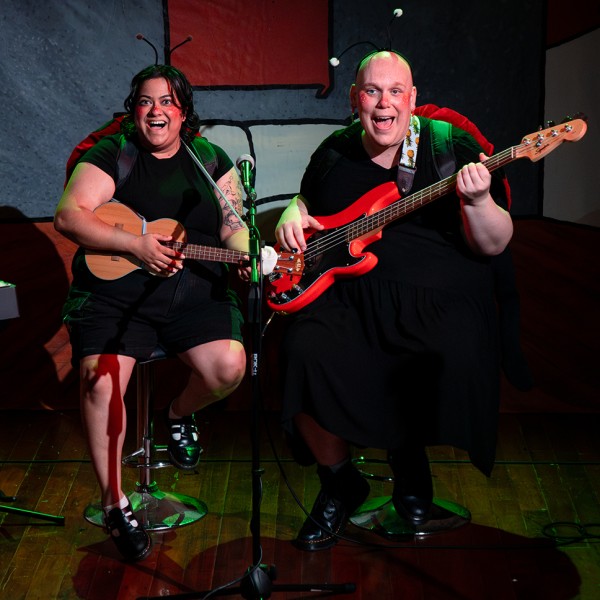
Welcome to Living Room Wall and the final concert by Bauble and Skump before the fumigators come to rid Rachel and Tim’s house of insects, these adorable ladybugs included. It’s a tragic premise for a delightfully entertaining show about bug life and human strife.

The music playing in the background (sound and lighting tech Jack McGee a.k.a. Moth) as we arrive and don pairs of antennae is appropriate – They Might Be Giants’ Doctor Worm and Owl City’s Fireflies are on the playlist.

Lia Kelly (Bauble) and Phoebe Caldeiro (Skump) are engaging and utterly charming performers, quickly bringing the audience into their world of insectoid musical magic. Their Flight of the Conchords-esque wit and lyricism (aided by co-writer and director Alayne Dick) is accompanied by adaptable and virtuosic playing skills as they flit between instruments and musical styles. Every song has us laughing out loud. It’s tough to pick a favourite but It’s Hard Being a Bug had me giggling insanely as Skump’s and, increasingly, Bauble’s obsession with lemons overtakes the existential dilemmas of arthropod life. Sadly, we don’t get to hear such bangers as Six Legs, Seven Things to Hold as the unfolding human conflict going on below – carefully scored on points by Skump – brings the fumigation ahead of schedule and we have to fast forward to crowd favourite Praying Mantis Wedding and a small-tear-inducing pair of songs about how the duo met and fell in love.

Kate Anderson’s set design particularly deserves mention as her backdrop evinces the top-down view of a suburban living room with simplicity and clarity. Her birthday card mini-set for It’s Your Special Day is inspired, has hilarious insect puns, and allows for funky head-bopping choreography from our performers.

From a clever homage to The Very Hungry Caterpillar, to the sub-plot of a failing human relationship, to the polished and clever anthems, Bug Songs Not Love Songs is entomological ecstasy from go to whoa.

Find Your Tribe | Regional News

Find Your Tribe

Presented by: Best on Tap

BATS Theatre, 19th Aug 2026

Reviewed by: Oliver Mander

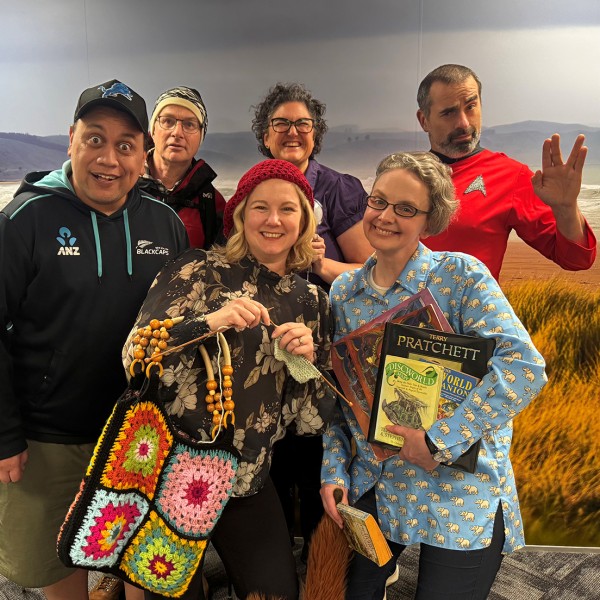
The joy of improv theatre is that the unexpected can offer a great experience. It isn’t surprising that the experienced Best on Tap troupe deliver on that promise, but it is perhaps surprising that the story unfolding on stage reflected a drama built on well-realised characters and relationships, rather than mere comedic slapstick.

The performance is a gentle enquiry as to the nature of friendship and the different forms it takes. The audience is asked for only two prompts at the beginning of the show, and the story unfolds from there. The scaffolding might be minimal, but this was enough for this skilled troupe to create a coherent narrative.

The show’s title and theme Find Your Tribe lends itself well to an emotional journey and a reflective tone. I felt the performance began somewhat tentatively, but it didn’t take long for each of the five actors to develop distinct characters and relationships.

Wiremu Tuhiwai seemed to revel in creating outlandish cues for his fellow actors to follow (I couldn’t help feeling they were used to it). It resulted in drama punctuated with enough humour to provide contrast to its more reflective moments. Kate Whitaker added strongly to this emotional dynamic; we were taken from reflection to humour to sadness, and everywhere in between.

Improv theatre is inherently collaborative, and the performances and cues provided by Mary Little, Geoff Simmons, and Barry Miskimmin were all integral in adding further emotional depth to the show. By the end, the audience was fully invested in all the characters on stage.

Matt Hutton’s improvised live soundscape added further emotional context, responding deftly to the action on stage. My favourite sound moment was the beeping of hospital equipment somehow wrung from his Yamaha keyboard.

Quick-wittedness is a hallmark of improv theatre, and there was plenty of that on display from Best on Tap. Find your way to this show or their next for something beautifully unexpected.

Becoming an Anecdote | Regional News

Becoming an Anecdote

Written by: Mitchell Botting

Directed by: Mitchell Botting

BATS Theatre, 4th Aug 2026

Reviewed by: Numi Stössner

On entering the Dome in BATS Theatre, I immediately notice dozens of typed paper sheets hanging from the ceiling. They remind me of memories scattered throughout the mind. This first impression proves to be right, as the performance I am about to witness is, in short, a meditation on remembrance. It is my first time watching a solo performance and I’m not sure my attention will hold over 90 minutes with one actor alone. But how wrong I was.

Becoming an Anecdote is writer and director Mitchell Botting’s attempt to tell the tragic story of the death of his lost love. The second-person play is a recollection of Mitchell’s own memories spanning decades, navigating the complex relationship between himself (performed by Stevie Hancox-Monk) and “you”. Through time jumps between 2006, 2015, and 2024, Mitchell revisits selected moments before, during, and after “your” death, allowing the viewer to witness a defining period of his life. Next to these personal flashbacks, the performance also lets the viewer question the reliability of the narrator by showing how memories are shaped by humans and distorted by time.

This play manages to be as entertaining as it is heartbreaking. The reenactment of past conversations is supported by quotes projected on the wall, lighting effects, music, and interactive recorded voices. Hancox-Monk perfectly portrays the conflicting emotions connected to an impossible situation, captivating the awestruck audience until the end.

I leave full of questions and lingering thoughts, and I think that is exactly how I am meant to feel. All in all, this “fabricated memoir” is a brilliant interplay of heartfelt script and outstanding acting, showcasing the complexities of love, grief, and guilt. It is a beautiful homage to a long-lost love and also a reminder of the rippling effects of death on the ones left behind. This was a truly moving experience that I will not forget any time soon. If you have the chance to see it, don’t hesitate!

Geriatric Drift | Regional News

Geriatric Drift

Presented by: PopRox

Directed by: Nina Hogg and Mo Munn

BATS Theatre, 31st Jul 2026

Reviewed by: Zac Fitzgibbon

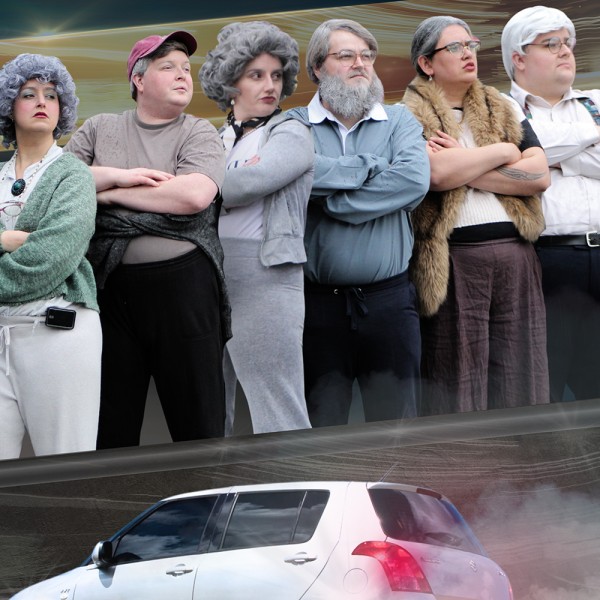
Being greeted by Shrewsbury-loving pensioners with a speedometer projected in the background (projection design by Nina Hogg) really sets the tone of Geriatric Drift. What follows is a story about four retirees on a journey to Northern Poland to obtain $20 socks, a rare and coveted item, for one of their great-great-great granddaughters.

Geriatric Drift is a parody of the global smash-hit franchise Fast & Furious, which, after 12 films, doesn’t seem to stop giving. What sets this show apart from these racer films is that this crew has lived long enough to be up to their 80th sequel.

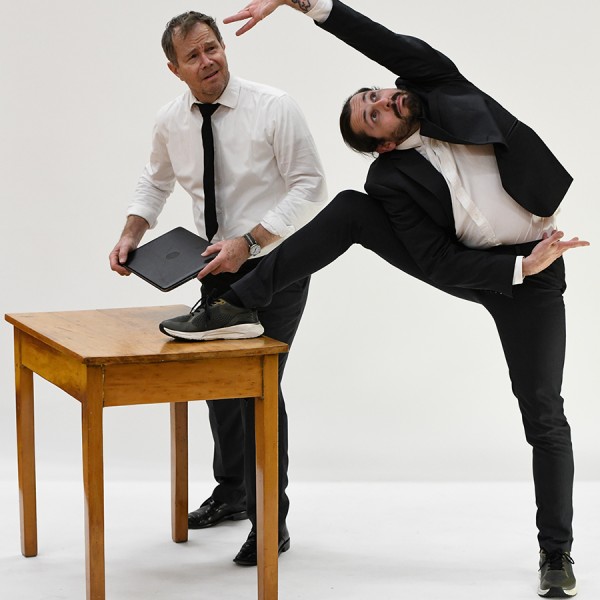
The show is completely improvised, with the cast asking for audience prompts to shape the story early on. All six performers – Hogg as The Rock, Dylan Hutton as Dominic Torretto, Tara McEntee as Letti, Jed Davies as Vince, Isaac Thomas as Paul Walker and others, and Austin Harrison as an additional character called Dmitri – have mastered the craft of improvisation. This results in a performance so cohesive, it feels like you genuinely are watching (yet another) Fast & Furious sequel.

Adding to the illusion that these characters are well beyond their ruby anniversary, ageing stage makeup (largely by Hogg) and costumes (individually sourced) truly transform the young cast into old-timers crossing the ocean to find socks.

Whilst these geriatrics are far from their rest home, they certainly know how to take the spotlight. The lighting design (Hogg) helps keep the focus on the characters, further immersing us in the comedy and highlighting the wild narrative. The design allows us to use our imagination to figure out all the crazy settings we’ve been transported to.

Geriatric Drift features hilarious improvisation that is sure to get you off your rocking chair. Watch out: things can get too fast, 2 Old, 2 Furious with quips that will make your false teeth fall out and a story that gets more chaotic and unhinged as it goes along. Here’s hoping these senior citizens hobble back to BATS ASAP.

Local Library | Regional News

Local Library

Written by: Dave Armstrong

Directed by: Conrad Newport

Circa Theatre, 25th Jul 2026

Reviewed by: Tanya Piejus

Dave Armstrong aptly describes his new comedy as a “love letter to readers, writers, and librarians” and has used a real story about his sister-in-law’s elderly neighbour as the launchpad for his narrative.

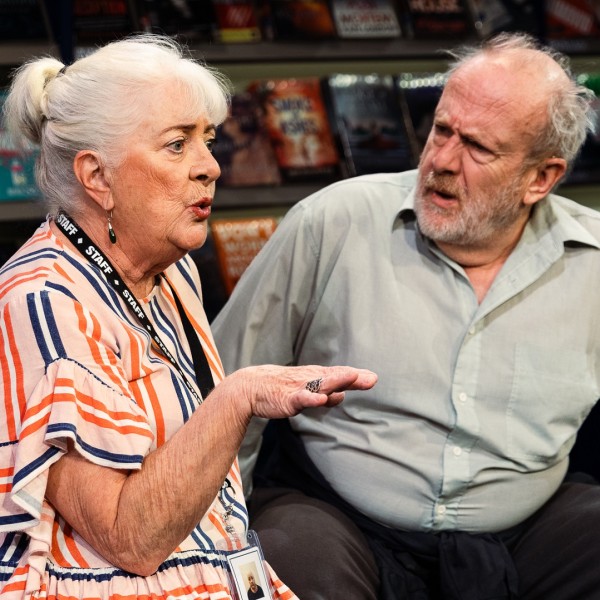
Local Library begins with conservative Boomer Paul Homewood (Peter Hambleton) having his book-borrowing rights suspended for hiding magazines to avoid paying the modest rental fee by stern senior librarian and social justice warrior Helen Nielsen (Jude Gibson). Initially poles apart in temperament, politics, and approach to life, over the course of Paul’s regular visits to the library, their battle of wills gradually thaws to an entente cordiale. They are united by literature and loneliness, discovering they have more in common than they would ever have thought.

Hambleton and Gibson are a charming pairing with great chemistry. Hambleton’s old-man shuffle and wonky tie (costume design by Sheila Horton) are a visual delight, while his butchering of “terrio Mowri”, stubborn northern English accent, and ridiculously anti-woke posturing are deliciously cringe-inducing. Gibson’s staunch librarian of 40 years’ standing, struggling not to be ousted from the best thing in her life, is believably vulnerable beneath her tough shell. They spark off each other beautifully and carry the 90-minute duologue with the panache of the seasoned pros they are. Conrad Newport’s delicate direction never gets in their way.

William Smith (lighting, set) and Azarael Ballard (sound) of Tungsten Projects Ltd have taken great care with the technical design. Their realistic setting has a suitably institutional feel with its community notices, stand of graphic novels, and neatly Dewey Decimalled books. The lights in the rows of shelves and above the issues desk creatively change the mood during scene transitions, accompanied by lively and suitably chosen music that bookends each chapter. The barking of Paul’s ever-changing company of dogs even comes from the right place behind the library entrance; attention to detail that will delight theatre nerds.

Witty and current with a deeper vein of meaning below the laughs, Local Library is bibliophilic bliss for anyone who loves a heartwarming story.

Accidental Death of an Anarchist | Regional News

Accidental Death of an Anarchist

Written by: Dario Fo and Franca Rame  

Directed by: Joy Hellyer and Paul Kay

Cochran Hall, 18th Jul 2026

Reviewed by: Stanford Reynolds

Tom Basden’s adaptation of Accidental Death of an Anarchist brings Dario Fo and Franca Rame’s 1970 political farce into a contemporary setting, retaining its sharp satire of institutional incompetence while updating many of its references. Directed by Joy Hellyer and Paul Kay, KAT Theatre’s production embraces the play’s chaotic energy, finding plenty of laughs while leaving room to push its farcical style even further.

James Kiesel is at the heart of the production as the Maniac, effortlessly transforming between personas as he manipulates those around him. From greeting audience members before the show wearing a white wig and pearls and claiming to be KAT president Margaret Robertson, to later shifting character to become a judge and a forensic expert, Kiesel demonstrates impressive physical agility, confidently commanding the stage with energetic movement. His performance captures the trickster spirit of the role, although there are moments where greater delight in deceiving his victims and more direct engagement with the audience could heighten the sense of gleeful anarchy.

The cast work well together, particularly in the scenes where the increasingly bewildered police officers (Kevin Hastings, Sadie McLoughlin, Chris O’Grady, and Gino Moretto) compound the confusion through their own ineptitude. These sequences are well blocked, ensuring the action remains clear despite the escalating chaos. At times punchlines can arrive a little too quickly, and some visual gags and physical comedy could be given more space to land; however, the production does well to find humour without becoming a pantomime. The cast’s commitment to the absurdity and deadpan delivery of punchlines make for a hilarious production, with use of varied accents adding another layer of comedy.

Basden’s adaptation loses some of the political focus and narrative purpose of the original, with the Maniac’s actions feeling like mischief for its own sake rather than a determined attempt to expose corruption. Nevertheless, the play’s themes remain surprisingly relevant. Its satire of policing, bureaucracy, and institutional failure resonate beyond its British setting.

KAT Theatre delivers an entertaining production, ultimately leaving audiences pondering its central question: who is truly the maniac? The man exposing the absurdity of the system, or those who unquestioningly accept it?