

Reviews - Regional News | Connecting Wellington

Reviews

Werewolf | Regional News

Werewolf

Presented by: Binge Culture

Circa Theatre, 26th Feb 2026

Reviewed by: Tanya Piejus

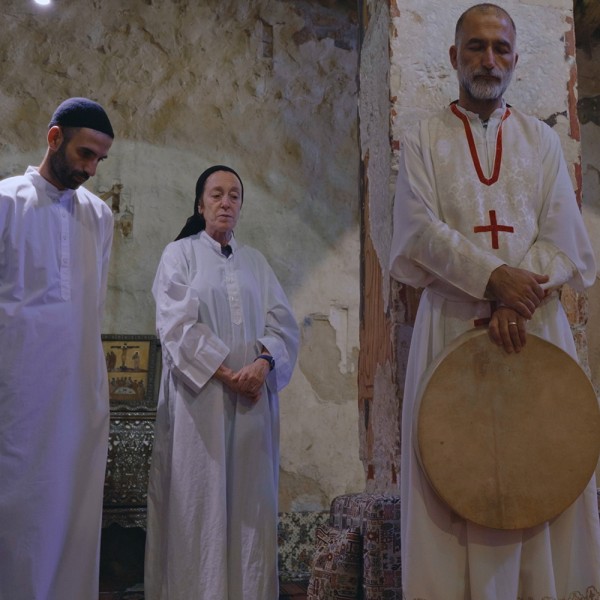
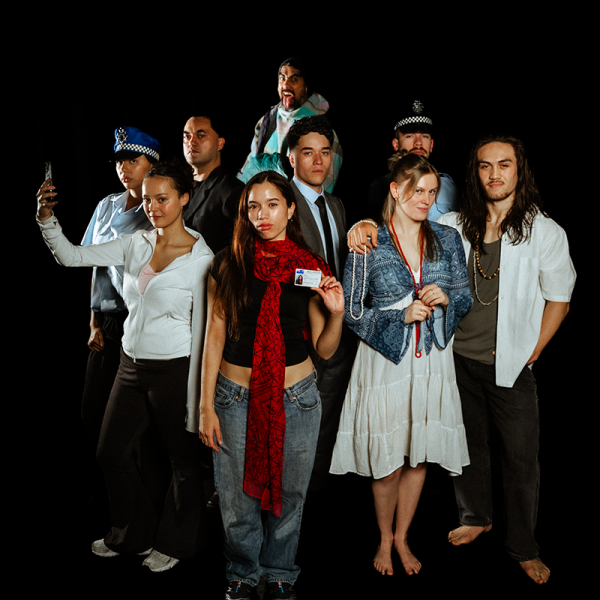
Three wardens (Joel Baxendale, Stella Reid, and Hannah Kelly) are in charge of 230 strangers with only half a day’s training and a bag of onions. The lycanthropy outbreak has begun. You have been summoned to the local shelter, along with other members of your community to wait for the all-clear. The containment period is one week and the nights are pitch black. As the threat outside takes shape, the atmosphere inside begins to turn.

Inspired by the classic game of deception, Werewolf is a gripping blend of thriller and comedy that pulls you into an interactive world of suspicion, survival, and nervous laughter as part of the Aotearoa New Zealand Festival of the Arts. Your pandemic information booklet contains a piece of information or behaviour that you can include in the overall narrative if you wish (the tinfoil hats in the back row are a brilliant touch). The organic action stems from game elements and a semi-improvised script, which heroes the audience within a broader plot surrounding the relationships between the three wardens.

The assured cast keep the story moving, deftly responding to the audience’s interjections and reactions, and providing distinct characters to variously love or hate. Eight audience members are called on to fulfil specific roles, with Daniel the timekeeper and his whiteboard becoming a favourite.

A deceptively simple set (Lucas Neal) of supposedly werewolf-proof silver curtains, a plastic tunnel entrance, and some convincingly military-looking equipment trunks is all that’s needed to turn Circa One into Safehouse 656. Neal’s lighting design makes excellent use of comforting orange for the safety of daylight, total blackout for the dread of night, and violent strobing pulses for the resolution.

The star of the technical show is Oliver Devlin’s surround sound design that fills the black nights with gunfire, screams, creepy voices, and a pounding heartbeat that makes the very fabric of the theatre vibrate.

Thrillingly funny and creepily immersive, Werewolf is a tantalising tease to your senses and guaranteed to send shivers down your spine.

A Complete Idiot’s Guide to Great Britain | Regional News

A Complete Idiot’s Guide to Great Britain

Created by: Sully O’Sullivan

Cavern Club, 26th Feb 2026

Reviewed by: Oliver Mander

I’ll admit at the outset of this review that I have a distinctly positive bias towards useless facts – especially when interlaced with delicious comedy. On that basis, I’m always likely to look favourably on a performance like this one.

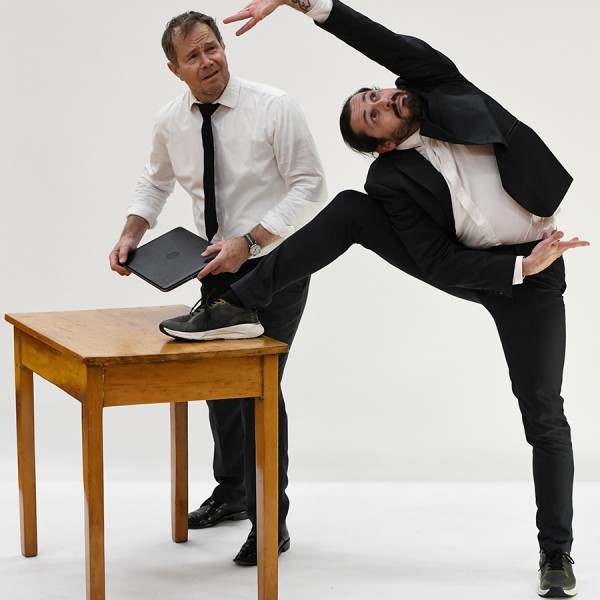
It helps that New Zealand comedian O’Sullivan is immensely funny, driven by a punchy and energetic style. He has created a fast-paced script, supported by slides that accentuate the delivery and set the audience up for laughs from the start. Without giving too much away, we’re entertained by the English nickname for people from Hartlepool, the national animals of England, Scotland, and Wales, and O’Sullivan’s take on the most quintessentially British landmarks.

Of course, it’s difficult to do a show containing facts without at least one person in the audience knowing the answer to the questions he raises. O’Sullivan’s use of the audience to augment his performance is masterful. He doesn’t let our involvement in the narrative overpower, instead balancing and blending it into his carefully crafted storyline, barely missing a beat as information comes thick and fast from the audience that is then incorporated into the comedy.

The show itself is clearly premised on the widely known ability of Great Britain’s populace to reflect on their own culture and laugh at themselves. There are more than a few British expats in O’Sullivan’s audience. On this basis, there is indeed some risk in the material; it is unlikely that A Complete Idiot’s Guide to Putin’s Russia would land with the same effectiveness. It’s a reflection on his considered writing that the comedy never crosses the line from humour to insult, nor does it rely on negative personality tropes.

Interactive, intimate, and informative, O’Sullivan’s New Zealand Fringe Festival performance of A Complete Idiot’s Guide to Britain offers an entertaining journey across Great Britain with a different perspective.


Mythosoma | Regional News

Mythosoma

Presented by: Body Island – Motu Tinana

Directed by: Kelly Nash

Tāwhiri Warehouse, 25th Feb 2026

Reviewed by: Zac Fitzgibbon

Imperfect, reverent, and poignant, Mythosoma invites us to feel, to reach into those wounded parts of us and be open. This theatre and dance piece is beyond interpretation, not because it is too high brow, but because each audience member will have their own extremely personal reaction. I have no doubt that this is its uniting factor; that trauma affects us all differently.

This piece does not try to be perfect, but rather to illustrate the visceral feelings that occur after heavy-hitting moments that words fail to describe. Humour is used tactfully and tastefully, planted in the right moments to preserve emotional momentum. Under Kelly Nash’s direction, the production settles but also stirs in unexpected ways. 

I am in awe of how Nancy Wijohn, Jada Narkle, Georgie Goater, and Caleb Heke move; the way they twist, turn, and navigate the memories their bodies hold. Every movement enthralls. We are called to lean in as observers, not to interpret what is placed before us. Likewise, Moana Ete’s narration and vocals provide a sense of grounding, of realisation and revelations. All five of these performers work as one, yet they tell their own stories. 

With production management and design collaboration from Rob Larsen, we are presented with a scenographic delight. Each lighting state draws us closer to the performers as well as our own feelings. The soundscapes are raw. The combination of lighting and sound results in an evocative experience for our eyes and ears. 

I was moved to tears by this piece. Be warned that it may take you on a powerful and possibly painful emotional journey, but the feelings that linger after and the healing you might undergo will make it entirely worth it. Mythosoma brings to life how we feel in our bodies during and after moments of impact, a task that Body Island – Motu Tinana achieves with flying colours where very few have been able to. Kia toa, Mythosoma.

The Works | Regional News

The Works

Presented by: Briefs Factory

Tāwhiri Warehouse, 24th Feb 2026

Reviewed by: Tanya Piejus

What a sparkly, sassy, spectacular way to open the 2026 Aotearoa New Zealand Festival of the Arts! Since 2008, Australia-based Briefs Factory have redefined cabaret with their own brand of queer subversion. With The Works, they thrust open their archives with a dazzling, daring, and delicious celebration of flesh, flash, and flourish.

For a gold coin, you can buy raffle tickets at the start of the show with the promise of a fabulous prize to be won. As suspected, that prize turns out to contain more than a little cheek – and I don’t mean the ones on your face. If naked tush makes you blush, this show ain’t for you! If it makes you whoop and holler for the beauty and sensuality of the human form, then this show definitely is for you. From feathery stripping drag numbers to burlesque trapeze over a bathtub, this is a glorious and gasp-inducing display of circus, comedy, crooning, and choreography. Sit in the front couple of rows and you’re literally immersed.

Kitty Bang Bang lights up the room with her whiskey-fuelled fire-eating routine; her flaming nipples need to be seen to be believed. The Evil Hate Monkey jumps through fiery hoops, bounces en pointe in a sparkly yellow tutu, and does obscene things with bananas that give eye-popping credibility to the full-frontal male nudity warning in the pre-show email. NASTIA’s hand balancing, Captain Kidd and Benjamin Butterfly’s aerial antics, and Serenity’s heel-wearing tumbling astound as much as Hollywood Star’s vocals and progressively revealed body inspire. And, Fez Faanana, exactly where do all those red flowers come from?

Joining these top-notch performers from Australia, London, and New York are local ballroom troupe, House of Marama. Their powerful gothic routine is a stunning introduction to this US Black and Latin-inspired Rainbow Pacific subculture for those unfamiliar with the local scene.

All the above is accompanied by a thumping dance soundtrack, intricate costumes, and bold haze-enhanced lighting.

Don your best briefs and get on down to the factory for the full works!

The Night Ali Died | Regional News

The Night Ali Died

Written by: Christopher Sainton-Clark

Directed by: Rosanna Mallinson

Gryphon Theatre, 21st Feb 2026

Reviewed by: Oliver Mander

The Night Ali Died is a gripping story beautifully told. Pre-show, we see a single central chair, with two distinct piles of clothing in each upstage corner. This simple staging creates opportunity for the sole actor, Christopher Sainton-Clark, to shine.

And shine he does.

Each character in this criminal drama recounts the events before and after the death of mild-mannered chemist Alistair (‘Ali’). As they unpick the events of that fateful night, each offers their own back story and perspective. From drug lords to detectives, motivations gradually come into focus.

For Alistair in particular, this is a simple and honest account that invites reflection on who matters in our lives – and the role we might play in theirs. Chances are, our actions or character make each of us a hero to someone. In this story, Ali’s actions define him as a hero to the daughter he will never know. Yet the invitation to reflect never feels like lecturing; it remains, first and foremost, a compelling story.

Sainton-Clark uses mime to accentuate key elements; from the recoil of a gun to the grip of a knife, we are left in no doubt as to what has occurred. His multiple characters are sharply differentiated through mannerisms, movement, and speech.

The technical precision of this production is almost cinematographic in nature. It’s as if we’re watching carefully constructed scenes from a movie, but performed live in one slick, classy ‘take’. Lighting cues, including the use of brief blackouts, heighten the drama, while sound and music reinforce the mood (collaborative design by Sainton-Clark, director Rosanna Mallinson, and technical lead Daisy den Engelse). A minor quibble is the placement of sidestage curtains allowing an open view of backstage. I say minor because once the performance gets underway, I never take my eyes off the action on stage.

Wellingtonians have experienced something special with this limited two-night run of The Night Ali Died. There’s still hope for audiences in Christchurch, Oamaru, Nelson, and Dunedin over the next few weeks.

Decadunce | Regional News

Decadunce

Created by: Marshall Lorenzo

BATS Theatre, 20th Feb 2026

Reviewed by: Oliver Mander

Decadunce is a frenetic, energetic, multi-layered romp that offers a merciless skewering of consumerism and excess.

Briscoes, Harvey Norman, and Uber are featured, with the focus of the satire less about the companies themselves and more about their target customer demographics. Lorenzo’s persona as a Harvey Norman salesman notes that all of their couches look like they were designed in 2001, while Uber’s younger generation customers have no money to their name, but still prefer the service to using their legs. And as for the Briscoes lady… I will never hear “You’ll never buy better” in quite the same way ever again.

As consumers, regardless of age, stage, or demographic, we are all roundly and hilariously lampooned.

Lorenzo offers a masterclass in audience engagement, with direct eye contact and energy that is irresistible. His stage performance is well supported by a striking set that offers superb functionality through its simplicity, and a soundtrack of energetic beats that reflect his own performance while keeping the buzz alive amongst the audience.

It is the clever integration of all those technical and creative elements that create the underlying energy for this show. Of course, we might expect that of every performing arts show, but it’s the sheer variety of those elements that make Decadunce something special. Lorenzo uses movement and dance, singing, voice, and caricature, beautifully integrated with sound, light, and stage. His talent is there for all to see, and the satire is generally well focused and targeted.

There are a couple of moments in the script that feel unnecessary. Satirising individual politicians is one thing, but making a personal slur against one within the show detracts from the wider satirical nature of the script. It’s clear that Lorenzo has the talent to create the satire without resorting to insult; maintaining the satire would have offered far more scope for humour.

Regardless of my personal status as an unabashed capitalist, this was a great night out. Energetic, biting, and seriously funny, it left me wanting to see more.

What to Wear | Regional News

What to Wear

Written by: Jenny Bornholdt

Te Herenga Waka University Press

Reviewed by: Margaret Austin

They say you can make a poem out of anything. Jenny Bornholdt’s recent collection bears this claim out – balancing banality of content with whimsicality and a fine appreciation of the everyday world. And I welcome her relatively simple language.

In Forecast, the lines “High pressure / and one weak front.” preface a brief but apt comment on the opposing nature of things. Worry opens with the poet’s state of mind before describing her concerns about disturbing stick insects, remarking about dogs “that veered like thoughts / into a tiny experimental / forest,” and recalling her mother’s preoccupation with the gardens of the world. I loved Spring with its delight in vegetables and the interspersing of flowers and birds – all so true to nature.

Mail is an amusing comment on our times – in this case the potential complexities of receiving letters. The poet’s mother lives in a retirement home, but somehow or other mail for the whole family ends up in her mailbox! “Soon after, we move there. All of us. It seems easiest. We have each other and mail comes as regularly as meal times.” remarks our poet philosophically.

For those who appreciate the esoteric, The London Painters should be a satisfying read. It’s a so-called found poem. For the uninitiated, a found poem is a creative work composed by taking existing words, phrases, or passages from non-poetic sources to create a new poem. In this case, more than 20 names are referenced – some painters and some not – of which I was familiar with perhaps half a dozen. A poem about painters that presents an intellectual challenge to readers.

The title Poem with a hole in it recounts an actual hole that needs to be dug for practical purposes, but our poet can think of only one use for such a deep pit: fill it with words. And she does! It’s a useful vocabulary lesson enshrined in literary form.

As for the collection’s title, we’re no better off, but then neither is our poet!

Once Upon a Time in Homowood | Regional News

Once Upon a Time in Homowood

Presented by: Red Scare Theatre Company

Directed by: Jamie Cain

BATS Theatre, 17th Feb 2026

Reviewed by: Tanya Piejus

With the highly talented people involved, I had high hopes for this production and it didn’t disappoint. Once Upon a Time in Homowood is a hilarious and deliciously realised celebration of the LGBTQIA+ community.

As the show’s publicity blurb states, “cinema and theatre are vital for queer people to see themselves represented both in explicitly queer texts, as well as queer-coded works”. Hear, hear. To that end, Once Upon a Time in Homowood creates a fan fic of what would have happened if Jack from Titanic was a soft butch. How about if Sunset Boulevard’s Norma Desmond transitioned and Hollywood ditched her? What if Mark Zuckerberg and Eduardo Saverin kissed in The Social Network?

These three ‘original scripts’ by Cassandra Tse, Jamie Cain, and Matthew Loveranes are delightfully irreverent of Hollywood tropes and place their new, playfully queer plots front and centre. The characters and scenes we know and love are joyfully parodied by an energetic seven-strong (with the emphasis on strong) cast of Ruby Carter, Rachel McLean, Zachary Klein, Mike Bryant, Lincoln Swinerd, writers Tse, Cain, and Loveranes, and stage manager Julia Bon-McDonald in a delightful cameo. Under Cain’s highly creative and fast-moving direction, they all have standout moments, as well as forming a seamless ensemble. Klein’s tight-lipped Cal Hockley in Titanic, Bryant’s manipulative Max in Sunset Boulevard, and Tse’s idiot Winklevoss twin in The Social Network are just a few of the many highlights.

Lucas Neal’s brilliant set consists of HOMO writ large like the Hollywood sign across the full width of the Dome stage with each letter containing fantastically clever pop-out sections that create specific acting spaces. All sound is provided by the cast. Special mention to Tse for providing the beautifully sung soundtrack of classic Hollywood themes. Jacob Banks’ hardworking lighting design under Ruby Kemp’s skilled operation ties the whole performance neatly together.

Come to Once Upon a Time in Homowood and have a gay old time this New Zealand Fringe Festival!

The Valentina | Regional News

The Valentina

Presented by: The Rebel Alliance

Written by: Anders Falstie-Jensen

Directed by: Anders Falstie-Jensen

New Zealand Fringe Festival online

Reviewed by: Zac Fitzgibbon

Independent Auckland-based theatre company The Rebel Alliance has adapted its award-winning stage production into an illustrated radio play. The Valentina follows eight-year-old Ellen as she travels through space alongside notable figures who have ventured beyond Earth, such as Neil Armstrong, Yuri Gagarin, and Laika the Dog.

This show has a great New Zealand flair, hitting the mark perfectly with a humour that most Kiwis will be well familiar with. This is not only thanks to director Anders Falstie-Jensen’s incredible script, but also to the vocal performances by Talia Pua, Ross McCormack, Bronwyn Turei, Wesley Dowdell, and Kevin Keys. The actors’ voices are crisp and clear, bringing the vibrant characters to life.

John Verryt’s illustrations add a whole new colourful dimension to the story, providing a visual way to ground us in the narrative. I am mesmerised by the illustrations of space. The vivid sound design by Sean Lynch further stirs my imagination. The visual and aural elements work in tandem to create an experience so immersive, I feel like I am also a crewmember aboard The Valentina. The new format therefore supports the crux of the piece: that we should feed our imaginations and dreams.

There is a perfect blur of science fiction and reality at play here. The Valentina is both educational and entertaining. Fact and fiction are clearly delineated, but this doesn’t stop me wishing all elements were true… I would only dream of visiting Vitanonan X!

Easily accessible and universally appealing, The Valentina can be appreciated by adults and children alike. It is a feel-good piece, daring us to let our minds run wild and reach to the furthest depths of space. Be sure to watch this illustrated radio play before it blasts off to galaxies unknown. Fly like a toroa and get tickets to the online event this New Zealand Fringe Festival.

“Wuthering Heights” | Regional News

“Wuthering Heights”

(M)

136 minutes

(2 ½ out of 5)

Reviewed by: Alessia Belsito-Riera

I haven’t read the book, but I can say with certainty that those who have will very likely not be pleased with this liberal adaptation of Emily Brontë’s groundbreaking novel Wuthering Heights. Smut-centric BookTok, however, will go absolutely feral.

A tale of lust and longing, madness and macabre, “Wuthering Heights” captures the storm of passion that ricochets between the somewhat-of-status Catherine Earnshaw (Margot Robbie) and servant-of-sorts Heathcliff (Jacob Elordi). From brooding glances to unspoken yearning, roiling anger to frenzied passion, bottomless despair to utter depravity, this film is truly a romance of epic proportions played fervently and intensely by its leads.

For an idea of what might await the viewer, one must only look at the poster: the clinch pose familiar from bodice-ripper books signals explicit passion and historical spectacle. Director, writer, and producer Emerald Fennell’s adaptation is designed to be as shocking to today’s audiences as Brontë’s would have been in the 1800s; it aims to disturb, disgust, and arouse.

Suzie Davies’ production design dances equally between two worlds: one decadent and hedonistic, the other stark and severe. It’s rich in symbolism and verging on surrealist, with not-so-subtle visual cues reflecting the inner turmoil of the characters. It’s certainly not afraid to depart from historical accuracy. Composer Anthony Willis crafts a soundtrack equally anachronistic, but no less fitting. Filmed on the desolate and melancholic moors the tale is famous for, Linus Sandgren’s cinematography is a visual feast that hungrily devours Catherine and Heathcliff’s insatiable appetites.

However, by leaning into the carnality and romantic aspects of the story, Fennell’s adaptation compromises what makes Brontë’s so great. The novel is not a romance, perversion is not sought, what Catherine and Heathcliff share is not the kind of love one yearns for. Fennell’s “Wuthering Heights” – despite being much more explicit in a sense – will never reach the depravity of the original. Nor will it ever achieve the depth that made Brontë’s tale groundbreaking.

D’Things N Such | Regional News

D’Things N Such

Presented by: The Gentle Boys

Directed by: Seiyan Thompson-Tonga

Circa Theatre, 14th Feb 2026

Reviewed by: Tanya Piejus

Have you ever come out of a theatre and thought: “I have no idea what that was, but I liked it”? Chances are that’s what you’ll be thinking when you leave D’Things N Such.

Four actors (Caleb Teaupa, Albert Latailakepa, Brett Taefu, and director Seiyan Thompson-Tonga) perform a seamless series of absurdist sketches that draw on pop culture nostalgia. They segue from boy band dance grooves, angry coffee shop interactions, and kids playing tag to movie and TV parodies, Russian tax mafia, incompetent gods, a tap-dancing Hulk, and even a ridiculous riff on The Glass Menagerie playing next door in Circa One. Accompanying these Tik Tok-style slices of comedic craziness are the musical stylings of Ete Reupena on keys (apart from when he’s briefly murdered, cremated, and his urn handed off to a front-row audience member). All of this is jubilantly performed with physical theatre, interpretive dance, group hugs, unexpected emotional punches, and high energy from the group known collectively as The Gentle Boys, each of whom brings bags of personality to their many and various roles.

On-point technical operator Hāmi Hawkins has his work cut out keeping up with the electric pace on stage to employ Isadora Lao’s colourful lighting design that works brilliantly with the actors’ antics. The colourful costume design (Helena and Otoota Cocker-Valu) delightfully and effectively amplifies the fun, and you can even buy a bucket hat made from the same materials as the actors’ jackets after the show. A shoutout also to Axel Iva for the minimalist but flexible set and prop design. Who knew that a giant box of matches could become so many other things?

D’Things N Such bills itself as “Wellington’s freshest, wildest and most unhinged theatrical experience since someone slapped corned beef and Nutella on toast” and they’re not wrong. This “disaster on purpose” is highly entertaining even if you have no idea what’s going on most of the time. Turn on, tune in, and enjoy!

Delirious | Regional News

Delirious

Written by: Damien Wilkins

Te Herenga Waka University Press

Reviewed by: Kerry Lee

What starts as a story of an elderly couple deciding to sell their home and move into a rest home soon turns into one about regret, introspection, and mollycoddling.

Mary, a retired policewoman, and her husband Pete, a former librarian, are both feeling the aches and pains of old age and have decided the time has come to sell their home and downsize. Suddenly, a phone call from a police detective about the death of their son Will years prior brings up old memories that perhaps should have stayed in the background. This sets the stage for a novel that investigates two lives in all their brutally honest glory: the ups and downs, the laughs and tears, and yes, the heart-wrenching circumstances of their son's death.

I found the central theme of Damien Wilkins’ Delirious to be that life may not always be fair, but it can still be fun, and even though we have to put up with things like loss, guilt, and even death, in the end, it is still worth living.

The main characters are very down-to-earth. There are no superheroes here saving the day; instead, they are just two people living their lives. The story shifts back and forth between past and present, showing readers how Mary and Pete changed and grew over time – before and after Will’s death. This is a great choice for a narrative structure, as it helps us to see how layered and complex the characters are.

While Delirious had a slow beginning, it soon took off emotionally and I found myself wondering how both Mary and Pete would cope with what life had in store for them. The subject matter isn’t the most upbeat and you may find it a little sad to read, but I still recommend this book, because in its own way, it celebrates life and the happiness that can come from even the most seemingly uneventful one.

The Book of Will | Regional News

The Book of Will

Written by: Lauren Gunderson

Directed by: Janet Noble

Gryphon Theatre, 4th Feb 2026

Reviewed by: Zac Fitzgibbon

Set after the death of playwright William Shakespeare, The Book of Will is a mostly faithful retelling of how those nearest and dearest to him compiled and published his work to keep their cherished companion’s ideas and memory alive. With thoughtful direction by Janet Noble, The Book of Will reminds us that legacies are intertwined and highlights the profound impact that people have on us.

Whilst the loss of loved ones leaves many holes for the characters, there seems to be a bit of an empty space when it comes to the ensemble’s sound design. In performance, they do contribute to some ambience, particularly at the beginning of scenes, although a much more sustained soundscape could help evoke even more mood and tension within scenes.

The performances of the Bard’s work throughout the play are captivating. I appreciate viewing his life’s work through a different lens. It was not necessarily Will’s own work in the end, but through the hard labour of those who loved him, we are still able to find wisdom in his words today. The show walks the tightrope between comedic and cathartic incredibly well. This is due in large part to the engaging cast.

Paul Kay as the overprotective but caring John Heminges, Ian Mortensen as the heart-strong Henry Condell, and Allan Burne as Richard Burbage (and other characters) are certainly highlights. Sylvia McKenna is excellent as Alice Heminges, and I would argue the crux of the story. Towards the end of the show, Meredith Dooley has a touching performance as Anne Hathaway Shakespeare. Like the compilation of Shakespeare’s work, the entire cast works together to provide us with a show as thought-provoking as the man this show precedes.

Before this review slips from your memory like what would have become of Shakespeare’s plays, I’d recommend heading to Gryphon Theatre at once to experience Stagecraft Theatre’s poignant production of The Book of Will yourself.

Marty Supreme | Regional News

Marty Supreme

(R13)

149 minutes

(3 ½ out of 5)

Reviewed by: Alessia Belsito-Riera

If you want to be stressed for two hours and 29 minutes then step right up for Marty Supreme, director Josh Safdie’s new film starring Timothée Chalamet that feels like watching the final moments of a heated sports match the whole time.

An American sports dramedy, Marty Supreme smashes onto the screen in a rapid, topspin shot that lands viewers right into the thick of it. Marty Mauser (Chalamet) is on the up and up, or so he says. He’s America’s current ping pong star, or at least he will be when he wins the British table tennis open in a few days’ time. Wily, scrappy, angry, delusional, cocky, arrogant, and with a dream that no one respects but he doggedly believes in, Marty goes to Hell and back again in the pursuit of greatness – never mind the chaos he leaves in his wake to get there.

With camera movements that travel at warp speed and music sequences that change faster than a ping pong ball swaps courts, Marty Supreme is designed to keep you on the edge of your seat and gasping for breath. Cinematographer Darius Khondji employs a handheld style and tilted angles to keep viewers unsettled while the distinct grain and rich filter – paired with a meticulously crafted period aesthetic by designer Jack Fisk – unmistakably roots the story in the 1950s. Meanwhile, editors Ronald Bronstein and Safdie keep the tension high with the quickest cuts in the west. Composer Daniel Lopatin (aka Oneohtrix Point Never) crafts a score that captures both the feeling of the time and the seesawing story with a soundtrack comprising original music and 50s hits. Sound is constant; with never a moment of silence and continuously changing music, viewers have no time to catch their breath. Always building in momentum, the score captures Marty’s mental unravelling as imminent chaos closes in and his life becomes increasingly frenetic.

As someone who isn’t the biggest Chalamet fan, I must give him credit where it is due. With mile-a-minute dialogue and a complex, high-strung character, he makes every action seem intentional yet unpredictable. Gwyneth Paltrow and Odessa A’zion also deserve praise in their supporting roles. As for Bronstein and Safdie’s script – game, set, match.

Below the Worms | Regional News

Below the Worms

Presented by: S.L.U.G (Society for Little Ugly Girls) Theatre Company

Written by: Te Ata Tu Patelesio and Sugar Rea-Bruce

BATS Theatre, 3rd Feb 2026

Reviewed by: Tanya Piejus

Below The Worms is an absurdist magic realism tale from a young theatre company that won the Parkin Development Award at last year’s Fringe Festival.

It follows the story of two families who live in homes that sit within the same house. A boy, Sonny (Te Ata Tu Patelesio), lives in one half with his dad and ailing grandfather (also played by Patelesio). A girl, Mags (Sugar Rea-Bruce), moves into the other half with her mum (Rea-Bruce again, who also doubles as the witch). They soon become friends. The children’s world is full of unexplained magic that slips into the everyday, such as the garden of singing worms and the witch who lives next door with her bloodthirsty hound. Despite the terrors and delights outside, the homes live in harmony until a kept secret between the families is revealed and the world is no longer what the children once thought.

The two lead actors manage multiple roles with aplomb, expertly tweaking their physicality and voices to suit their varying characters. They often interact using physical theatre techniques and dash up and down the traverse stage, climb a versatile piano, and relax into quieter moments with practised ease.

The supporting group of four actors (Nadia Officer, Eve Naicker, Cypha Clark, and Kimiora Honeycombe) are a delightfully versatile choir and ensemble. Dressed in a base of soft browns, they are the garden worms who sing catchy songs. They’re also the witch’s growling dog, casually cocking a leg when their arrogant mood suits. In addition, they operate beautiful white paper puppets of the insects and birds that flutter through the garden (designer Grace O’Brien).

With a clever set made from clothes strung on washing lines, effective lighting, and an excellent accompaniment of live music from music director Sarah Lawrence on piano, violin, and guitar, Below the Worms is a deeply charming and whimsical story about childish innocence and what happens to it when the strange and unsettling adult world intrudes.

Vulture | Regional News

Vulture

Written by: Phoebe Greenwood

Europa Editions

Reviewed by: Denver Grenell

Setting a novel amid the Israeli-Palestinian conflict is a bold and risky endeavour, even more so if it’s your debut. Making the book a black comedy is even riskier. Is the reader willing or able to laugh at situations set amid a very real conflict that has claimed hundreds of thousands of lives?

In Phoebe Greenwood’s Vulture, journalist Sara Byrne is assigned to cover the 2012 conflict in Gaza. She stays at The Beach, a hotel that hosts all the international media, and has local minders who introduce her to key figures on the ground. She is still reeling from the end of an affair with a married man back in the UK and the recent death of her father, a respected scholar, and throws herself into her work.

Sara’s drive borders on self-obsession, more concerned with ‘getting the story’ than with the potential consequences of her methods. She blunders through war-torn Gaza, causing tension with local Palestinians, her minders, the fellow media contingent, and the newspaper she is writing for. She is a refreshingly flawed character and should appeal to fans of Fleabag who prefer their characters a bit messy.

While the book doesn’t shy away from the horrors of the war and the lives lost, the flashbacks to Sara’s chaotic pre-war life in London can’t help but seem trivial by comparison, even if they provide vital insight into Sara’s state of mind.

Greenwood worked as a correspondent in the Middle East, so she’s technically qualified to write about the region and the conflict. As such, Vulture offers insight (and a critique) into the media’s involvement, just not enough to balance the comedy. While the comedic elements lend the book the makings of a satirical wartime tale like Catch-22, they aren’t woven into a satisfying whole. There’s no moratorium on writing about this conflict, and although Greenwood should be commended for not playing it safe here, the book doesn’t quite reach the high standard set by other classics in the satirical wartime sub-genre.

Good Things Come and Go | Regional News

Good Things Come and Go

Written by: Josie Shapiro

Allen & Unwin

Reviewed by: Jo Lucre

Good Things Come and Go is a heartfelt novel about just that. The good things that happen, and what happens when they go.

For Penny and Adam (known as Riggs), the good thing was their daughter Rose. She would also be the one to go. After Rose dies, and the enormity of her absence lingers, the promise of a solo art exhibition of her work sees Penny return to Auckland after years in LA. There she and Riggs reunite with Jamie, their childhood friend, now temporarily living in his uncle’s bach, he too trying to conquer his own demons.

Their years apart hang starkly between them as they awkwardly navigate the debris left over from a shared past long gone, and secrets long held. Their stories inextricably intertwine with the heaviness of what is the here and now. Author Josie Shapiro propels you headlong into each character seamlessly in a three-way narrative, each one jaded by the aftermath of grief, unfulfilled dreams, and faded friendships.

Shapiro artfully captures the presence of Rose, especially the heaviness of her loss, without being overly reminiscent or flooding the story with memories of her. Instead, grief sits at the edge of their stories, Penny, Riggs, and Jamie.

Penny, the artist with her big dreams. Broken, a mother without a child. Riggs, the perpetual big kid, former pro-skater, addict, fiancé of Penny. Also broken and now childless. Jamie, once a skater too, lost. Broken in other ways. In love with Penny.

Somewhere between the three of them, past wrongs will be exposed, love will be questioned, grief will be explored. With redemption and redefined relationships, each will learn how to carry on together, and apart, when good things come and go.

Black Butterfly – a memoir | Regional News

Black Butterfly – a memoir

Written by: Tony Hopkins

Baggage Books

Reviewed by: Margaret Austin    

This book – a first by poet, performer, and storyteller Tony Hopkins – is a firsthand account of the life experienced by an African American man, born in Washington DC, and for the last 35 years resident in Wellington, New Zealand. The book’s cover photos demonstrate the breadth and variety of the cities Hopkins has lived in – readers may recognise them!

And the book itself? It’s chock-a-block with anecdotes, encounters, and observations – some rueful, some startling, and some salutary. Washington DC was the starting point: when Hopkins turned 13, his father told him he was now a man of the house, then added: “The first time you go to jail, I’ll get you out, but after that you’re on your own.”

If Washington DC was the chrysalis, our butterfly has now emerged. The sixties with its race riots had also arrived, and the murder of Martin Luther King Jr in 1968 sparked Hopkins’ initial realisation of identity with his “soul brothers”. Self-described as an angry black man, he headed off to California to join the Black Panthers.

Of all chapters in Black Butterfly, the one titled Streets is the most graphic. Our writer is now living in San Francisco, where there are brushes with police, stints in jail, sexual encounters, and, most engagingly, life with two street hustlers, principally one called Sophisticated Player. Their initiation of Hopkins into street life with all its temptations, dangers, and violence form a powerful picture of Hopkins’ life and times.

Further experiences and reflections on several years in Europe and then, finally, Aotearoa follow. They are enhanced by Hopkins’ tone, and here is where the importance of this work chiefly lies – it’s consistently candid and without rancour.

Six poems accompany the text. The first and last deal with identity – effectively bookending this short but compelling story. “My identity is about who and what I identify with. / I’m grandson to a Cherokee / Although I’m no longer young, I am still gifted and black.” Bravo!

Giving Birth to My Father | Regional News

Giving Birth to My Father

Written by: Tusiata Avia

Te Herenga Waka University Press

Reviewed by: Margaret Austin

This lengthy collection represents a deeply felt grief enriched by celebration. Tusiata Avia’s father died 10 years ago, and the author confesses that she has kept the work hidden away for the last eight. That’s a clue to the nature of its content: how personally revealing her poems are both of herself and her family.

This is how it was supposed to go consists of an imagined account of Avia’s father’s funeral and the preparations for it. There is a moving reference to what he has been dressed in, namely his Christchurch Garrison Band uniform, and with his hair Brylcreemed as in his youth.

We get the eponymous My father gives birth that begins with a startlingly graphic metaphor: “I think about you in labour that night / birthing yourself out of this world / your pains coming faster and faster”. But there is no epidural for this, notes the writer, and the rest of the poem achingly records the last hours of a man deeply loved and revered by his daughter.

Tender images alternate with practical ones. In Dressing my father we get detailed descriptions of preparations for burial including mention of the injection necessary to mitigate the effects of Samoan sunshine. Most telling of the writer’s conflict about the revelations she’s making is in Dad causes an earthquake when, having experienced an actual earthquake back in New Zealand 3619 kilometres away from Samoa, she asks of her father “I wonder if you’ve had enough of me telling the family secrets  / excavating your bones in public like this – ”

In one of the concluding poems, we get “First anniversary: We go to Dad’s house” where longing for a loved one is expressed thus: “I sit by your grave and the death sickness comes / I’m unsure whether it’s you who are dead, maybe it’s me.”

You are truly alive Tusiata – grieving and celebrating your father and offering us readers the chance to do both with you.

The Glass Menagerie | Regional News

The Glass Menagerie

Written by: Tennessee Williams

Directed by: Colin McColl

Running at Circa Theatre till 22nd Feb 2026

Reviewed by: Tanya Piejus

First up in Circa Theatre’s 50th anniversary programme, this production of Tennessee Williams’ autobiographical memory play is a brave contemporary adaptation. It retains the feel of 1930s St. Louis and revels in Williams’ lush language, while pushing the themes into a current context and drawing the most from the play’s dark humour.

Amanda Wingfield (Hera Dunleavy) is a faded southern belle who chose the wrong one of her many ‘Gentleman Callers’ to marry. He abandoned her and their children and is never seen but often mentioned as his actions have thrust the family into penury, despite Amanda’s desire for her children to have the same comforts she once enjoyed. The story is told through the eyes of her son Tom (Simon Leary) who struggles with a dead-end job to feed his family while scribbling poetry, escaping into movies and booze, and dreaming of adventure. Her other child, Laura (Ashley Harnett), is withdrawn and fragile. In this interpretation, she is likely on the autism spectrum with anxiety and self-enforced social isolation arising from mental and emotional challenges rather than the purely physical one scripted. The arranged Gentleman Caller is Tom’s workmate (Jackson Burling) who Amanda hopes will woo her daughter.

The cast is excellent, all enjoying the beautiful writing and Williams’ careful character creation while giving their personas fresh life. Newcomer Harnett is especially engaging. She has far fewer lines than the other actors and her ability to express the complexities of Laura’s character through action and expression is a joy to watch. An unscripted and joyous moment in the second half that cleverly covers Amanda’s tricky costume change is a sublime moment of directorial creativity (Colin McColl) and acting brilliance.

Tony Rabbit’s stark white set reinvents the cramped Wingfield apartment and works well with his subtle lighting design. John Gibson’s sound design weaves in Annea Lockwood’s stunning music drawn from natural infra and ultrasound to underscore the emotional weight of the play.

Don’t miss this sensitive reworking of a gorgeous classic.