

Peter Hujar’s Day
(M)
76 minutes
(4 out of 5)Reviewed by: Isabella Smith
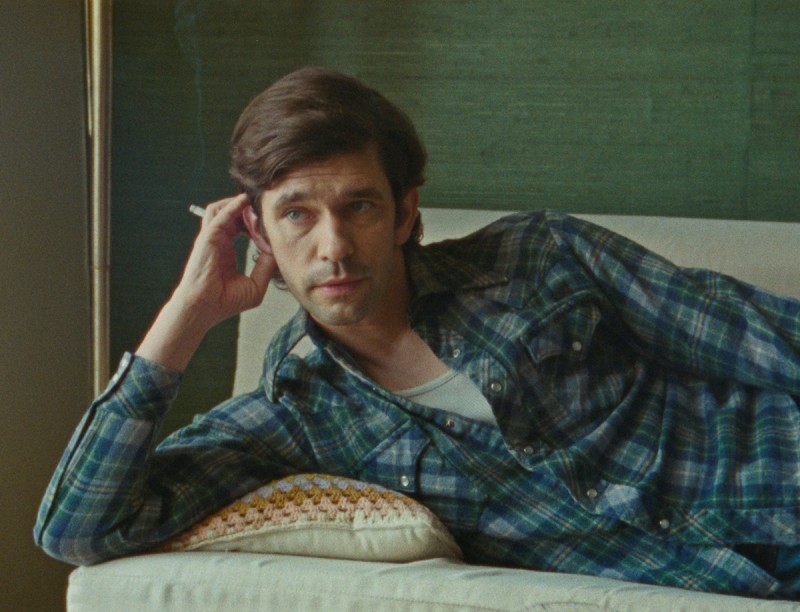
Known for his spare, emotive black-and-white portraits of the denizens of queer, creative, and intellectual circles in 70s and 80s New York, Peter Hujar’s Day is a verbatim account of a certain day in the photographer’s life. Directed by Ira Sachs and shot on Super 16mm film stock, the film is a quiet yet commanding time capsule, a chance to eavesdrop on a dramatic reimagining of a tape-machine recorded interview between two friends, the writer Linda Rosenkrantz (Rebecca Hall) and Peter Hujar (Ben Whishaw).
The warm tones of the film, with deliberately janky cuts and scratches, shows them moving around Rosencrantz’s stunningly dressed apartment, shifting with the sun from table to couch to rooftop to kitchen while Hujar describes in detail what he did the day before. It is gentle and meditative, affectionate and slow. The pace gives space to the audience to consider the mechanisms of memory and legacy, the sieving effect of time, and the tragic loss of not only a brilliant photographer, but a human being with aches and pains and concerns around money, health, and work – just like the rest of us.
What marks his day as different from anyone else’s are his phone calls with the likes of Susan Sontag and Fran Lebowitz, his appointment with Allen Ginsberg to photograph him for The Times – who was cool, distant, and took to chanting at every available moment – and his plans to photograph William S. Burroughs the following day. Otherwise, he takes several naps, puts off his work, eats Chinese takeout, and only seems to come alive after midnight, when he practices Bach on the harpsichord.
While perhaps only compelling to fans of Hujar, or audiences interested in artistic process, Whishaw and Hall do an incredible job of what would be a complex performance to pull off: the subtle embodiment of quirks and mannerisms of two historical figures to make it appear effortless and documentarian. Each frame feels like a picture, and for me the 76-minute runtime was the perfect length. Running like an alternate reel the entire time is a sense of loss, knowing that Peter Hujar, among many of the friends he photographed, died of AIDS in 1987 in the midst of the crisis, the devastating effects of which had profound effects on his artistry and legacy.
View more reviews:
« Click here