
Now We’re Talking
Created by: Stephen K Amos
The Hannah, 8th May 2026
Reviewed by: Oliver Mander
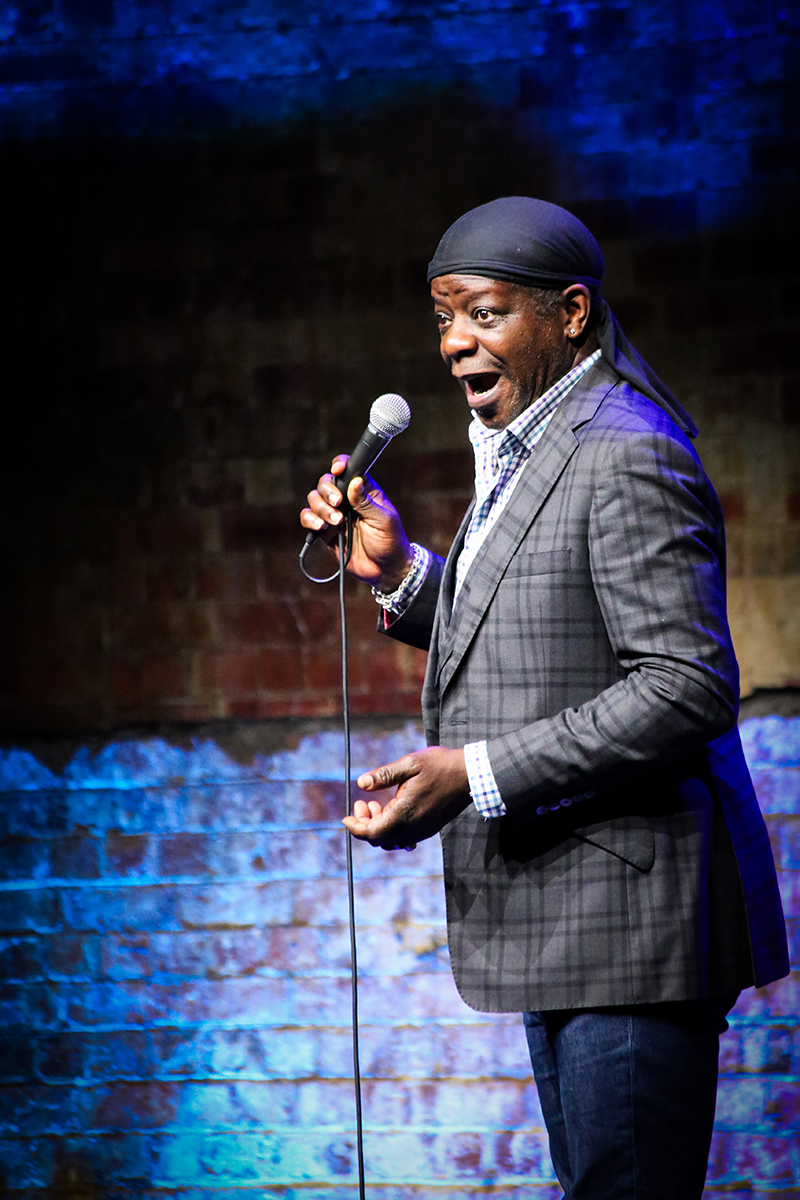
Stephen K Amos is well known for interacting with his audience, and this performance was no exception. Now We’re Talking will be remembered fondly by 18-year-old Ethan, “short-arms guy”, the gentleman who briefly left the auditorium to go to the toilet, and even this reviewer and his wife (‘Olly and Gillian’).
Let it be known: if you’re in the front row, the second, the third, or perhaps even the balcony, you’re fair game. Amos is so quick-witted that even a quiet pat on your wife’s shoulder will attract his attention…
The running commentary on these audience members gave Amos counterpoints for the human, social, and cultural observations that underpinned the laughter. His comedy sits within the modern British ‘observational’ tradition: socially alert, conversational, nerdily curious, and quick enough to turn almost any audience interruption into material.
Amos confirms that when it comes to modern British comedy, it’s cool to be a nerd.
There were some wonderful highlights in this performance. Comedy gold was extracted from the Dunning Kruger effect, Venn diagrams, and an exposé on the science of laughter. Underlying the performance was the hypothesis that the modern world talks far more than it listens. Amos’ key reflections were on the noise of modern life: social media rage, the post-truth paradox, casual offence, and how people judge one another without context. This takes the show well beyond a simple sequence of observational routines.
Amos’ crowd work was not just a comic device; it became part of the argument. By drawing the room into conversation, he demonstrated the point he was making: laughter works best when people are conscious of each other and willing to listen. Even a simple audience exercise, asking members to tell each other it was great to be alive, became part of Amos’ wider argument about connection, context, and the casual cruelty of online life.
Amos made us laugh, reflect, consider, and think, leading the audience through variable emotions that allowed them to fully engage in the process. This was observational commentary, delivered in a manner that felt inclusive and conversational, rather than a lecture.
A must-see.
View more reviews:
« Click here