

Mar Musa
(M)
97 minutes
(4 out of 5)Reviewed by: Isabella Smith
Mar Musa opens with the pastel colours of dawn sweeping across a vast desert landscape. Built into the side of a rugged, treeless mountain, the ancient monastery Deir Mar Musa al-Habashi looks more like a citadel, camouflaged save for the architectural straight lines that give it away.
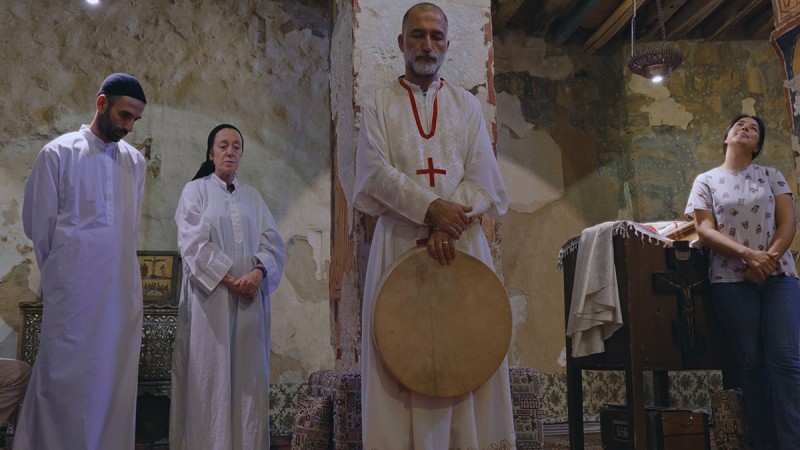
The monastery’s history is deeply tied to the economic, political, and social fate of Syria, beginning in the 4th century. Mar Musa, directed by Shahab Kermani, follows the monks and nuns living in the monastery through intimate, observational storytelling as they navigate post-war devastation in Syria. The monastery’s key tenets are to practice and promote interfaith dialogue between Christians and Muslims, provide radical hospitality to all faiths, and close the distance between the two religious groups to move towards a more peaceful and mutual life.
We see the community sharing meals together with visitors of both faiths, smiling and laughing as they discuss profound theological questions and the horrors of war. Their faith is resolute, and love and understanding is at the heart of the gatherings. This is despite the grave personal losses and trauma experienced by everyone. Including the abduction of community founder Father Paolo Dall’Oglio by ISIL and the destruction of the 1,500 year old Mar Elian monastery in a nearby town.
The cinematography is spectacular, cutting between landscape, daily life, and interviews. Inside the monastery we get an intimate portrait of prayer and contemplation against the backdrop of Byzantine iconography, lit up by votive candles and columns of light coming through small openings near the ceiling.
The community visit nearby towns completely ravaged by war. The footage of street after street lined with rubble was some of the most shocking scenes of destruction I’ve ever seen – made all the more profound in the strength of the people that have chosen to remain.
The documentary is slow and meditative with a hypnotic score that won Best International Sound award at the Doc Edge Festival. I could’ve happily just watched the weather change on the desert below and listened to the monks, nuns, and visitors as they chatted over shared meals. Their lives are centred around healing the deep fractures within the country. The message of unity was poignant, and as the credits rolled, I could only wonder what the future holds for the place.
View more reviews:
« Click here