

Reviews - Regional News | Connecting Wellington

Reviews

Riviera Revenge (N’avoue jamais) | Regional News

Riviera Revenge (N’avoue jamais)

94 minutes

(4 ½ out of 5)

Reviewed by: Alessia Belsito-Riera

Docking half a star for the ending! Look, I’m a sucker for the type of unresolved conclusion that makes most people angrily shake their fist at the sky. Exhibit A: La La Land – perfect movie, no notes. Exhibit B: Inception – it’s the way it had to be. I love when you invest hours of your time and become emotionally attached to characters only to find that, like in life, the ending is not tied up in a pretty little bow like you’d hoped for. But Riviera Revenge? That cut deep, and if you can’t tell, I’m slightly mad about it.

Up until the final three minutes, this film was everything I had hoped for in a French summer rom-com. Scandal, slapstick, scenery, and, most importantly, strong female characters who take no slack from men. We love a stylish, self-assured queen in her seventies. What more could you ask for?

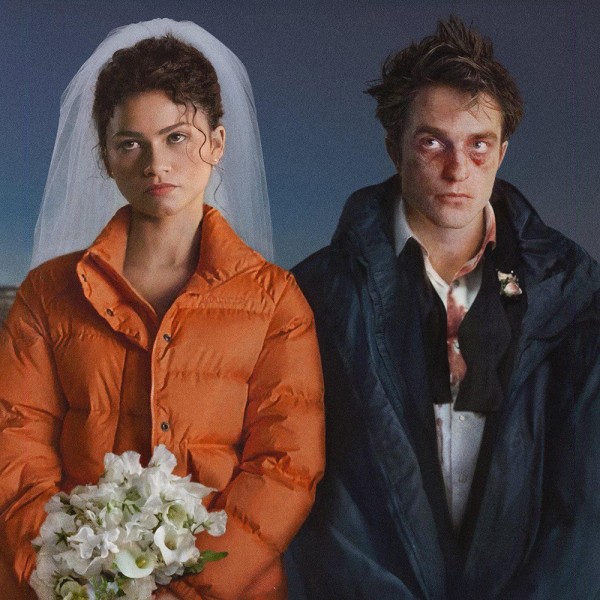
Written and directed by Ivan Calbérac, Riviera Revenge follows the story of Annie (Sabine Azéma) and François Marsault (André Dussollier), a former military general. After being happily married for 50 years, François discovers 40-year-old letters in his attic revealing his wife’s torrid affair with their Niçoise friend Boris Pelleray (Thierry Lhermitte). Resolved to avenge the deed to the dismay of his wife and their three adult children, he goes hunting for the culprit on the Côte-d’Azur.

With no shortage of scenic shots and saturated in the essence of a summer spent along the European Riviera, Philippe Guilbert’s cinematography alone would have won me over in the cold depths of our New Zealand winter. Add perfectly timed editing from Reynald Bertrand, a suitably stylish French wardrobe from costume designer Rebecca Renault, and expertly fashioned sub-plots stitched into the story, and you’ve concocted the perfect recipe for a rom-com à la francaise. Not to mention the kind of finely tuned, subtle acting you get only from veteran performers at the peak of their power.

Light-hearted, cheeky, and suitably silly with just the right amount of sass and sauce, saunter to Riviera Revenge in cinemas, but be warned: N’avoue jamais or never admit – the original title – is perhaps a better indicator of what to expect!

Shostakovich: UNPACKED with Antipodes Quartet | Regional News

Shostakovich: UNPACKED with Antipodes Quartet

Presented by: The New Zealand String Quartet Trust

Prefab Hall, 6th Aug 2025

Reviewed by: Ruth Corkill

This is my first encounter with the Prefab Hall venue, and I am impressed. The glass and cathedral-grain plywood interior is an ideal backdrop for this intimate chamber music performance. There is minimal but effective stage dressing consisting of suitcases, sheet music, and candles. In the front row, we are within touching distance of the cellists.

The production includes many thoughtful touches. The programme notes for each piece are written by a different musician, and include their personal musings and emotional responses to the works. Before each musical work, NZSQ violinist Peter Clark reads a poem by a well-known author from Aotearoa. Each poem is cleverly chosen to resonate with the themes of the music. It’s an effective convention; the poems feel almost like palate cleansers between courses of rich food.

We begin stirringly, with the newly formed Antipodes Quartet in their Wellington debut, playing Dmitri Shostakovich’s String Quartet No. 7 in F-sharp minor. Right from violinist Mana Waiariki’s adroit opening the quartet are precisely attuned to each other. This is an emotionally and structurally complex work, which I last saw performed by the internationally renowned Borodin Quartet, yet I was astounded and moved by this rendition.  

Antipodes Quartet follow the Shostakovich with Gao Ping’s A Lingering Echo – homage to Dmitri Shostakovich. We then have a reshuffling of musicians. Antipodes Quartet cellist Lavinnia Rae is joined by two New Zealand String Quartet members and guest violinist Arna Morton for Shostakovich’s String Quartet No. 6 in G major. It’s a tremendous pleasure to see these different combinations of artists working together, especially at such close quarters when the minutiae of their techniques can be appreciated.

All eight musicians return to the stage for the decadent and diabolical final work, Shostakovich’s Two Pieces for String Octet. The octet produces a gloriously balanced sound – each young musician synergistic with their counterpart. Luminary cellist Inbal Megiddo is especially magnificent, drawing overwhelmingly beautiful phrases from her instrument.

Party Faithful | Regional News

Party Faithful

Presented by: Orchestra Wellington

Conducted by: Marc Taddei

Michael Fowler Centre, 26th Jul 2025

Reviewed by: Ruth Corkill

Party Faithful is a remarkable concert programme, presenting two symphonies – both Aotearoa premieres – by 20th-century masters. Dmitri Shostakovich’s Symphony No. 3 in E-flat Major, Op. 20 The First of May, and Benjamin Britten’s Symphony for Cello and Orchestra, Op. 68 both emerged from complex times in the artists’ careers, when each composer was publicly celebrated yet privately vulnerable. The two men were near exact contemporaries: while Shostakovich navigated his perilous acclaim under the shadow of Stalin’s purges, Britten lived a precarious double life in England – a semi-closeted gay man, who nevertheless enjoyed the official patronage and personal friendship of the British Royal Family.

We open with Britten’s Symphony for Cello and Orchestra, an intellectually demanding work composed for the legendary Russian cellist Mstislav Rostropovich. Soloist Lev Sivkov joins the orchestra, and from the outset commands the stage. The piece unfolds as a series of musical affirmations and challenges that threaten to destabilise the work, before once again allowing the soloist enough momentum to counterbalance the orchestra. Sivkov’s characteristically intense style extracts each phrase with precision, switching deftly between tones in an assortment of grainy, breathy, and rumbling theme-fragments. He fires volleys only to cut them off abruptly, or detonates hard-struck chords only to demur and dapple us with a warm, golden cadenza. The audience is engrossed, and even Sivkov’s fellow musicians seated around him seem transfixed by his playing.

By the time Shostakovich composed the symphony featured in tonight’s programme, his friend and fellow composer Mikhail Kvadri – who had received the dedication of his extraordinary First Symphony – had already been executed. Fittingly then, the Shostakovich we hear in this Third Symphony brims with political contempt and anxiety. The work uses a single-movement structure, with marches, brass flourishes, and lyrical passages tripping over each other in their desperation to proclaim the praises of the Soviet State, without a single theme repeated. The conclusion is a driven and disquieting fanfare, culminating in a compelling choral section from the Orpheus Choir.

Mana Moana | Regional News

Mana Moana

Presented by: New Zealand Symphony Orchestra

Conducted by: Brent Stewart

Michael Fowler Centre, 24th Jul 2025

Reviewed by: Tamsin Evans

There are so few opportunities to enjoy collaborations like this one that the audience dived wholeheartedly into the enormously uplifting experience Mana Moana offered us. The very full programme was a repertoire of songs from around the Pacific Islands arranged for Signature Choir and the NZSO. “Pasifika music is grounded in storytelling, vocal interplay, and spiritual expression while orchestral music brings scale, structure, and emotional range,” Signature Choir founder and music director Fepulea’i Helen Tupai says.

The Signature Choir embraces more than 50 vocalists, and was formed three years ago in Te Whanganui-a-Tara Wellington to promote Pacific language and culture through music. The local audience loves their local choir and plenty of waves, smiles, greetings, and eye contact between singers and family in the crowd added to the palpable excitement in the sold-out auditorium.

We voyaged between the Cook Islands, Fiji, Niue, Samoa, Tokelau, and Tonga, guided by exceptional talent: Helen Tupai and Jadrah Tupai, director and co-director of the Signature Choir; Brent Stewart conducting the NZSO; and MC Tofiga Fepulea’i. With one of Aotearoa’s leading comedians at the helm, the evening was filled with laughter as well as the simple but powerful happiness inspired by the music.

And the music was awesome. The choir was superbly supported by the orchestra. Voices might sometimes be overwhelmed by instruments but not in this performance. The sounds of the Pacific were front and centre and the orchestra proved how musical traditions can step out of their familiar spaces. Western culture claimed the term ‘classical’ for its music and musicians, but the NZSO showed us how they can flex those boundaries. Expert arrangements and wonderful performances demonstrated how cultures can combine in musical and metaphorical harmony. Whoops, cheers, dancing, clapping, singing, laughter, and delight were the other prominent sounds of the evening, all of them rapidly growing in the last quarter of the show. Pure joy.

The Futures of Democracy, Law and Government | Regional News

The Futures of Democracy, Law and Government

Te Herenga Waka University Press

Edited by Mark Hickford and Matthew S R Palmer

Reviewed by: Kerry Lee

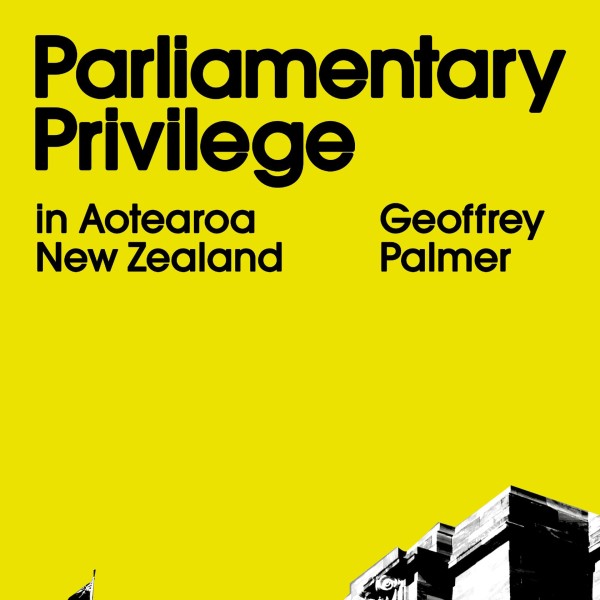
After reading The Futures of Democracy, Law and Government: Contributions to a conference in honour of Sir Geoffrey Palmer, I have a renewed appreciation for the laws that make up our society. While I was just a boy and not interested in politics when Sir Geoffrey took office, I can now honestly say that I retroactively appreciate him.

Starting as a law professor and then an MP representing Christchurch, in 1979, he went on to help form the fourth Labour Government as their justice minister. He was responsible for helping to develop many acts in this capacity, including the New Zealand Bill of Rights, before becoming our 33rd prime minster in 1989.

The Futures of Democracy, Law and Government is a series of essays by eminent judges, scholars, and politicians who discuss elements of his career in public affairs. The book explains why things are the way they are and the role political parties play in our Westernised democratic system, touching on human rights and the Treaty of Waitangi as well as a host of other things we sometimes take for granted.

My favourite part of the essay collection was finding out about Sir Geoffrey’s understanding of the environment and how climate change would affect not only individuals but businesses as well. There was a need, as the book says, to safeguard the environment for future generations.  

Despite being a very thorough read, I never felt intimidated by the subject matter of The Futures of Democracy, Law and Government. While I am by no means a politician, the writing was easy to follow and I was able to grasp many of the concepts laid down. While I enjoyed the book and it made me appreciate the laws that are in place today, I can see how someone who isn’t into politics to begin with might not be convinced to start tuning in.

In short, if you love politics, I wholeheartedly suggest picking this book up. Even if you don’t, I still recommend checking it out to see if it’s for you. I suspect you will not regret it.

The Stars are a Million Glittering Worlds | Regional News

The Stars are a Million Glittering Worlds

Written by: Gina Butson

Allen & Unwin

Reviewed by: Jo Lucre

In The Stars are a Million Glittering Worlds, Central America promises to be an all-encompassing escape from the guilt-ridden shores of Aotearoa for Thea. There, she joins Chris, the elusive man she’s thought of exploring the possibility of having more than friendship with – until he introduces her to his girlfriend Sarah.

Despite Thea and Sarah’s initial reservations, the three fast become an inseparable trio.  Author Gina Butson brilliantly captures the heady nature of their friendship, played out in San Pedro La Laguna, a Guatemalan town on the southwest shore of Lake Atitlán. Beautifully expressed, it’s easy to imagine the vibrant place, rendered eloquently by Thea’s imaginings. San Pedro is where the hum of energy seems to inexplicably hold the trio together with the strength of shared friendship and the intoxicating pull of a different culture and way of life. One albeit tainted by the seedier side of drug trading life. An emerging catalyst of discontent soon reveals itself.  

Wonderfully written, each of the four parts of The Stars are a Million Glittering Worlds purposefully builds a narrative that is gentle though not passive, interchanging the past and present. When tragedy rewrites the trio’s journey and the nature of their intwined relationships, Thea finds herself far way again, this time in Tasmania, Australia navigating a new relationship of sorts.

It's a relationship and span of time that will test her, make her search unknowns, rail against past and present trauma, and rally against unanswered questions. Ultimately, it will lead to her figuring out a literal and metaphorical way home that is paved with resolution, self-exploration, and forgiveness.

At times throughout The Stars are a Million Glittering Worlds, I thought the story may end a different way. The lives of Thea, Sarah, and Chris seemed to hitch frequently on happenstance and an undercurrent of doubt, with understandings between the characters that to me suggested a different outcome… until it all panned out organically in a way that made sense.

Illusionist Anthony Street | Regional News

Illusionist Anthony Street

Presented by: Base Entertainment

Created by: Anthony Street

The Opera House, 20th Jul 2025

Reviewed by: Alessia Belsito-Riera

Are you a believer or a sceptic? The kind of person who just wants to be entertained by the mere mention of magic or someone who needs to know the truth behind the smoke and mirrors? Illusionist Anthony Street – with what seems like nothing more than a flick of the wrist or a snap of his nimble fingers – leaves both camps spellbound.

From behind puffs of smoke and billowing satin flags, the Australian dream maker conjures up grand illusions for his audience of willing Wellington fans, fabricating worlds of wonder where anything is possible. He makes dancers Imogen Doody and Rachael Peters vanish seemingly into thin air – weren’t they just inside that sword-stabbed box not a moment before? Audience members are brought to the stage only to find their chosen cards appearing in the most unexpected places. A motorcycle somehow materialises at the flash of a perfectly timed lighting change (Xavier Dannock). Each one of us in the crowd, after performing a card trick according to the instructions, finds the three of diamonds tucked snuggly beneath our leg, just as Street predicted.

But it’s not just the illusions of grand scale that make Street’s audiences “ooh” and “aah” on cue. His skill and showmanship shine brightest in the smallest tricks, in the intimate moments of heartfelt humour, sentimental storytelling, and charming connection. Beginning the show by performing the first magic trick he ever saw, Street walks audiences down memory lane, tracking the standout moments that led him right here to The Opera House stage.

Watching eight-year-old Willow’s eyes light up as she helps Street levitate a table on stage or little Basil’s eyes widen in disbelief as the illusionist pulls coins from behind his ears and elbows are the truest and purest moments of magic. With stage manager Jeremy Evans in tow with a camera linked up to a projector screen above the stage, Street takes three rings from the audience and, before our eyes, links them together – I cannot for the life of me figure out how he did it. And truthfully, I don’t really want to know. Call me a believer, but I prefer to live in a world imbued with magic.

How to Train Your Dragon | Regional News

How to Train Your Dragon

(PG)

125 minutes

(4 out of 5)

Reviewed by: Alessia Belsito-Riera

It’s been a long time since I have left the cinema with such a big smile on my face. Whether you want to attribute it to the heartwarming story, the irresistible charm of an exceptionally cute dragon named Toothless, or the fact that I have watched both this new live-action iteration and the original animated feature sat next to my mum in the cinema is your call. Regardless, I would bet that How to Train Your Dragon will make you smile as much as it did us.

If you, like me, recall staring starry eyed up at the screen when the animated movie How to Train Your Dragon was released in cinemas in 2010, then you’re in luck, because the live-action version is essentially a shot-for-shot remake. For those who didn’t grow up with the franchise, the first film in the series takes place in a Viking settlement that battles with dragon attacks daily. Descended from the best fighters of all the Viking tribes, the inhabitants of the Isle of Berk have been tasked with one job: kill all dragons. To chief Stoick the Vast’s (Gerard Butler) dismay, his son Hiccup (Mason Thames) either didn’t inherit the dragon-slayer gene or perhaps just sees the world a bit differently. When Hiccup befriends a dragon named Toothless, he never would have guessed that together they would turn the world upside down.

Written and directed by series creator Dean DeBlois, the live-action film sees Nick Frost in the teacherly role of Gobber the Belch, New Zealand’s own Julian Dennison as Hiccup’s classmate Fishlegs Ingerman, and Nico Parker of The Last of Us fame as Hiccup’s crush Astrid Hofferson alongside relative newcomer Thames and Butler reprising his original role. Together, they deliver a performance that captures the same charm and high-adrenaline spirit of the original cartoon without seeming over the top. The story and world are believable, and incredibly beautiful thanks to cinematographer Bill Pope’s sweeping shots of the Irish coast. The CGI has copped some criticism for not blending in well with its surroundings, but it looked seamless to my untrained eye. With excellent production design (Dominic Watkins), costumes (Lindsay Pugh), and dynamic editing (Wyatt Smith), How to Train Your Dragon is as joyful, adventurous, and fun as I remembered it so many moons ago.

Firebird: Ravel & Stravinsky | Regional News

Firebird: Ravel & Stravinsky

Presented by: New Zealand Symphony Orchestra

Conducted by: Emilia Hoving

Michael Fowler Centre, 17th Jul 2025

Reviewed by: Tamsin Evans

John Ritchie’s Papanui Road Concert Overture was a brilliant opening piece in this programme. The road came to life in a series of distinct soundbites. It really was like walking down the street, checking the front gardens, peering up driveways, spotting locals, remembering events, and noticing what was going on.

Pianist Javier Perianes played Manuel de Falla’s Nights in the Gardens of Spain with a sound neither dominant nor lost in the orchestra. Just as the composer intended, all the musicians came together in a lovely unity of Andalusian, flamenco, North African, and classical traditions.

Ravel’s Piano Concerto in G Major is also an intermingling of styles, this time the composer’s Basque heritage and 1920s jazz. The opening whip crack tells you this is something different. The first and third movements have a tinge of jazz to go with the folk melodies. From the first piano notes – which were beautifully played – the balance and tone in the piano and orchestra were so seamless that in the second movement, it was as if the woodwind emerged from inside the piano, one after the other. Emilia Hoving’s conducting talent and style were really apparent here.

While playing in different time signatures in each hand is definitely challenging for the pianist, imagine the next level of difficulty this presents for the conductor. Hoving is a very talented, assured, and confident young director. Her distinctive style has been noted by commentators in the last couple of years. Here she appeared to be conducting a different time in each hand, each comfortably independent of the other.

Leading the orchestra into Stravinsky’s The Firebird, Hoving played with the opportunities the 13 movements presented to bring out some amazing solos from horns, strings, woodwind, and harp. The intensity and liveliness grew, building towards a thrilling finale. Waves of pulsing sound raised the heart rate, excitement, and the applause.

The Phoenician Scheme | Regional News

The Phoenician Scheme

(M)

101 minutes

(4 ½ out of 5)

Reviewed by: Alessia Belsito-Riera

By the time Anatole Zsa-Zsa Korda’s sixth assassination attempt is underway, Wes Anderson’s orderly, well-balanced world has been blown to smithereens… quite literally. As for Korda (Benicio del Toro), he seems more annoyed than afraid.

We soon learn that this is nothing out of the ordinary for ‘Mr Five Percent’. The world’s most elusive businessman seems to profit from dubious dealings – hence the routine assassination attempts. Except this time, something has changed. After his latest plane crash, Korda had a vision: a Biblical, black and white cut scene in which he appears to be on trial for his life. Perhaps he died for a moment this time. Regardless, it won’t be his last vision or death

He decides to appoint his only daughter, Liesl (Mia Threapleton), a nun, as sole heir to his estate. Thus begins The Phoenician Scheme, setting Korda, Liesl, and Norwegian entomologist tutor-turned-administrative secretary Bjorn (Michael Cera) on a madcap venture to revolutionise the area formerly known as Phoenicia.

Written by director Anderson and Roman Coppola, The Phoenician Scheme, like any Anderson film, is distinctively his in every aspect. From sets to sound, dialogue to dramatics, the master of arthouse filmmaking has done it again. His latest is isolating yet intimate, microscopic yet monolithic, a perfectly choreographed two-step where moments of high-stakes intellect waltz onto the screen only to be replaced by a lindy hop of unhinged absurdity.  

Adam Stockhausen’s sets look as flimsy and fabricated as Korda’s grand scheme, while Bruno Delbonnel’s cinematography makes everything seem toy-like and distant yet still utterly personal and aesthetic as in true Anderson fashion. The score, crafted meticulously by Alexandre Desplat, is incessant. Like a dripping tap, it accompanies every breath, every argument, every drop of every pin. As messy as Korda’s world, it eats away at your sanity as the story devolves into chaos and uncertainty.

Add flat lays, extreme long shots for exposition, and hyper-detailed closeups overflowing with props and the result is a reality that seems both utterly fabricated and inherently real, chaotic and choreographed, impossible and familiar. Despite its orderly appearance and general dreaminess, The Phoenician Scheme is a world of inconsistencies, opposites, coincidences, tragedies, and miracles. Like every Wes Anderson film, it’s a bit like life itself.

The Fox | Regional News

The Fox

Written by: Keith Scott

Directed by: Annabel Hensley

Gryphon Theatre, 9th Jul 2025

Reviewed by: Zac Fitzgibbon

A story as dark and cold as a Wellington winter night, The Fox gently unravels a modestly content household in the pursuit of happiness. Inspired by D. H. Lawrence’s novella of the same name, Keith Scott’s The Fox follows Jill Banford (Yasmine Alani) and Nellie March (Lottie Butcher), who live a humble life on a farm. Things go awry when Henry Grenfel (Sven Hoerler) returns from fighting in World War I to the homestead his grandfather had once owned, now the abode of Jill and Nellie.

The Fox is drenched in symbolism, which is often overlooked in plays, but the actors do well to emphasise phrases so that the audience can easily understand the references. Whether it is the titular fox or a deer, everything in the script has a deeper meaning. It takes paying a penny for your thoughts to a whole new level. We are prompted to view everyday life through a different lens, eager to dissect the meaning in everything. The Fox serves as a warning about the place we put men in our lives and homes and the damage they can cause.

The cast keep the audience engaged throughout – no mean feat for just three actors – and portray their characters with nuance, showing us the complexity and frailty of their relationships. I particularly enjoy the queer coding between Jill and Nellie.

The set (Ewen Coleman) provides the perfect backdrop and really feels like the quaint home Nellie and Jill have spent years perfecting. It is also refreshing to see how well utilised the set is, as each part serves a purpose.

This Wellington Repertory Theatre production will get you pondering on many levels as it asks a question about the cost of happiness and whether it is achievable. I know I will still be thinking of it in the days ahead. Come in from the cold and see for yourself the damage a fox can do.

DARKFIELD | Regional News

DARKFIELD

Presented by: Realscape Productions

Running at Odlins Plaza till 27th July 2025

Reviewed by: Madelaine Empson

By now, anyone wandering Wellington’s wonderful waterfront would have spotted two large shipping containers set up at Odlins Plaza. In giant block letters, one reads FLIGHT, the other SÉANCE. But what worlds wait inside?

DARKFIELD is an immersive audio experience that takes place in total darkness, but not before audiences see the inside of the containers. This gives us a setting for the experience to unfold and grounds us in reality before the rug is pulled out from underneath us (figuratively, but it sure feels literal) and our imaginations take flight.

Which brings me to FLIGHT. With the Australian and New Zealand set built by Show Works, stepping inside this container elicits a collective audible gasp. It looks practically identical to the right side of an airplane cabin, complete with round windows through which a faint glow emits. Familiar sounds you’d hear on any flight beep and crackle through the provided headsets. Hilariously, and without being asked to do so, many of us fasten our seatbelts. On small overhead screens, flight attendant Eugénie Pastor relays safety instructions and our captain, Nigel Barrett, dials in. Cue lights out.

It's pitch black as the sound of our plane taking off blares in our ears. I nearly get vertigo and, as I thrust back in my seat unwittingly, I curse inwardly for having forgotten my sucky lollies. Then I remember… this isn’t real! Talk about suspension of disbelief.

Fictional babies start to cry from multiple seats as their ears pop from the altitude and I find myself counting my blessings I’m not seated next to one of them before remembering, again, that I’m on the ground in Wellington. A hilarious highlight of the 360-degree audio performance comes when our flight attendant tells the babies to stop crying, please, and dead silence ensues.

The story that unfolds from here is a touch on the nose radome, particularly with the reference to a passenger named Mr Schrödinger. As someone who genuinely felt like they were on an airplane in the first five minutes, the script’s diversion into fantastical realms muddied my experience. I’d be curious to see a storyline that leans more on the merits of such a brilliant and unique concept – perhaps one that takes audiences on a regular flight filled with interesting character studies or relationship (aero)dynamics. Nevertheless, I’d recommend DARKFIELD: FLIGHT for the highly detailed set and the singularity of the experience: apart from next door at SÉANCE, you’ll never see (or hear) anything like it!

SÉANCE sees audiences enter a room single file, peeling left and right to sit on either side of a large rectangular table that runs the length of the shipping container. Small golden bells dangle on red strings, but other than that, the set (built for Australia and New Zealand by Form Imagination) is stark, cold. We’re instructed to place both hands on the table and to not, under any circumstances, take them off for the duration of the experience, lest we break the connection and unleash a spirit. Nervous energy crackles down the table like electricity. When the lights go out, Tom Lyall performs a séance through our headphones, seemingly stomping up and down the table and whispering sweet spooky nothings in our ears. I can’t spoil the story here, but there’s a certain melting, squelching sound that still makes me shudder!    

With artistic direction from David Rosenberg and Glen Neath, executive direction from Andrea Salazar, and creative direction from senior creative producer Victoria Eyton, DARKFIELD is produced by Amy Johnson and Nathan Alexander of Realscape Productions. I would’ve loved to have seen more character development throughout both stories, but wholly enjoyed my time in the alternative worlds, the heart-palpitating dark fields conjured up by this creative team. Enter at your own peril!

The Ballad of Briar Grant | Regional News

The Ballad of Briar Grant

Written by: Jack McGee

Directed by: Lia Kelly

BATS Theatre, 8th Jul 2025

Reviewed by: Stanford Reynolds

The Ballad of Briar Grant tells the story of Hayley (played by Phoebe Caldeiro) and how she finds herself again after confessing her true feelings and being rejected by Briar Grant, her best friend. After her hopes are crushed, aimless and despairing, she ends up travelling to an apple orchard in the south of France. Here she is confronted by fate and unable to escape her emotions, as the woman she is working with is also called Briar Grant (played by Anna Barker).

Barker and Caldeiro have excellent chemistry, their sharp and considered delivery getting the humour of the script across as the ridiculous coincidence of their situation is ignited by their opposing personalities. Hayley is dejected and lost, struggling to draw meaning from the beautiful landscape she has found herself in. Meanwhile, Briar is manic, brash, and desperate for connection to the point of unabashed obnoxiousness. The characters are relatable, and while their situation may not be familiar, it is easy to empathise with them and read oneself into the story. Hayley’s feelings of despondence and frustration are compellingly painted by Caldeiro, matched by Barker’s neurotic pushiness as Briar Grant.

The set design by Heather Wright is effective, consisting of modular crates full of apples and some drapes that evoke the rows of the apple orchard. Sound design by Ben Kelly and lighting by Jacob Banks also satisfyingly set the scene, with sounds of birdsong and an orange glow of light to depict the warm, sunny day in France. Lighting and sound are also used to punctuate key moments in the play, including the climax of the story where Hayley’s emotions finally build up to express her frustrations about her original Briar in song. 

At times, there are pregnant, ponderous moments in the play where the action is drawn out and we are able to reflect on what the characters are going through. Sometimes the motivation in these moments is a little unclear, but overall, the script is understandable and lifelike. Thus, it is incredibly cathartic to see the characters grow and change, and reflect on how we also may have become different from our past selves.

The Sound Inside | Regional News

The Sound Inside

Written by: Adam Rapp

Directed by: Stella Reid

Circa Theatre, 6th Jul 2025

Reviewed by: Tanya Piejus

Bella Baird is a brilliant but brittle Ivy League creative writing professor. Christopher Dunn is her talented yet angry and somewhat mysterious student. Surrounded by real life and literary fiction, an unusual friendship grows between their two lonely souls. Then one winter’s day, Bella asks an unthinkable favour of Christopher and their figurative and literal bonds turn full circle.

With much of the text delivered in direct address to the audience, Dulcie Smart has a huge job to do in playing Bella and does so with the self-assurance of an accomplished international stage and screen actor. As Christopher, Kieran Charnock carefully carries the awkwardness and sometimes disingenuous nature of a young novelist struggling to find his identity and voice. 

Stella Reid’s tight and flowing direction makes the most of Meg Rollandi’s creative set design that allows multiple rooms, a bar, and a park to co-exist without need for walls. Natasha James’ moodily effective lighting design that employs three onstage lamps, plus top and side light through haze, emphasises the darkly multi-layered narrative. Thomas Arbor’s shapeshifting music and sound effects provide a pulsing sonic backdrop, most appreciably during the scenes where both actors are on stage. 

I appreciate the expressive and often lyrical writing, the exploration of the loneliness that sometimes accompanies high intelligence and literary sensibility, and the encircled creativity of the story. I would like to have seen Bella and Christopher interact more often and have more actual dialogue and less reported speech than Adam Rapp’s script gave them as their refreshingly non-sexual relationship unfolded. This I think would have allowed me to emotionally invest in the characters and their fates, rather than marvelling at their intellectual capabilities. Ultimately, The Sound Inside tugged more at my head than my heart.

With an award-nominated script, high production values, slick direction, and highly rated actors, The Sound Inside is a classy piece of theatre that will leave you with much to chew on and dissect.

Sick Power Trip | Regional News

Sick Power Trip

Written by: Erik Kennedy

Te Herenga Waka University Press

Reviewed by: Margaret Austin

What do you do when confronted by the current and impending horrors of today’s world? If you’re a poet, you face up squarely in the best way you know. And in Erik Kennedy’s case, this means writing a collection titled Sick Power Trip. Here are poems that take their themes from both human behaviour and the natural world and couch them in language that dispenses with disguise. From wistful to cynical, from challenging to harshly judgemental, Kennedy dissects what we’re experiencing with poetic deftness.

I Like Rich People, but I Couldn’t Eat a Whole One Myself is an especially graphic example, with grandly cynical lines like “Billionaires are just ordinary people / who throw away / their electric toothbrushes / every night.” Yet such cynicism is balanced by the poet’s acknowledgement of our shameful commonality.

Enclosure of the Commons 11 is a nostalgic reference to old-style ownership. Yet it asks the question “Can anything really be ‘owned’?” and concludes with “You don’t get very far saying / that everything belongs to everybody.” By contrast, Soft Power looks to a time when animals could not only speak but were to prove more entertaining than humans! “They were oracles, troubadours, bards, soothsayers, heartthrobs.” If only!

Wistfulness forms part of Kennedy’s poetic vocabulary. It’s best exemplified in An Only Child Poem in which an overheard conversation in French on the bus suggests that the speaker is paying tribute to a beloved mother: “his dear mother who wanted the world / for him to be big and full of boulevard views”.

Most searing of all perhaps is one of Kennedy’s concluding poems: Bystander Poem; or a Gaza Poem which begins with “If you can listen to the stories and not shudder, / you have a refrigerated beetroot for a heart.” Graphic, thrusting, and a cold reminder of our universal awfulness. We may not be complicit, our poet seems to say, but we’re not exempt.

Sick Power Trip is a saddening and salutary journey into self-awareness made universal.  

NYO Adventure | Regional News

NYO Adventure

Presented by: New Zealand Symphony Orchestra

Conducted by: Adam Johnson

Michael Fowler Centre, 5th Jul 2025

Reviewed by: Tamsin Evans

After the opening piece, Don Juan by Richard Strauss, conductor Adam Johnson told us it wouldn’t be the last time the New Zealand Symphony Orchestra (NZSO) National Youth Orchestra (NYO) string musicians would play it. Don Juan is apparently one of the more difficult pieces in the repertoire and, should they pursue their careers with other orchestras, they will probably find themselves playing it in their audition. On the strength of this performance, their careers, and those of their colleagues, are off to a great start. The sound was lush and deep with strong rushes of romanticism through lovely legato playing.

Soprano Madison Horman, a local from Palmerston North with an impressive musical education, took on the challenge of Strauss’ 4 Lieder, Op. 27. Horman has a rich tone and although a little outweighed by the orchestra in early, quieter passages, her big voice did justice to one of the most frequently performed of Strauss’ works.

As well as an opportunity for the country’s best young musicians to play and perform together, the NYO also supports an annual composer-in-residence. This year, Luka Venter drew inspiration from UNESCO’s International Year of Glaciers’ Preservation to take listeners inside a glacier. Glaciers are in a constant state of change and Venter captured the sounds of that perpetual movement with a mysterious accuracy. As well as depicting the vivid blue colour of the ice, we could hear the light dancing through the form of the glacier.

Rachmaninov’s Symphony No. 2 brought together all the hard work our National Youth Orchestra musicians have put in on their own, in their regional groups, and finally, as one orchestra rehearsing together for the last week. The passion of the piece was matched by passion in the performance. It feels harsh to pick only one amongst so many, but the standout was the principal clarinet in the Adagio. Long passages, played with infinite care and attention, held the narrative perfectly.

Heidi and Sean Show | Regional News

Heidi and Sean Show

Presented by: KidzStuff Theatre for Children

Created by: Heidi Jean Lougher and Sean Kaata Dwen

Tararua Tramping Club, 28th Jun 2025

Reviewed by: Tania Du Toit

Mister Six and I had the privilege of being in the presence of a famous duo at Heidi and Sean Show. Heidi Jean Lougher and Sean Kaata Dwen have trained and performed all over the world, including Vietnam, Scotland, and Iceland, and they did not disappoint. They may have even encouraged my son to attend circus school one day!

Although the weather is wet, the Tararaua Tramping Club Clubrooms are warm and cosy. We are warmly welcomed by Fergus Aitken and show producer Amalia Calder at the door and make our way to the lolly table, which has become a part of our tradition when attending KidzStuff shows. Then we go to scout out some choice seats. The venue is already pretty full, and I am surrounded by lots of excited faces. What I love about the theatre is the fact that there aren’t allocated seats, and the kids are welcome to sit on the rug right in front of the stage. Talk about front-row action!

Heidi and Sean’s simple but effective staging, costumes, and props make us intrigued about what tricks they might have up their sleeves. The lights and music by the wonderful Deb McGuire set the vibe for each act.

With the number of oohs and aahs, gasps and claps that we heard (and sounded ourselves), it’s safe to say you and your kids will be in for a treat at Heidi and Sean Show. Humorous jokes are worked into the act, aimed at both young and old. It gets even more fun with a bit of audience participation, and the finale will leave you wanting more.

After every show I go to with Mister Six, I always ask him what his favourite part was. Unfortunately, I can’t share his specific answer this time because I don’t want to spoil it for you, but it does turn out that he loved… drumroll please… all of it! He loves magic, tricks, stunts, and all things awe-inspiring. So, pop down to Heidi and Sean Show for a show like no other these school holidays!

Secret Art Powers | Regional News

Secret Art Powers

Written by: Jo Randerson

Barbarian Productions

Reviewed by: Margaret Austin

I don’t think I’ve ever before used the word “groundbreaking” to describe a book! I’m using it now because I’m reading Secret Art Powers by Jo Randerson. This book is so overwhelming that I had to stop reading it at intervals to fully experience and come to terms with my feelings of joyful recognition. I am a theatre practitioner and reviewer, so Randerson’s reflections, experiences, and observations, grounded in their love of theatre, resound especially strongly. That said, there is a wealth of material to interest and challenge other readers and even quirky illustrations “crowdsourced during sessions of group drawing”, Randerson acknowledges in their foreword.

“Art is a way of being,” Randerson continues, and this volume goes on to expand on that theme, and perhaps even more importantly, on its implications. The six powers they write about are explored – one might even say exploited – in the interests of art and the artist. None more so perhaps than their first power, which they title Lies. What could lies have to do with art? Plenty, Randerson asserts. Many truths exist and they are sometimes in conflict with each other. “The truth is rarely pure and never simple”, as Oscar Wilde wrote in The Importance of Being Earnest. And art can and does describe realities that have their own truth.

The secular world, and the political one, have difficulty with such a wide-ranging concept. Witness the pitifully small financial support given to artistic endeavours in this country compared to the vast amounts allotted to sport! I’m tempted to say that those in charge of such decisions suffer from a severe lack of imagination, sensitivity, and any valuing of the place of emotional response.

What does exaggeration in a theatre piece matter if it makes an important point? Why shouldn’t irony and satire be acceptable as ways of exposing wrong or corruption? These and similar arguments are skilfully and passionately presented by Randerson in their six parts: Lies is followed by Fluidity, Multiplicity, Wrong, Live, and Imagination.

Secret Art Powers has the subtitle: How creative thinking can achieve radical change. This book is a giant step in that direction.

A Nightime Travesty | Regional News

A Nightime Travesty

Presented by: A Daylight Connection and Brink Productions

Directed by: Stephen Nicolazzo

Hannah Playhouse, 12th Jun 2025

Reviewed by: Tanya Piejus

Presenting A Nightime Travesty in its international debut, one of Australia’s few First Nations independent theatre collectives explodes onto the Wellington stage as part of the Kia Mau Festival. Their “unique brand of Blak Brechtian, post-traumatic adventure theatre” is a brutal, passionate, and X-rated satire against toxic patriarchy, colonialism, environmental destruction, white supremacy, and the abuse of God to demonise and subjugate Indigenous peoples. Even the inequities and privations of the theatre world come under its savage spotlight.

Co-creators and committed performers Kamarra Bell-Wykes and Carly Sheppard play the lion’s share of the roles as the Last Fleet of privileged humans takes to the sky to escape a poisoned Earth burning below them. They’re bound for an uncertain fate, perhaps the afterlife they’ve dreamed of in church. The “last Aboriginal”, the naively hopeful and warrior-hearted Angel, is one of two flight attendants and a failed pilot, denied the chance to fulfil her potential simply by her race and sex. The actual pilot, Captain God’s Gift, is an over-sexed, hugely endowed man-beast who ravages any available female just because he can. Lurking on the fringes and occasionally joining the story is a bong-smoking, masturbating Death (Zach Blampied).

Helping deliver the often hilarious, occasionally heart-rending original songs are smallsound and Matthew Pana on guitar and drums. smallsound is also responsible for the easily portable set design that involves a desk, skulls, stuffed toys, a couple of small bins, a large gong, and various other bits and pieces that Death plays with and that become props used throughout the show, alongside the odd amputated limb and severed head. Gina Gascoigne’s pacy lighting design augments the garish, crazy action.

A Nightime Travesty thoroughly eviscerates its themes in 100 minutes of raw, eye-popping theatre. Sit in the front row and you’ll be offered bottles of urine and cat food to keep you going on this journey to Hell. Strap in for a wild ride!

Favoured Son | Regional News

Favoured Son

Presented by: Orchestra Wellington

Conducted by: Marc Taddei

Michael Fowler Centre, 7th Jun 2025

Reviewed by: Ruth Corkill

This concert continues Orchestra Wellington’s season-long exploration of the works of Dmitri Shostakovich, spoiling us with the Aotearoa premiere performance of his Symphony No. 2 in B major, Op. 14 October. This challenging work epitomises a precious and precarious time in the composer’s career, when he was still the beneficiary of state support. October was commissioned by the Propaganda department of the State Music Publishing house to mark the 10th anniversary of the October Revolution.

The orchestra opens with low muttering strings, a chaotic ferment of pregnant tension. Music director Marc Taddei’s command of the symphony’s moods and mutations is masterful, and the audience clings on through tempestuous, whirling themes and an almost sarcastic march. Brass shines throughout, glutting on variations of liminal and mocking tonalities. This crucible of sound is collapsed instantly by the wail of a factory siren, a simultaneously otherworldly and industrial interruption that summons the choir (Orpheus Choir Wellington) for the rousing and bizarrely banal finale.

In the interlude that follows, our conductor confesses into the microphone, “Bonkers is the word for this music”.

This is a night of delights for the Russophiles, with Shostakovich set alongside his fellow countrymen, 19th-century greats Pyotr Ilyich Tchaikovsky and Nikolai Rimsky-Korsakov. It’s smart programming – opening with the melodic refusals and polyphony of October allows for the full shock value of the work to ring out, and makes the lyricism of the following pieces all the more pleasing.

Celebrated pianist Jian Liu joins the orchestra for Tchaikovsky’s Piano Concerto No. 3 in E-flat major, Op. 75 and delights us with his adept and sensitive playing. The evening closes with Rimsky-Korsakov’s Scheherazade, a tone poem whose endless harmonic invention and reinvention on the same seductive tunes conjures the plenty of the Arabian Nights. Concertmaster Amalia Hall winds balletically through the yearning violin melodies, complemented by dynamic section soloists, including a deliciously expressive oboe. We leave Favoured Son stimulated, satiated, and eager to see where this season’s narrative takes us next.