

Reviews - Regional News | Connecting Wellington

Reviews

Vividwater | Regional News

Vividwater

Written by: Jacqueline Owens

Four Elements Press

Reviewed by: Jo Lucre

She’s a “sellout bitch” to some, but to Alex Pym, her job as a mnemopath, a professional memory machine at the main water trading bureau WaiOra, is just a means to an end. With student debt high and no parents to fall back on, the job is a necessary evil. She’s there to remember the important stuff so others less competent don’t have to.

In Vividwater – the first of a three-part series – Wellington author Jacqueline Owens offers a fresh take on a dystopian tale. Aotearoa is a hydrosphere, one of the lucky few countries with enough drinkable water. The uniquely New Zealand setting and cultural references add to the gritty unrest, where decades of drought mean water is a highly guarded resource, scarce in the hands of many, plentiful in the hands of a few.

Alex’s job “finding new high-grade sources of crystalwater… even vivid water” is murky and morally ruptured. She’s looking for hydrocrimes, tracking hidden sources of water in people’s backyards under the premise of the common good. She’s whispering secrets and finding herself with a Platinum watercard. She’s part of a dog-eat-dog system, fractured between the haves and the have-nots, the upper classes rallying for water control and the bottom rung fighting for survival.

The reemergence of Alex’s ex-boyfriend Lawrence after 15 years in China spurs deep conflict within her and insightful reflection on the choices ahead. Her developing relationship with Lawrence is incongruous with the life she’s now living. Beneath every aqua transaction lies a human fragility and moral compass Alex must navigate carefully within a labyrinth of politics, corporate greed, and deception.

I liked the premise of Vividwater and Owens offers such an intricate and detailed preview of a future in which drought has rendered an Aotearoa that is difficult to imagine, where resources are scarce and all faces of humanity surface.

Though perhaps it’s not so difficult to imagine after all…

O Fortuna | Regional News

O Fortuna

Presented by: Orpheus Choir Wellington & Auckland Choral

Conducted by: Brent Stewart

Michael Fowler Centre, 28th Sep 2025

Reviewed by: Ruth Corkill

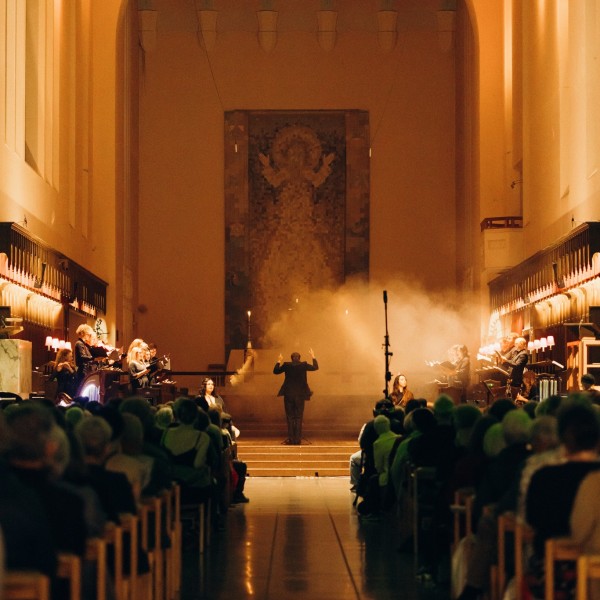
Nearly 300 performers take the stage for this epic collaboration between Orpheus Choir Wellington, Auckland Choral, a children’s chorus, the Wellington Brass Band, and outstanding soloists.

The concert opens with Leonard Bernstein’s Chichester Psalms, a lovely piece, full of unexpected turns and lyrical beauty that showcases Bernstein’s flair for blending classical structure with theatrical expressiveness. Bernstein composed Chichester Psalms in 1965, drawing on material originally written for West Side Story and an abandoned musical project titled The Skin of Our Teeth. In his solo passages, countertenor Coco Diaz masterfully draws out the jazzy, rhythmic vitality and melodic phrasing of the work. His performance is mesmerising, and his voice is smooth, pure, and richly coloured. However, the choir seems less confident, with moments of hesitancy and very little dynamic contrast.

No such hesitancy is to be found, however, once we are plunged into the epic tale of fate, revelry, and sensuality that is Carl Orff’s Carmina Burana. The full force of the Wellington Brass Band is on show from the first bars of the opening, and the choirs seem to swell and fill with colour to meet them. It is simply thrilling music.

What follows is a smorgasbord of moods and modes. Baritone James Harrison brings delightful comic flair to his performance, particularly in his drunken characterisation during In Taberna. His theatricality is matched by vocal precision, making his moments both funny and musically satisfying. Soprano Emma Pearson is faultless throughout; consistent, clear, and commanding. The Wellington Brass Band are wondrous, adding punch and texture to the already rich orchestration. Pianists Jian Liu and Diedre Irons, both elite soloists, anchor the performance with virtuosic clarity and stamina, their playing a masterclass in precision and expression. It feels like an extraordinarily rare treat to have two such exceptional pianists on stage at once. The heft and drama of the closing movement is hard to beat; monumental, visceral, and utterly absorbing.

If We Knew How to We Would | Regional News

If We Knew How to We Would

Written by: Emma Barnes

Auckland University Press

Reviewed by: Margaret Austin

“How many thoughts can you work into a single poem?” asks the back cover of If We Knew How to We Would. On starting to read the poetry therein, I found myself wondering if I could bear having as many thoughts as Emma Barnes!

The graphic quality of 72 pages of writing is what strikes you first. The opening poem Lineage has as its first statement: “The man with the sharp knife cuts the fat to tissue paper thinness and two people fold it into their mouths: a sacrament, like frills, like folds.” It goes on to elaborate on the theme set by the poem’s title: an intriguing combination of butchers, fate, and pigs.   

I especially like In your hands as it explores, with reference to the title’s ambiguity, that most controversial of subjects: love. “Your hand on my throat…” – and I’ll leave the rest to your imagination – recalls the title, but the reader is quickly relieved at the poet’s conclusion: “We’re all that’s happening now”: perhaps a philosophical remark, but at least we know they’re still alive!

The eponymously titled middle section of the collection comes with a warning to readers who may be wary of certain themes. On the day I found out you killed yourself is the most powerful example. Constantly repeating the words “believe” and “belief” as well as the poet’s violent denial of a reality effectively reminds us of our reaction to what we don’t want to accept.

Other poems in the same section echo similarly with grief and sorrow, expressed in mainly short sentences and powerful words, giving a staccato effect, very much the principal trademark of Barnes’ style.

One of the final poems I am is perhaps the best answer to the quoted question I started with. I just wish Emma an occasional rest from their thoughts and that they may take heart from the origami butterfly they refer to!

Over and Out | Regional News

Over and Out

Written by: Jackson Burling

Directed by: Simon Leary

BATS Theatre, 19th Sep 2025

Reviewed by: Tanya Piejus

Jackson Burling was told one thing: never become a truck driver. In Over and Out, part of the TAHI: New Zealand Festival of Solo Performance, he digs into the why of not following in his dad’s footsteps through an interview with diehard trucker Murphy, bringing us along for a joyous ride of emotional discovery.

Verbatim theatre has become an increasingly popular form in recent years for bringing authentic voices to the stage. Through Murphy, “a real guy being real”, we understand the hard and often-underappreciated life of New Zealand’s long-distance drivers. The hours are brutal, you’re always away from home and miss time with your kids, you subsist on junk food and V, you have to sleep in the back of your cab… There are many reasons not to choose this career, but it’s clear by the end of this 50-minute performance that those who do choose it love it with a passion that transcends the drudgery.

Burling is a superbly talented and highly engaging writer and performer. Under the expert guidance of director Simon Leary and with a stellar lineup of tech support, his tale goes far beyond the mere replaying of Murphy’s on-the-road interview. He jumps effortlessly between himself and Murphy with nothing more than a trucker’s cap as a prop. He also interacts with a projection screen (design and videography by Rebekah de Roo) and perfectly timed sound effects (Oliver Devlin) to tell his own story of choosing performance over driving. I won’t spoil the surprise of what a very clever lighting effect (Jacob Banks) does to represent his dad. Even Burling’s cell phone is part of the multimedia brilliance.

All of this could have been self-indulgent, but it’s entirely not. At the core of Over and Out is the relationship between Burlings junior and senior and it’s one that is beautifully revealed over the course of a warmly funny and innovatively produced show about taking your own path in life.

2:22 A Ghost Story | Regional News

2:22 A Ghost Story

Written by: Danny Robins

Directed by: Peter Feeney

Running at Circa Theatre till 11th Oct 2025

Reviewed by: Madelaine Empson

If you love experiencing the pure adrenaline shot a good horror can inject, I highly recommend 2:22 A Ghost Story. Set in a rapidly gentrifying pocket of London, the play follows married couple Sam (Regan Taylor) and Jenny (a wholehearted Pamela Sidhu), who are raising a new baby in an old home that they’re renovating. Jenny believes in ghosts; Sam, a scientist, does not. At a dinner party with their friends Lauren (Serena Cotton) and Ben (Jack Sergent-Shadbolt), wine flows, heads butt, and tensions rise as the clock ticks ever closer to 2:22, when something unspeakable changes everything.  

Cotton’s performance as a psychologist intoxicated by both booze and love is a highlight, and I particularly enjoy the interplay between Sergent-Shadbolt and Taylor, who deliver a contemptuous relationship with quick wit, twinkling eyes, and comic levity – much needed in a script that sets up some heavy themes. While Danny Robins’ writing is eloquent and clever, his dialogue feels more scripted than natural in parts (particularly in the way Jenny speaks), stunting the moments of emotional depth the cast are clearly capable of reaching in their exploration of those themes.

On the horror front, 2:22 A Ghost Story more than delivers. Chris Reddington’s prop design and hyper-detailed set (that staircase is spectacular) work in tandem with costume designer Shiloh Dobie’s special effects to create a couple of show-stopping moments. I can’t get into specifics here for fear of spoilers, but anyone who’s seen the show will know the hot second I’m talking about. And if you haven’t yet – cards on the table, why not? Special mention also to the rain trickling down the glass backdoor, emphasised by Marcus McShane’s striking lighting design and Dan Elliott’s thunderous sound design.

Director Peter Feeney puts all the moving parts of the intricate puzzle together, ensuring each spooky moment is perfectly designed and timed for maximum effect. The result is the audience reaction straight out of every horror creative’s best nightmare: the shriek, followed by the nervous, jittery giggle. I leave feeling exhilarated.  


Caught Stealing | Regional News

Caught Stealing

(R16)

106 minutes

(4 out of 5)

Reviewed by: Alessia Belsito-Riera

Caught Stealing doesn’t come out swinging. In fact, it feels like it’s taunting you, yelling “Hey batter, batter” from the sidelines for the first 30 minutes, but boy does it hit a homerun into a grand slam eventually.

Pulsing with energy, Caught Stealing feels as though it’s teetering on a precipice as Hank (Austin Butler), a 30-something boozed-up and burnt-out bartender tormented by baseball and broken dreams, desperately tries to catch the curveballs life throws at him. The most recent comes in the form of cat-sitting for his dodgy English neighbour Russ – played by a mohawked Matt Smith in a role that is equal parts character foil and comic relief. As soon as Russ disappears, the directionless Hank finds himself embroiled in a dangerous struggle for survival amidst the criminal underbelly of 1990s New York City, forced to navigate the monsters of an underworld he never imagined and the demons from his past he thought he’d never meet again.

Based on the book of the same title by Charlie Huston, who also wrote the screenplay, Caught Stealing is saturated with director Darren Aronofsky’s signature brand of blackness. Seeping in from the sidelines before pooling into the corners, darkness (but not without comedy) drenches Hank’s world at an unexpected turning point, steering what seems like a predictable plot into an unhinged joy ride through chaos. Aronofsky’s long-time collaborator Matthew Libatique’s cinematography is precise and grainy – paired with Mark Friedberg’s grimy, gritty production design and fashioned by Andrew Weisblum’s sharp editing that dances between timelines to reveal more of Hank’s past – crafting an aesthetic that is cluttered and corrupt, echoing the inner workings of Hank’s mind that becomes increasingly unstable as he grapples with regrets, missed chances, and a progressively perilous problem. Match cuts and callbacks create satisfying circular moments, but not without character development tangled in between (balanced brilliantly by Butler). As the web of lies coils more tightly around Hank, simultaneously unravelling and sustaining him, he gears up for one helluva swing.

A chaotic car crash of a movie that comes careening around the corner at breakneck speed, you’re in for a wild ride if you choose to ride shotgun… just be sure to buckle your seatbelt.

Stargazers  | Regional News

Stargazers

Written by: Duncan Sarkies

Te Herenga Waka University Press

Reviewed by: Denver Grenell

While some forms of satire go for the jugular, wielding their themes and real-life precedents like a sledgehammer, Duncan Sarkies’ (Scarfies, Two Little Boys) third book, Stargazers, opts for a less caustic path and is all the better for it. And despite the Star Trek-like font and cover art, the book is no cosmic exploration of our place in the universe. Instead, using the relatively niche world of alpaca breeding as his lens, Sarkies humorously examines the political machinations that govern us, and how we deal (or don’t deal) with them.

The story revolves around a cast of Kiwi alpaca breeders, the governing body ABONZ (Alpaca Breeders Organisation of NZ) that oversees their activities, and its publication, the Alpaca News. When the results of ABONZ’s election are called into question, tensions escalate between the two dominant parties: The Breeders Party (big money, status quo, possibly corrupt) and The Reformers (progressive, less money, and less power). Add in a mysterious disease affecting the alpaca population, and the smouldering flames of discontent can’t help but ignite in a comically awkward fashion.

Sarkies’ characters range from those seeking justice, to people-pleasing pushovers, to the bullies at the top of the heap, like the controlling and unshakeable Shona Tisdall, alpaca breeder and producer of VitAl Paca Health Biscuits, which may have something to do with the declining health of the alpaca population. Opposing Shona is the caring but abrasive Willemijn De Vries, firmly set on her crusade to right the listing ship that is ABONZ. But, in some wonderfully written chapters, we also spend ample time with the creatures themselves, gaining crucial insight into the very animals the whole story revolves around.

Sarkies threads his tale with humour and pathos, ultimately painting a sobering, all-too-familiar picture: the status quo will ultimately reassert itself, and those fighting the good fight will be left to lick their wounds and regroup, hopefully stronger for the next round.

Mahler 6 | Regional News

Mahler 6

Presented by: New Zealand Symphony Orchestra

Conducted by: Gemma New

Michael Fowler Centre, 5th Sep 2025

Reviewed by: Ruth Corkill

Mahler’s Sixth Symphony is a behemoth. It demands technical precision, psychological insight, and masterful expressiveness. Tonight, under the baton of Gemma New, the NZSO delivers a performance that lives up to those demands.

The stage is packed with over 100 musicians, including two harps and the infamous Mahler hammer, an enormous wooden box and hammer which looms behind the stage on the choir stalls. Mahler wanted the hammer in this work to produce a dull, hollow thud, which he intended to evoke two blows of fate striking down a hero. It’s not a standard instrument, so the NZSO built their own especially for this concert series.

The opening movement veers between martial rhythms and romantic lyricism. New favours clarity over indulgence, allowing the orchestra to breathe without losing momentum. Occasionally there is a gentle clang of cowbells, rustic and tonally indifferent to the fanfare around it.  

In the Andante, warm strings shimmer as the music unfolds almost organically. It is a welcome reprieve from the symphony’s otherwise relentless forward motion. In the Scherzo, Mahler’s sardonic humour comes to the fore. The woodwinds are sharp and brittle, their interjections biting.

The final movement is sprawling, fragmented, and devastating. The hammer blows land with theatrical precision, each one a brutal punctuation. Offstage, the cow bells echo again, as if pastoral realities are making one last attempt to break through the brass surges and the foreboding tones of the trombones and tuba. New navigates the movement’s emotional terrain with assurance, drawing out moments of despair, defiance, and fleeting hope.

The NZSO plays with conviction and sensitivity, horns melding with woodwinds and strings to create rich harmonic textures. The percussionists (two timpanists, snare drum, celeste, xylophone, glockenspiel, church bells, cowbells, and the hammer) are especially deserving of praise. Tasked with some of the symphony’s most dramatic moments, they are impeccable. Gemma New proves herself a formidable Mahler interpreter, drawing up the intellect and heart of his music.

Joy, Full & Fearless | Regional News

Joy, Full & Fearless

(E)

55 minutes

(4 ½ out of 5)

Reviewed by: Alessia Belsito-Riera

I am pleased to announce that New Zealand children’s book author Joy Cowley is not only a national treasure, but an absolute icon. Oh, you already knew? Well, as someone who grew up overseas, I was not acquainted with this incredible woman until I saw the new documentary Joy, Full & Fearless and I have since decided that when I grow up, I would like to be like her: joyful and fearless.

Over the years, Cowley has had several opportunities to film a documentary about her life, always turning down the offer until Joy, Full & Fearless director Clare Burgess came along. Wise and wonderfully mystifying, Cowley must have somehow known that Burgess would handle the task with care and compassion, unrolling her trauma and triumphs out like a map through which to discover both her thousands of books and the great tale that is her life.

Her story is thoughtfully stitched by Burgess, editor Simon Price, and executive producer Pietra Brettkelly, who weave moments of her life together with excerpts from her beloved books to create a tapestry that is complicated and complete, lived and learned to the fullest. Presenting her life in a non-linear way allows Cowley to paint her own portrait. Past interviews, family videos, and animations of her stories juxtapose intimately captured moments from the present day to showcase not just where she is now but the river she sailed to arrive at the sea. Cowley narrates her own story, laying her experiences bare without hesitation or fear, and through this, she spins yet another tale to add to her collection – one that is just as delightful, real, and empowering as the many she has written for others.

At this particular screening, Cowley herself was present. The author has low vision, but thanks to the size of the screen at The Roxy, she was able to see her documentary, her life summed up in 55 minutes, for the first time. Cowley always seems to be looking at the world through a lens of childlike wonder and this occasion was no different. As the credits rolled, her face lit up, her eyes sparkled, and her joy for life shone bright.

I N P A T I E N T or How I Spent my Summer Vacation | Regional News

I N P A T I E N T or How I Spent my Summer Vacation

Created by: Sarah Andrews Reynolds

BATS Theatre, 2nd Sep 2025

Reviewed by: Zac Fitzgibbon

Content warning: mental health conditions, self-harm.

Intimate and confronting, I N P A T I E N T or How I Spent my Summer Vacation opens your eyes to serious mental health conditions and makes you face up to your views on them.

Writer and performer Sarah Andrews Reynolds provides a fictitious but grounded view of her lived experiences with mental illness. Through her stories, she normalises talking about mental health and forces us to sit with perspectives we may not have considered.

In this one-woman show, set during a group therapy session in a private psychiatric hospital in Walnut Creek, San Francisco, Reynolds plays many characters with various mental health conditions: schizophrenia, bipolar disorder, clinical depression, and more. Each characterisation is strong and distinct, proving this performer’s breadth of talent. The characters feel heartbreakingly real, reminding us that we need to be more aware of those living with mental health conditions around us.

Despite mental illness being a central theme, the show has many moments of comic relief, ensuring it never becomes dredging. Yet, by Reynolds’ account, psychiatric hospitals don’t sound like hospitals at all; they sound like prisons. Contrasting humour with the depiction of a harsh reality makes the work both devastating and compelling.

Many moments land as powerful, intense, traumatic, and uncomfortable all at once – such as Reynolds’ ‘Beautiful Girl’ monologue. You cannot relax in this show; you are forced to feel everything. At times, it is viscerally uncomfortable, especially with the makeup effects (BodyFX) depicting instances of self-harm.

As Reynolds aptly puts it, it is the end of the beginning when it comes to reframing how we view mental health conditions – not just in Aotearoa, but the world.

This is a necessary piece of theatre, shining a light on struggles that so many endure while many others remain oblivious. Come to The Studio at BATS Theatre and experience all the emotions this moving piece on mental health brings.

Instant Theatre | Regional News

Instant Theatre

Presented by: Instant Theatre

BATS Theatre, 30th Aug 2025

Reviewed by: Tanya Piejus

Instant Theatre is a fully improvised, character-driven performance of real people in real situations. With no scripts, no games, and nothing prepared, three performers (Sarah Ashill, Thomas Bauer, and Tony Yuile) spontaneously create new lives and their stories each night.

With just a prompt from the audience for two emotions – anger and ecstasy – to guide the direction of the narrative, these talented actors created the simple but beautiful story of a couple experiencing the 13-year itch and trying to rekindle the flames of romance on a dream vacation at a tropical resort. The wife, Angie, is keen for adventure and excitement while husband Tom just wants to do what they usually do on holiday – sit by the pool and drink cocktails. Jealousy raises its ugly head when Angie goes for surfing lessons with a hunky instructor, but these classes save the day when Tom finally decides to venture outside his comfort zone and steps into the waves alongside his wife. Angie’s best friend Janice also enters the picture secretly occupying the room next door, while Tom makes friends with the mysterious Charlie over drinks and chess.

Unlike other improv troupes, these actors don’t employ random props or silly hats to tell their tale. Their stories come from the heart with just four stools to provide some physical variations and well-timed blackouts from coach Ben Zolno on the lighting desk to shift the scene. This spareness of staging provides for authenticity, and audible ‘aahs’ from the audience accompanied the most heartfelt moments.

Like all good character-driven stories, I was left wanting more. Why did Angie feel the need to bring her bestie on a supposedly romantic getaway? Who is Charlie exactly and why does he come to this resort every year? Will the brief encounter between these two lead to anything? Of course, with limited time and a spontaneous story, these questions can never be answered, but it’s a testament to the rich layering these improvisers can achieve that I even considered such questions.

Iron | Regional News

Iron

Written by: Rona Munro

Directed by: Campbell Wright

Gryphon Theatre, 27th Aug 2025

Reviewed by: Tanya Piejus

With the current government’s ‘tough on crime’ stance, Iron is a timely work for Stagecraft Theatre to have chosen. Rona Munro’s sharply drawn drama about a mother and daughter reconnecting after 15 years apart is given a heavy weight of meaning by being set in a women’s prison, where inmates and guards alike are institutionalised by the straitjacket of punishment.

Fay (Karen Anslow) was locked up for killing her husband. This left her daughter Josie (Ivana Palezevic), a child at the time, deeply traumatised and destined to become a successful but lonely adult. Supervising their visits are two guards (James Bayliss and Helen Mackenzie Hughes) whose personal lives and attitudes have been shaped by the work they do far more than they should be.

The cast of this production are excellent. Anslow draws out Fay’s complexities and passions with skill and energy. Palezevic is awkward and devastatingly emotional as her troubled daughter who just wants to be able to remember. Their relationship is believable as it deepens and evolves with each visit.

Bayliss imbues his guard George with humour and paternalism over his female charges while he scoffs from Josie’s well-meaning fruit baskets. Mackenzie Hughes’ guard Sheila is uncomfortably hardened by the overstepping, love-hate relationship she has with Fay.

The traverse set (Neil Wallace) brings the audience close to the stage and involved in the story as the actors occasionally break the fourth wall to include them. The transformation that moves the action to the prison garden is a lovely moment of creativity. The stark lighting (Jamie Byas) and monochrome wardrobe (Rosie Glover) add to the grimness of the prison setting. I would like to have seen the actors given more dynamic movement to match the quality of their performances, as the static blocking has two characters sitting and talking across a table for long periods of time.

With its topical themes, well-crafted relationships, and engaging performances, Iron will leave you with much to mull over.

It’s What He Would’ve Wanted | Regional News

It’s What He Would’ve Wanted

Written by: Nick Ascroft

Te Herenga Waka University Press

Reviewed by: Margaret Austin

How does Nick Ascroft regard himself? This is the question that pervades my mind on a reading of It’s What He Would’ve Wanted. Or perhaps contemplation is a more accurate word. The title’s eponymous poem gives voice to the writer’s supposed quandary: how important is he? Or, for that matter, his last wishes? Almost every set of lines in this poem expresses mutually exclusive reactions to the death we must all submit to. One of my favourites is: “If my funeral planner is reading this wondering what I would’ve wanted, appreciate that I would not have wanted a funeral planner.” There’s defiance too. “In life I was haunted by regret, so in death I will flip the roles and haunt it back.” I just hope our poet gets his final wish!

The Time I Shook Allen Curnow’s Huge Paw is a delightfully self-deprecating verse celebrating several brushes with famous literary figures. Aspiring poets may envy “and oh the time I talked at Keri Hulme.” Aspiring poets who disdain rhyme / may also come to realise / rhyme’s not actually out of time!

I can’t let Dire Diary go without a wince! A visit to the dental hygienist who ministers – albeit tenderly – to our poet’s gumline evokes memories of lost love, of desire, of love in general. But from love we go to courage. “It takes bravery to throw yourself at someone.” Though “I don’t mean my hygienist” keeps us on track. Take courage reader – Ascroft is urging you to!

He now lets loose with some vulgarity in Old Farts, excused perhaps by his reference to playing Scrabble, avowedly one of the poet’s more intellectual activities. More rhyming here – evidence that humour and rhyme make an effective combination. Vulgarity gives way to ribaldry in Synonyms for Vag – heads-up for a vocabulary lesson!

As a nod to today’s mundane world, one of Ascroft’s final poems constitutes an ironic lament for supermarket payment methods: Do You Wish to Continue? Yes please, Nick – and I hope this review is what you would’ve wanted!

Freakier Friday | Regional News

Freakier Friday

(PG)

111 minutes

(3 out of 5)

Reviewed by: Alessia Belsito-Riera

When it comes to teen icons and Hollywood royalty there are few that surpass Lindsay Lohan and Jamie Lee Curtis respectively. Together in the early 2000s, they made what my generation would call cinematic gold in Freaky Friday. Co-starring in the 2025 sequel Freakier Friday, they’ve mined somewhat of a diamond in the rough, full of messy and sparkly moments in equal measure, but no less dazzling.

I might be biased in saying I enjoyed Freakier Friday immensely considering I grew up on a steady diet of early 2000s teen movies, but who am I to rebuke a reboot and miss out on reliving the angsty, digital nostalgia of my childhood? It doesn’t quite live up to its 2003 counterpart, but that doesn’t mean it’s not a bit of fun.

What Freakier Friday does best is bring itself into 2025 without losing the charm it had in 2003. Incorporating current pop culture and ideas, it rehashes the teen daughter-young mum dynamic without seeming like an outdated trope thanks to director Nisha Ganatra. Plus, the script is flipped this time: Anna (Lohan) and her mum Tess (Curtis) get along beautifully in adulthood; it’s with her own daughter Harper (Julia Butters) and stepdaughter Lily (Sophia Hammons) that she doesn’t always see eye to eye. The best part about Freaky Friday was seeing a kid enjoy the freedoms (and responsibilities) of being an adult, and this remains true as we watch Lohan and Curtis galivant across the screen as ‘teenagers’. Their performances are formidable and relatable. Their enjoyment is palpable, as is costume designer Natalie O’Brien’s, but the outfits just aren’t quite as iconic as they were in 2003 – the soundtrack, however, is just as banging.

Where Freakier Friday misses the mark is in the story. With more characters comes more complications. It’s fun and it’s silly, with several callbacks to the original, but there are moments that seem random, unnecessary, rushed, and overall a bit weak.

That being said: “I haven’t watched a fun movie like that in a long time. It’s put me in such a silly mood,” my friend said before we scurried off down the road chanting Take Me Away at the top of our lungs. And I couldn’t agree more.

ration the Queen’s veges | Regional News

ration the Queen’s veges

Written by: Tainui Tukiwaho and Te Wehi Ratana

Directed by: Tainui Tukiwaho

Circa Theatre, 16th Aug 2025

Reviewed by: Tanya Piejus

In December 2023, the activist group Te Waka Hourua caused a nationwide furore when they abseiled into Te Papa and painted over the three articles of the English Treaty of Waitangi Exhibition to read: “No. Her Majesty the Queen of England the alien. ration the Queen’s veges.” This ‘redaction action’ provoked strong opinions across Aotearoa with some singing their praises and others calling for retribution. While all the artists were charged, only one – Te Wehi Ratana – got jail time. He spent 48 hours in Rimutaka Prison, about which most of this out-there and poignantly funny play is concerned. In the most unlikely of circumstances, Ratana’s hard-core cellmate Brian and 180 nicotine lozenges inspired a movement for change.

Playing Ratana, Brian, and an unnamed actor tasked with bringing this (mostly) true story to life is Ngahiriwa Rauhina. Full of energy, talent, and passion for this overtly self-aware tale, he commands the audience’s attention. Deftly switching between characters, he bounces around the cleverly designed stage (Nicole Marsh) in his orange prison jumpsuit and cool Michael Jackson Toitū Te Tiriti T-shirt (costume design also Nicole Marsh) delivering quick-fire dialogue and frequent direct address without pause.

Supporting Rauhina is the chameleonic voice of Roy Iro as the intimidating but ultimately soft-hearted prisoner Junior, plus a host of other characters. Excellently creative and well-timed projection (designer Jane Hakaraia, operator Marshall Rankin) and an entertaining soundtrack (Connor Magatogia) also provide context and visual comedy for Rauhina to perform with. Ironic props (Nicole Marsh again) of road cones, a tino rangatiratanga flag, and a guitar add to the assumption-defying nature of this production.

ration the Queen’s veges is as audacious a piece of Māori theatre as the original act of frustrated protest that inspired it. As Rauhina declares: “Do the mahi, get the treats” – make the effort to see this show and you’ll be justly rewarded with a unique piece of theatricality about a singularly Aotearoa display of defiance.

Cringeworthy: The 90s | Regional News

Cringeworthy: The 90s

Devised by: Andrea Sanders

Written by: Andrea Sanders

Circa Theatre, 9th Aug 2025

Reviewed by: Zac Fitzgibbon

This show acts as a cringeworthy (see what I did there) and hilarious history lesson about one of the most iconic decades of music for mankind. Get Down on It with Cringeworthy: The 90s, featuring iconic choreography (Andrea Sanders and Devon Neiman) and songs like …Baby One More Time, How Bizarre. We Like to Party, and Silly Love Songs.

The show begins with four authentically 90s performers – Sanders, Neiman, Kali Kopae, and Jared Pallesen. Each one of them rocks their body through each number, and the singing would make Alanis Morissette proud. The group is incredibly NSYNC with each other. Just when you think it can’t get any better, Mackenzie Htay – a Gen Z with his heart in the 20th century – joins in Act Two for even more boyband-crazy moments.

The quips are side-splitting, and the whole production feels reminiscent of Six: The Musical, only this time about all things 90s. I cannot commend the choreography enough – each performer dances with absolute vigour from start to finish, and it’s no wonder the audience is cheering throughout. The costuming (in collaboration with Creative Show Off Costume Hire and the cast) is fly, while the set (Mitch Sigley) provides some clever and interesting nods to the era.

Despite being born close to the 90s, I feel like I am the youngest person in the audience. But that does not Sway me – I still feel completely immersed in this decade and am MMMBop-ping the entire time. Cringeworthy: The 90s is fun, uplifting, and educational. I hope the producers (Beatgirl Productions) continue the series with an instalment all about the noughties.

Words can’t do it justice, so breakdance your way down to Circa Theatre: “you gotta know to understand” just how incredible this show is.

PS: I don’t apologise for how many puns I’ve just written, because This Is How We Do It with a review of this kind.

Ascension: Schumann & Vaughan Williams | Regional News

Ascension: Schumann & Vaughan Williams

Presented by: New Zealand Symphony Orchestra

Conducted by: André de Ridder

Michael Fowler Centre, 9th Aug 2025

Reviewed by: Tamsin Evans

While Tāwhirimātea (Māori god of wind and weather) and Te Ihorangi (Māori god of rain) reminded us we are still looking forward to spring in Wellington, the NZSO lifted our spirits to remind us the blast of winter will give way to the new season soon in Ascension, the second concert of their Rumakina Immerse Festival.

Vesa-Matti Leppänen, playing the now, sadly, late Michael Hill’s own violin, took to the skies as The Lark Ascending, an early 20th-century English classic. The violin has a beautiful tone, bringing light and shade to the birdsong even when the lark was at his highest. We have skylarks in New Zealand too and Ralph Vaughan Williams’ evocation of English skies and rolling hills translates into our landscape and light.

Papatūānuku is the outcome of a remarkable collaboration between taonga pūoro expert Jerome Kavanagh Poutama and composer Salina Fisher. In his pre-concert talk, Poutama spoke of how his music is all held in his head, each piece bound to a memory of the time, place, and event of its creation. Fisher’s orchestration was written to wrap around and support Poutama’s melodies and there were some beautiful matches between traditional orchestral instruments and the many taonga pūoro (singing treasures) Poutama used to give voice to Papatūānuku, the Earth Mother. A wonderful instrumental rendition of the dawn chorus instantly reminded me of hearing that amazing natural phenomenon on Kapiti Island, a conservation reserve rich in birdlife. The fluttering, twittering, flurrying, and calling on stage was as close to the real thing as you could get.

In contrast, Robert Schumann’s Symphony No. 1 Spring is firmly of the classic Romantic era. Traditional in form and more familiar to the ear than Papatūānuku, the sound was perfectly balanced and expertly played. Conductor André De Ridder’s direction was joyful, directive but nuanced and engaging. We will all look forward to seeing more of him when he takes up the role of NZSO’s musical director from 2027. Haere mai, Maestro!

Enchanted: Stravinsky, Dukas & Mussorgsky | Regional News

Enchanted: Stravinsky, Dukas & Mussorgsky

Presented by: New Zealand Symphony Orchestra

Conducted by: André de Ridder

Michael Fowler Centre, 8th Aug 2025

Reviewed by: Tamsin Evans

Wellington’s weather lined itself up perfectly for the opening concert of the NZSO’s 2025 Rumakina Immerse Festival, although the title of Modest Mussorgsky’s Night on Bald Mountain could be an understatement for the state of the streets on a cold, wet, windy night in August. The violins, brass, and percussion set up the witches’ sabbath gathering, shrieking and howling most convincingly before eventually resolving into an uneasy peace, led by clarinet and then the flutes. Later, when we left the Michael Fowler Centre the wind and rain had eased off, perhaps just in time for the Cuba Street partygoers heading out to meet the witches turning for home.

Domestic magic was very much the theme for the next item, Paul Dukas’ The Sorcerer’s Apprentice. The opening theme sounded like there were cobwebs in the corners and the apprentice was taking an extended break. The pace picks up as the boy gets to work and when the bassoon and glockenspiel play off each other, you know the magic has been instilled into the broom. Made famous by Disney’s Fantasia, the music is terrifically visual for anyone who knows the film. For anyone without the mental images, the orchestra did a fine job of portraying the mayhem and panic as the broom gets out of control.

A more powerful magician is at work in Igor Stravinsky’s Petrushka, bringing puppets to life. The innovation in Stravinsky’s composition is evident from the start. Early sounds of dissonance are later fully realised as the composer uses two unrelated keys to show the dual natures of a puppet who has been made to live. The flutes and trumpets combined well to lead us into the seduction of the Ballerina. The orchestra responded to the direction of conductor André de Ridder (announced as the new NZSO music director from 2027) with nicely balanced accents and intensity conveying action, colour, and all the drama of Petrushka’s life and death.

Riviera Revenge (N’avoue jamais) | Regional News

Riviera Revenge (N’avoue jamais)

94 minutes

(4 ½ out of 5)

Reviewed by: Alessia Belsito-Riera

Docking half a star for the ending! Look, I’m a sucker for the type of unresolved conclusion that makes most people angrily shake their fist at the sky. Exhibit A: La La Land – perfect movie, no notes. Exhibit B: Inception – it’s the way it had to be. I love when you invest hours of your time and become emotionally attached to characters only to find that, like in life, the ending is not tied up in a pretty little bow like you’d hoped for. But Riviera Revenge? That cut deep, and if you can’t tell, I’m slightly mad about it.

Up until the final three minutes, this film was everything I had hoped for in a French summer rom-com. Scandal, slapstick, scenery, and, most importantly, strong female characters who take no slack from men. We love a stylish, self-assured queen in her seventies. What more could you ask for?

Written and directed by Ivan Calbérac, Riviera Revenge follows the story of Annie (Sabine Azéma) and François Marsault (André Dussollier), a former military general. After being happily married for 50 years, François discovers 40-year-old letters in his attic revealing his wife’s torrid affair with their Niçoise friend Boris Pelleray (Thierry Lhermitte). Resolved to avenge the deed to the dismay of his wife and their three adult children, he goes hunting for the culprit on the Côte-d’Azur.

With no shortage of scenic shots and saturated in the essence of a summer spent along the European Riviera, Philippe Guilbert’s cinematography alone would have won me over in the cold depths of our New Zealand winter. Add perfectly timed editing from Reynald Bertrand, a suitably stylish French wardrobe from costume designer Rebecca Renault, and expertly fashioned sub-plots stitched into the story, and you’ve concocted the perfect recipe for a rom-com à la francaise. Not to mention the kind of finely tuned, subtle acting you get only from veteran performers at the peak of their power.

Light-hearted, cheeky, and suitably silly with just the right amount of sass and sauce, saunter to Riviera Revenge in cinemas, but be warned: N’avoue jamais or never admit – the original title – is perhaps a better indicator of what to expect!

Shostakovich: UNPACKED with Antipodes Quartet | Regional News

Shostakovich: UNPACKED with Antipodes Quartet

Presented by: The New Zealand String Quartet Trust

Prefab Hall, 6th Aug 2025

Reviewed by: Ruth Corkill

This is my first encounter with the Prefab Hall venue, and I am impressed. The glass and cathedral-grain plywood interior is an ideal backdrop for this intimate chamber music performance. There is minimal but effective stage dressing consisting of suitcases, sheet music, and candles. In the front row, we are within touching distance of the cellists.

The production includes many thoughtful touches. The programme notes for each piece are written by a different musician, and include their personal musings and emotional responses to the works. Before each musical work, NZSQ violinist Peter Clark reads a poem by a well-known author from Aotearoa. Each poem is cleverly chosen to resonate with the themes of the music. It’s an effective convention; the poems feel almost like palate cleansers between courses of rich food.

We begin stirringly, with the newly formed Antipodes Quartet in their Wellington debut, playing Dmitri Shostakovich’s String Quartet No. 7 in F-sharp minor. Right from violinist Mana Waiariki’s adroit opening the quartet are precisely attuned to each other. This is an emotionally and structurally complex work, which I last saw performed by the internationally renowned Borodin Quartet, yet I was astounded and moved by this rendition.  

Antipodes Quartet follow the Shostakovich with Gao Ping’s A Lingering Echo – homage to Dmitri Shostakovich. We then have a reshuffling of musicians. Antipodes Quartet cellist Lavinnia Rae is joined by two New Zealand String Quartet members and guest violinist Arna Morton for Shostakovich’s String Quartet No. 6 in G major. It’s a tremendous pleasure to see these different combinations of artists working together, especially at such close quarters when the minutiae of their techniques can be appreciated.

All eight musicians return to the stage for the decadent and diabolical final work, Shostakovich’s Two Pieces for String Octet. The octet produces a gloriously balanced sound – each young musician synergistic with their counterpart. Luminary cellist Inbal Megiddo is especially magnificent, drawing overwhelmingly beautiful phrases from her instrument.