

El ser querido (The Beloved)
(M12)
135 minutes
(4 out of 5)Reviewed by: Isabella Smith
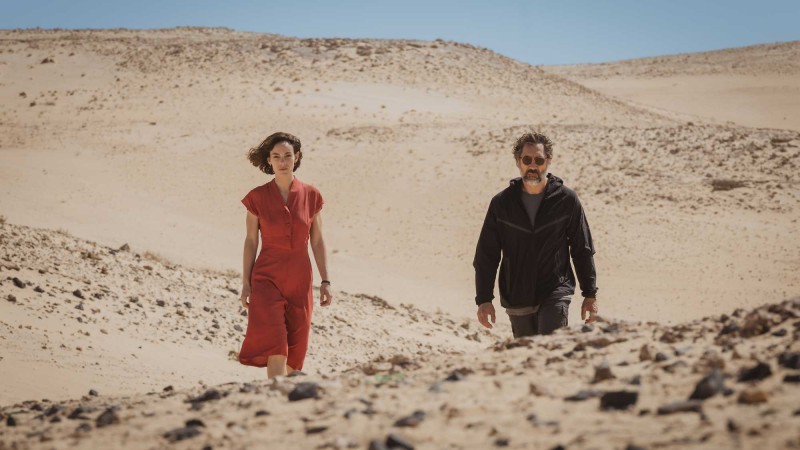
I love books about writing and movies about cinema; they cut open the belly of the art form and expose its spleen and inner machinations. El ser querido (The Beloved) from Spanish director Rodrigo Sorogoyen does exactly this: a film set on a film set in 1930s Spanish-ruled Western Sahara, that is in fact being shot in Fuerteventura – another imperial outpost. This level of alienation plays out in other ways throughout, highlighting the power of cinema to deceive.
Javier Bardem plays Esteban Martínez, a controversial Spanish film director and celebrated Oscar and Cannes Palme d’Or winner who invites his estranged daughter Emilia Vera (Victoria Luengo) – whom he hasn’t seen for 13 years – to lunch and offers her a leading role in his upcoming film. The lunch is tense, setting the scene for what is to follow. Emilia accepts the role, but not without serious consideration of the trauma caused by her father’s drunken and often violent behaviour when she was a young girl – which Esteban flatly contests as fictions conjured up by her mother to pit her against him.
El ser querido might’ve been one of the best examples I’ve seen of actors having to act as though they aren’t acting. We see Emilia trying to keep it together when the camera is rolling. We witness Esteban’s controlling, anger-fuelled, and toxic manner on set, which is chillingly offset with sporadic bouts of charm that help maintain his mythic status among the crew.
While exploring a dysfunctional father-daughter relationship, it also lays bare the harsh and unglamorous realities of a film set, the power imbalances built into the industry, and the filmic devices that propel a story: narrative, scene composition, cinematography, sound. Scenes mirror or are pitted against each other (e.g. a tyrannical film director makes a film critiquing the Spanish Empire, built on the foundations of patriarchy). Fictive layers put reality on shaky grounds. The film switches between black and white, analogue, and colour, shifting mood and making the audience think about what function each camera serves. The sound at times is removed to strip a scene bare and home in on gesture and set. The same scene is performed over and over again. The sun scorches. The wind burns. The director always has the final say.
There were moments when the film lacked energy and I was hoping it would wrap up quickly. Whether this too was intentional, I wouldn’t be surprised.
View more reviews:
« Click here