

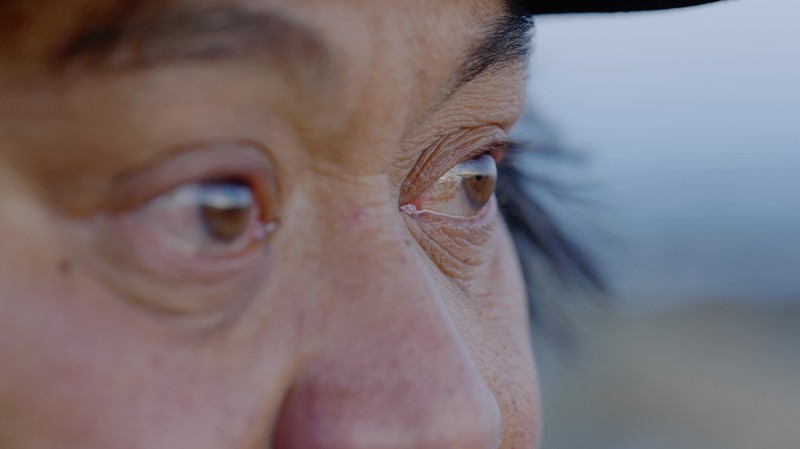
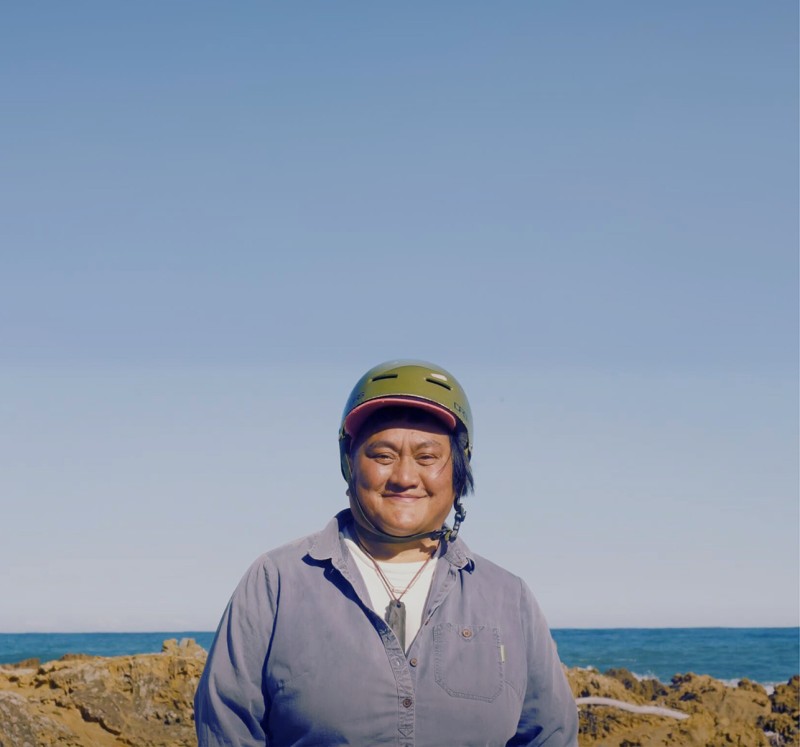
Teiti Nepia
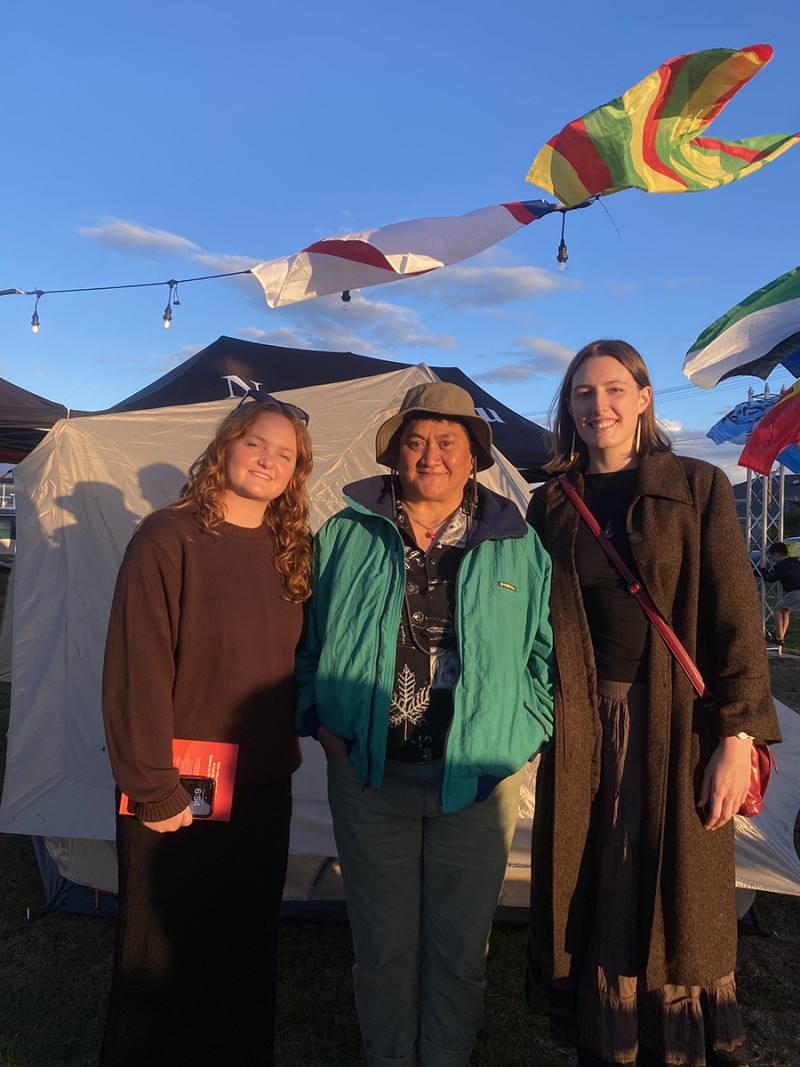
L-R Emma Duncan, Teiti Nepia, Ashlee Stevens.
Wellington Silver Screeners: Emma Duncan and Ashlee Stevens by Alessia Belsito-Riera
In our Wellington Silver Screeners series, Alessia Belsito-Riera shines a spotlight on the movers and shakers working in the film capital of New Zealand.
Fresh out of Te Kunenga ki Pūrehuroa Massey University, emerging filmmakers Emma Duncan and Ashlee Stevens embarked on different paths as they ventured into the film world, with Emma landing a job at WĒTĀ FX and Ashlee jumping into contract work on big sets. But that doesn’t mean they don’t still collaborate with their friend Kate Chu on smaller passion projects under their own production company Three Kea Pictures.
Their latest is Home, a short documentary film that follows Teiti Nepia, a mana wahine who reclaims her autonomy by living on public land when she becomes priced out of Wellington’s rental market. Embracing mana motuhake and art activism, she finds connection to her tūpuna and a deeper sense of home under the stars.
With recent screenings as part of Wairoa Māori Film Festival, Māoriland Film Festival, and Doc Edge Festival, I chatted with Ashlee and Emma about their journey so far and where they’re heading next.
How did you get into filmmaking?
Emma: My dad is a huge movie buff, and we would watch everything growing up, and then it finally clicked that there were people making those films. From there I was just fortunate enough to grow up in Wellington where there are so many opportunities on our back door.
Ashlee: I grew up making little iMovies and Video Stars and forcing all my friends to act for me, so I always had a passion for it, but it wasn’t until later when I was deciding where to go to uni that it clicked that I could actually pursue it as a career.
What do you love about it?
A: There is so much! Being able to spread amazing stories, whether they be influential or just an escape for people is really special. In terms of actual direction, I’m mostly interested in cinematography and art department, which are the very creative side of things.
E: For me, something really special is the overlooked moments in our day-to-day lives that are actually really important. We both love making stories about relationships. It’s special that you can physically make something and let your work speak for itself.
Tell me about your career since graduating. What’s the journey been like?
A: Straight out of uni I was lucky to get a role on a feature film called The Rule of Jenny Pen. It was filmed half in Wellington, half in Taupō, which was really uncanny because I grew up in Taupō and moved to Wellington to study film. So to go back there for my first job was surreal. Then I’ve gone on to work on the Avatar pickups for the third film and a bunch of other feature film work. I jumped on Wolfman for a little bit and Warren’s Vortex. I worked on them as a production runner and met so many amazing people. I’ve gone down the route of being on set and doing contract work from project to project, which is always so much fun, but also really nerve-wracking because you don’t know when your next job’s going to be.
E: I did a little bit of freelance work when I first got out of uni as the Writers’ Strikes were happening and then I was lucky enough to get a job at WĒTĀ FX, and I’ve been there for over a year now as a production coordinator.
How do you two manage to stay motivated to make your own films when working full time?
E: It’s not easy.
A: There’s a little bit of pushing each other as well, which helps.
E: And remembering that feeling when you make something beautiful. When collaborations go really well, you want to nourish those. It’s good for your creative practice as well.
A: It’s really about being able to balance being that small cog in a big machine of paid work, but then also appreciating being leads on smaller projects and having that creative control, which is really special and fun. It fills your cup.
On that note, tell me about Home.
E: When we met Teiti, we were filming a documentary series for Barbarian Productions and Teiti was talking about her situation and instantly all three of us were like, ‘We have to help her tell her story’.
A: Teiti had seen us walking around with cameras because she was one of the actors, and she approached us and pitched her idea for a film. I think what was special about it was that it wasn’t just this film, it was her kaupapa and her life. Big themes in it are around connecting to your tūpuna and your land and being able to work through these tough times. It was just really special for us to be able to partly be the tool she needed to spread her message.
E: Her outlook was about hope and education. It was beautiful that at screenings she would be able to talk to it and inspire others who are unhappy and uncomfortable.
How do you find working in Wellington’s film industry?
E: Film in general has its difficulties. Wellington is probably like no other, but there’s something special about it. People come here to learn about film and there are great film schools, and all the history with the films that have been made here. But it is challenging and it’s a lot about who you know and connections. Networking is a part of your job and it’s hard when things maybe aren’t paid because it sometimes doesn’t feel like work but it’s really just as important.
A: I wouldn’t want to sugarcoat it and say you just jump from project to project. It takes a lot of passion, a lot of drive to continue – especially when there isn’t a lot going on – to keep pushing for the career that you want. It is a lot about who you know and being a good person to work with because you can have all the skills, but if you’re not a kind and a cool person to work with, then no one’s going to want to bring you back.
How would you recommend networking?
A: There are lots of good avenues to go down, like Women in Film and Television hold events for networking. In a way, networking is your interview. On set it’s more about reputation and meeting people that gets you through.
E: Going out for a coffee one-on-one, I found, because sometimes in bigger crowds it can be really daunting, so planning meetings was, I think, what got me a job. Something I wish I knew earlier was the ability to have quiet confidence and know you don’t have to be the smartest or the loudest person in the room, but if you’re passionate and willing to work hard, things will happen for you. And also don’t be scared if you’re the only girl. It happens a lot. You have the right to be there as well.
A: Especially in a lot of technical roles there seems to be disproportionate numbers of gentlemen. So, stand your ground, be confident!
Do you feel like there are more avenues for women now?
E: I think it’s evolving, and I think there are conversations that are really inspiring. Even at work there are panels with amazing women in senior roles and that’s really inspiring to see.
A: I agree, I think it’s definitely getting better and there’s more equity to it with targeted scholarships and opportunities trying to bring more women into those technical roles, which are really cool to see.
What’s next?
E: We are working on a music video that is in post-production, so that’s really exciting to keep the ball rolling on smaller projects. For me, just continuing at WĒTĀ and learning, learning, learning.
A: I’m starting on Black Sheep 2. It’s so nice, the more I jump on the more I rock up and know more people there as well. So it’s slowly getting more and more comfortable. I’ll either be production runner or art runner. Working in the industry is pretty cool because every day is so different, you get to see so many cool things and work with such amazing minds who bring it all together.
View more articles from:
« Issue 255, October 21, 2025