

Walk the soul back home by Isabella Smith
Before embarking on Te Araroa, the 3000-kilometre hiking trail traversing the length of Aotearoa, The North’s director Bart Schrijver had never hiked for more than a few hours or finished off a long day in the bush inside a too-cramped tent.
Fast forward 10 years and Schrijver has released his second hiking film, described by The Guardian as “perhaps the ultimate hiking film”.
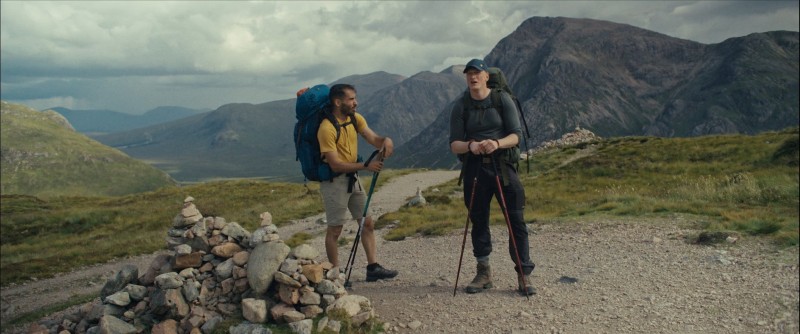
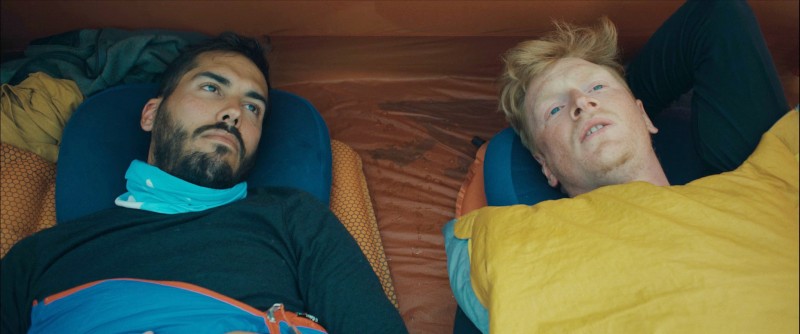
The North follows two old friends as they work to rekindle their friendship and discover themselves while walking 600 kilometres through sheet rain across the wild and isolated Scottish Highlands.
I spoke to Bart ahead of his return visit to Aotearoa to promote the film. There will be a special Q&A Screening at Light House Cuba on Monday the 30th of March at 7pm.
How did the Te Araroa walk inspire you to create the film?
A year before going a friend and I were sitting together having a beer. He said he wanted to travel and be out in nature for three months. We found Te Araroa and he said, ‘Maybe I’ll do that.’ Two beers later, I said, ‘We should do it together.’ And that was the end of the discussion.
We slept together in one tent, which was very cosy and at times awkward. Of course, there were a lot of little frustrations that arose from living with someone so closely. This was nine years ago, we were 26 or 27, an age where people’s paths start going in different directions. He was getting a job and I was still trying to figure out what I was going to do. I loved being out there. For four and a half months our job was walk, sleep, walk. We got so strong so quickly. Mentally it was nice, I had so much time to think about myself and about what I wanted to do. Afterwards, I went to Norway by myself for a month, and that’s when it all really started. I thought, okay, maybe I want to make a film about this.
That’s interesting that you went on this walk in your mid-twenties but chose to include characters who are in their thirties. Why did you choose that age bracket for The North?
I thought it would drive even more of a wedge between the two people. The early 30s is such a weird place. Six, seven years ago, you were all on the same level. Then all of a sudden paths diverge really quickly. At that age I was trying to make films, my financial situation wasn’t great, I was doubting myself a lot. I had friends telling me that maybe I should do something else. Friends who had already bought a house, gotten married, got a dog.
I was interested in how two people who look very different in terms of their outlook and where they are in life, can actually both be stuck in who they are in very similar ways.
When you grow up, your family and society tells you to act a certain way, and you create an image of yourself which often isn’t reality. For some that’s ‘I need a job, I need security’. For others it’s ‘I don’t know what to do.’ But it's the same kind of structure.
When you walk, whether you like it or not, people have to confront themselves. If you take people out of the real world, and put them in nature where there's nothing else – no job or boss or things that take priority – the stuff that is important at that moment in their life comes up.
You described the fluid process of filming, which is so antithetical to a typical film set. Everyone walked the trail and carried the gear. What were some of the problems you came up against?
Not a lot of people I know actually like being on a film set where you work 10 or 12 hours, there isn’t a lot of time for creativity. And why would I want to do that? Let’s do something that we actually enjoy and create something fun.
The financial side of making films is one of the most important things. I realised I could do this with a low budget. With these films set out in nature, we don’t need any lighting. The film crew was six people compared to a normal crew of 50 or 100 or 1000. We decided if we’re actually going to do this, let’s go to places where other people can’t get to. The scenery and the weather play a giant part in the film. If it rains, it rains and we have to shoot the scene in the rain.
We also had to keep on moving, we’d shoot for three or four hours a day. The rest of the day we’re walking. That’s so much time to talk to each other and be creative. It happened often where new scenes were added because something happened. Or scenes got killed because we felt like the film was going in a different direction. It also meant carrying all the gear. Our backpacks were usually between 25 to 35 kilos. We had a certain amount of batteries so we had to be specific and take care to turn the camera off and on to ensure the batteries didn’t run out. It was like we were filming on film like in the old days. If you ran out of film, you're done.
One night, Carl’s (one of the actors) tent broke and it was in the middle of a storm, and he just slept in the rain. This way of working definitely isn’t for everyone.
Do you have any hopes of what the audience will get out of the film?
I showed it in Netherlands, Belgium, and London and all their reactions have been so different. I’m just interested to see what people get out of it. It's not a film where, in the end you know who killed who, or what the heist was. It's a film about the experience of being out in nature and the relationship between two people. Hopefully that reflects on people in the audience. If they don't get that, I hope they just think it's beautiful.
View more articles from:
« Issue 264, March 24, 2026