

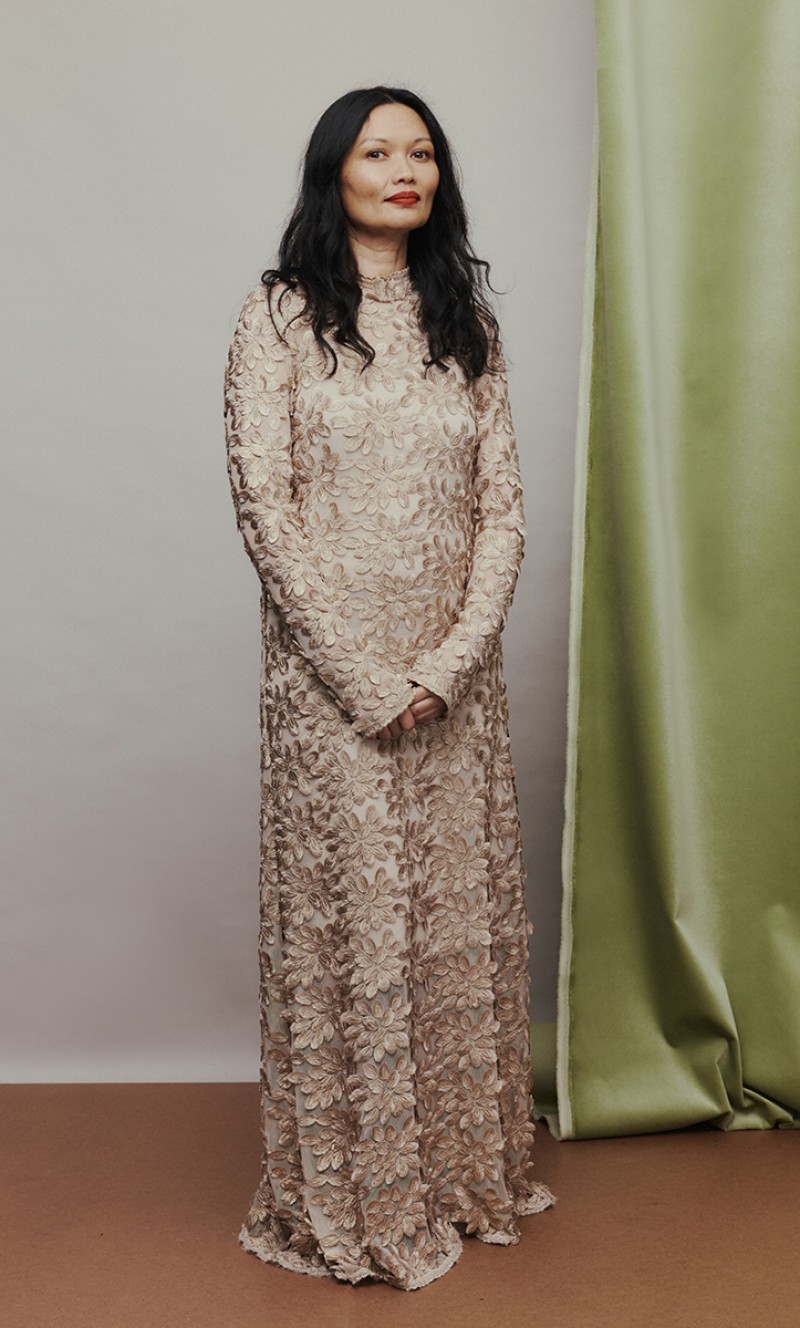
Photo by Holly Burgess
The creative antidote by Madelaine Empson
New Zealand singer-songwriter and multi-instrumentalist Bic Runga needs little introduction. The national treasure has soundtracked our lives with the likes of Sway and Drive, won countless Aotearoa Music Awards, gone platinum more than 20 times, and became the youngest-ever inductee into Te Whare Taonga Puoro o Aotearoa | New Zealand Music Hall of Fame in 2016. Yet despite all the awards, accolades, and acclaim, she’s “just happy to be back with new music”, she tells me, smiling.
Red Sunset, her sixth studio album and first in a decade, will see Runga touring Aotearoa and Australia this autumn, including a spectacular stop at Michael Fowler Centre on the 2nd of April with New Zealand Symphony Orchestra. I was lucky enough to sit down with the Something Good singer over Zoom to take a sweeping look at her illustrious career to date. I was lucky enough to Zoom with the Something Good singer, pictured here wearing archival Kate Sylvester for New Zealand Fashion Week’s Into the Archive Show 2025 with creative direction from Dan Ahwa, ahead of the Red Sunset Tour.
What sparked your passion for music?
The older I get the more I realise that what’s in music for me is just something I can’t explain. It’s got a mystery about it that’s endlessly worth investigating. I don’t know, I hate using the word magic, but the more I think about it, music is magical. I’ve spent my life trying to get better at it, trying to understand it, trying to analyse what makes it good. But it just boils down to something that I can’t explain, and that’s endlessly fuelling, to find out more and more about music. It’s the same way I felt about it when I was, like, four, when I first heard a song coming out of my parents’ bedroom. It felt like it changed the atmosphere. Why would it cut through the room and make me feel spooked out? Why did it do that? That’s what I’m always interested to know, and I still haven’t figured it out.
How did you get your start in the industry? What turned it from a spark into a career?
I decided pretty early on, at like, 11, that I wanted to be a musician. I actually didn’t get into art school, that’s what forced it all to speed up. When I didn’t get into Ilam in Christchurch, I thought I better make a go of music seriously. I didn’t really think it would be possible, but I just had no choice. I made a demo, and I got signed to Sony when I was about 18 or 19. The demo came out as the first single I ended up touring with the Finn Brothers, and the guy that ran the Finn Brothers’ fan club was really nice to me. He was so supportive that he sold my CD at the merch table at their show. That made the song chart, out of nowhere. My first single made it onto the charts because of the help of this guy at the merch desk. It was quite grassroots, I suppose. I did have the resolve to do it though; I think once you decide you want to do something, you go in, boots and all.
What inspired you to get back in the studio to record Red Sunset?
My kids are getting older now; one of them just left home for Wellington uni this week. That’s been on my horizon for a while… to get back into some things that I wanted to do. Also, things got weird from the pandemic onwards, and it’s just getting weirder and weirder the more we live our lives online. I have an internet addiction like everyone else. It was sort of wrecking my brain. I think the antidote to that is to be creative.
When you listen to the album, how do you think it compares and contrasts sonically and thematically with your earlier work?
It’s really hard to have a long career. Stylistically, it’s hard to know how to navigate the changes of people’s palates. If I tried to recapture exactly the sound and the aesthetic of those records (Sway etcetera), they would just sound – you don’t want to make it sound retro. You want to use the technology of the time, but then you don’t want it to be divorced from what you’re known for. So, it’s just finding that balance. I’m always looking for good examples of that: for someone who can come back with the sound that doesn’t sound like they’re chasing, or trying to be current, and they’re not selling out their past audience. It’s hard to find that.
My next question was going to be about how you navigate the changes in the industry seeing as it’s been nearly 30 years since Drive.
So much has changed in the industry – people’s attention spans are almost nil… People’s listening habits are definitely erring towards nostalgia. That’s why a lot of back catalogue music is doing really well at streaming – Fleetwood Mac and things like that are having a resurgence. People want to feel familiar things. I think it’s actually quite a big ask of people to try to get inside an album they don’t know, on top of all the other things demanding their attention. Streaming really needs to be reformed, because no one can really make a living out of it. Conversely, there are these amazing digital tools that can help you pinpoint where in the world your stuff is working out. There’s lots of good and bad. Certainly it’s good how cheap you can make a record. Back in the day when I was first signed, you needed a label to give you a massive budget so you could afford a studio. But now anyone can buy equipment or make a record. You could feasibly make a really good record on your phone if you wanted to.
Looking back from your first time in the studio till now, what highlights jump out at you?
I’m just really happy I’m still here. I can’t believe it. Maybe in my secret dreams, I hoped the songs I wrote would stand the test of time. I’m really happy that they sort of have. Certainly Sway has been covered quite a lot – by artists much bigger than myself! There was a big cover by Amy Shark with R3HAB which did more business than I ever did out of the song [chuckles], just because they are a bigger artist. A really big artist called beabadoobee covered Sway as well. It’s just amazing to me sitting at home and that’s just happening without me – I love it! It’s an amazing thing for a songwriter to see. And I got to meet all my heroes when I was touring. What’s endlessly good about it is meeting other artists and working with people you respect.
How does it feel when people say things about your voice being woven into the fabric of Kiwi life? Do you ever get used to it?
Well, no! I’ve learnt to be really chill about everything. It’s really nice when someone comes up to you and they genuinely say that something in your songs has stayed with them or been part of their lives. You can’t put a price on that, it’s just so special. I really cherish that.
What kind of atmosphere do you anticipate for the Wellington gig with the NZSO?
They’re an amazing orchestra and I can’t wait to do that show. I think it’s about the songs, and the songs you know. I think it’s about intimacy and authenticity – even though there’s going to be this massive sound, still achieving an intimacy, a connection with the audience, is really important. And everyone being together.
Do you have any pre or post-gig rituals?
Oh! I do. It’s to do with timing when I eat, and I try to eat really well. I do some stretching and spend a long time doing my makeup. It’s sort of like a drill; you have to get into a routine, a bit like a military thing [chuckles]. You have to go through this methodical process that calms you down and focuses you. And then afterwards, I just want to eat cheese!
That was one of the last things I was expecting you to say!
I’m trying not to eat cheese all week up to it, and afterwards it’s like, I want to eat a wheel of camembert!
Brilliant and extremely valid!
[Laughs.]
View more articles from:
« Issue 262, February 24, 2026