
Matakite by Melanie Tangaere Baldwin
Remembrance and resistance by Alessia Belsito-Riera
Te Pātaka Toi Adam Art Gallery re-opened its doors on the 22nd of November 2025 with Whai Wāhi, an exhibition of new and historic works that foregrounds creative voices anchored by the Treaty panel from Museum of New Zealand Te Papa Tongarewa, redacted by artists and activists Te Waka Hourua on the 11th of December 2023. Following the gallery’s holiday closure, Whai Wāhi reopens on the 20th of January until the 29th of March.
Sculpture, photography, painting, installation, and moving image works from the 1970s to the present day articulate expressions of mana motuhake, dissent, and an enduring will to engage in critical dialogue about our shared colonial past, highlighting the need for change while affirming the continuity of connection to whenua and tūpuna. Co-curator Abby Cunnane says that Whai Wāhi demonstrates the need for remembrance and resistance.
As the first exhibition since the gallery has reopened, how did it feel to be in the space?
The gallery has been closed since July, so in the lead up to the opening there was definitely a sense of anticipation and energy building here at the university and in our wider communities. For us working at the gallery, the arrival of artworks heightened that charge even more. On opening day, it was uplifting to see the crowds pouring in the doors. We’d also just heard the news that our 26-year-old gallery had won an NZIA national award for enduring architecture, so there was a lot to celebrate that evening.
How do the contemporary and historical works across a range of mediums work together?
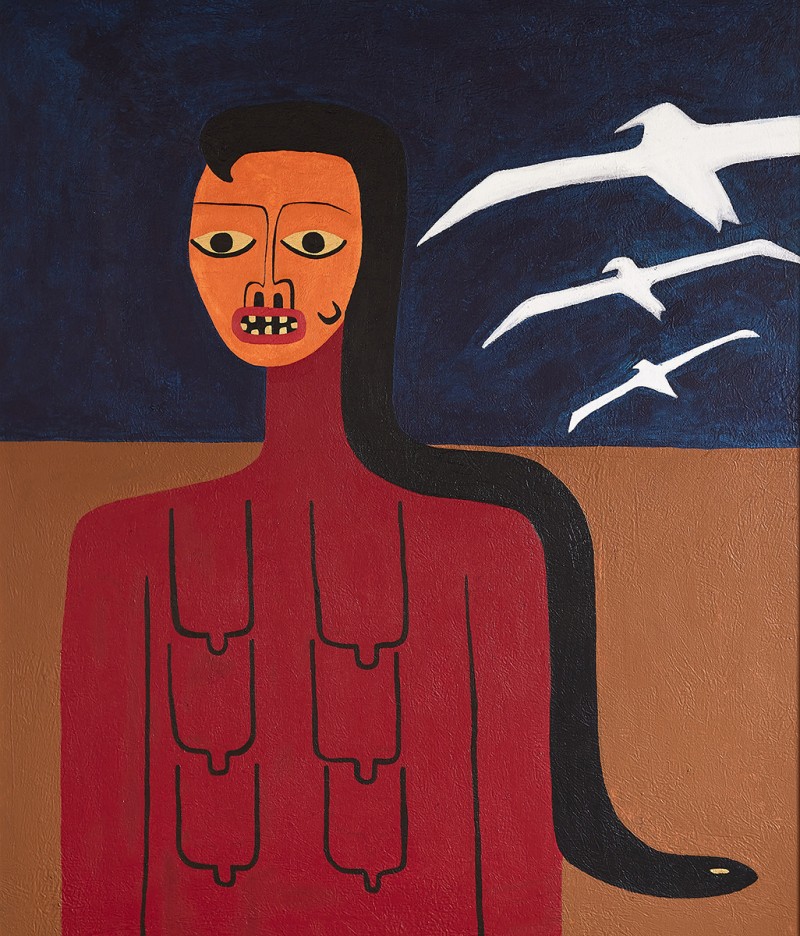
In this exhibition, the contemporary and historical works are set in dialogue with each other. A contemporary work like that of artist collective Te Waka Hourua, the redacted Treaty panels, is contextualised within a series of historical works that are also vivid articulations of the need for Treaty justice – for example, works from Emily Karaka's 2015 Settlement series. A series of images by documentary photographer John Miller trace a history of significant protests in Aotearoa, reminding us that today’s conversations about Te Tiriti o Waitangi are built on a long history of political action. The newest works – and an arresting textile banner by Melanie Tangaere Baldwin, and a sound installation by Madison Kelly that visitors are able to play – occupy the gallery space rather than the walls, and their encounter with their audiences is quietly dramatic. There is a sense, I think, that these artworks would not be possible without the commitment of generations prior.
What do you hope visitors take away from the exhibition?
Whai Wāhi is an exhibition that proposes that artists and artworks have an important role to play in conversations about social change. As such we hope that the exhibition offers a context where conversations around Te Tiriti, identity, and relationships in Aotearoa can be furthered in a way that’s useful, restorative. We also hope that visitors take away an experience of these works on their own terms, as artworks – while they are political, they are also incredible expressions of technical skill, visual language, and narrative imagination. We hope that visitors can feel a sense of pride in the fearlessness and vision of our artists.
View more articles from:
« Issue 259, January 13, 2026