

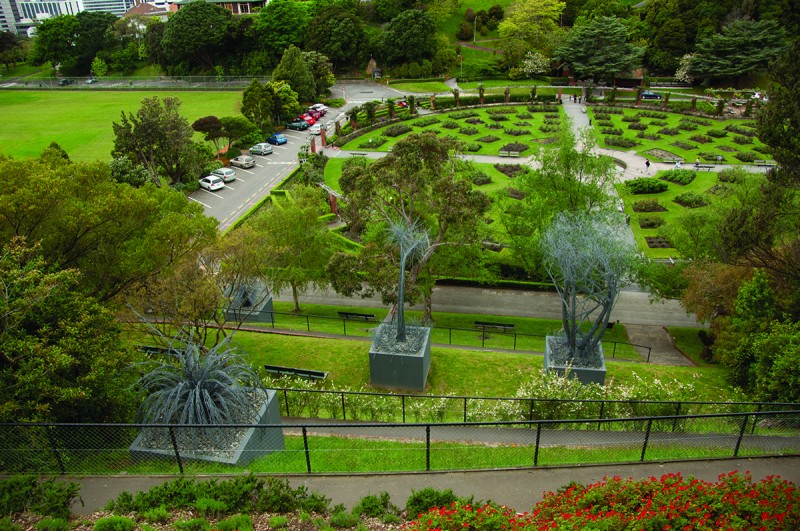
Photo courtesy of the Wellington Sculpture Trust
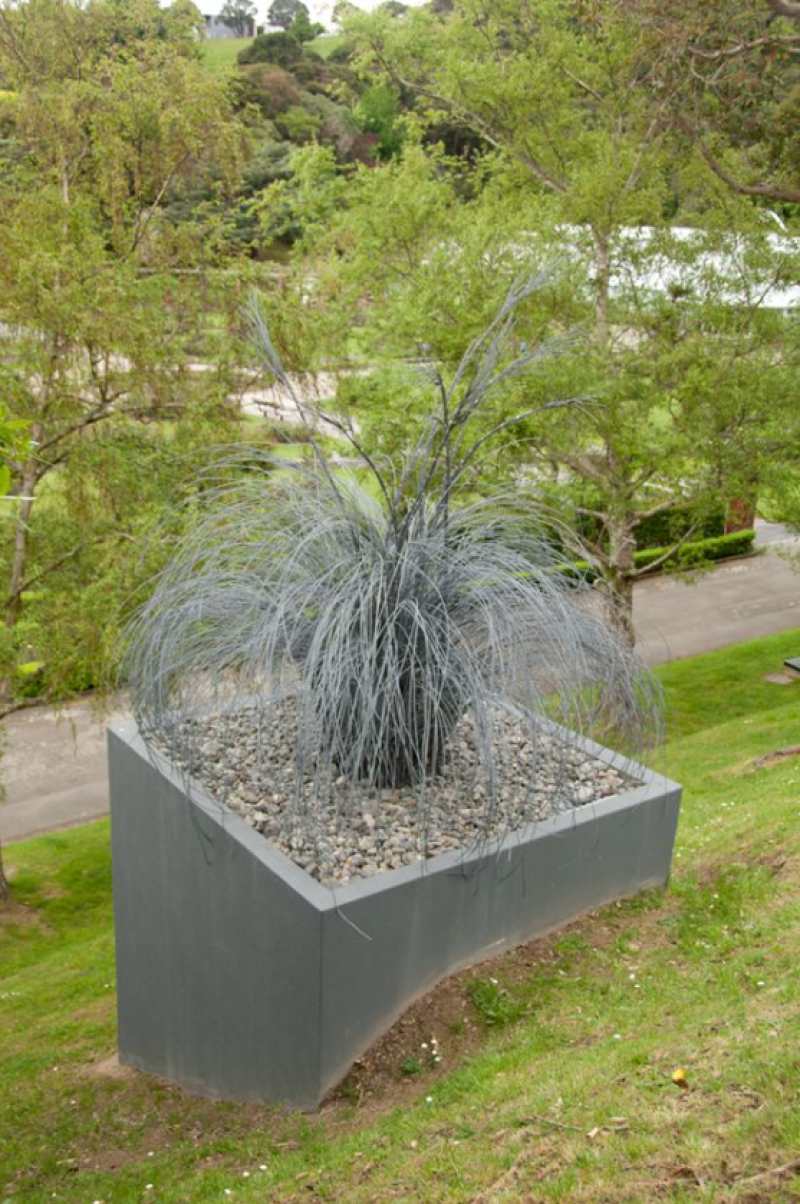
Photo courtesy of the Wellington Sculpture Trust
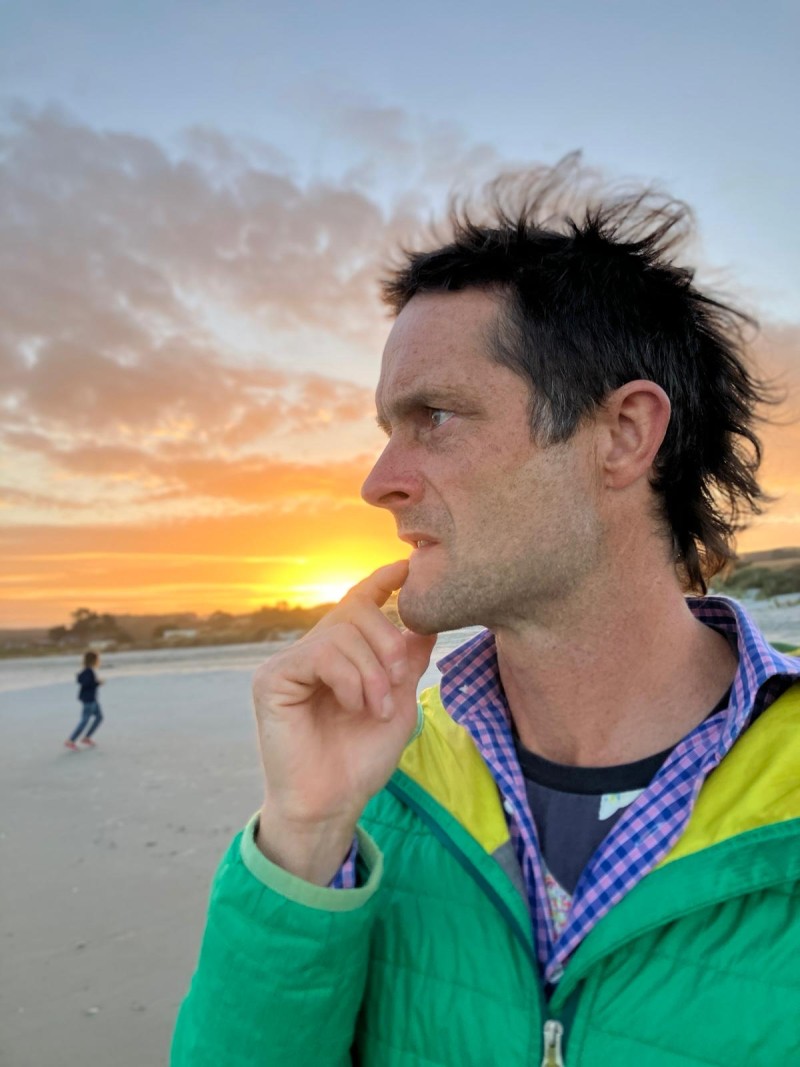
Regan Gentry
Green Islands by Isabella Smith
In this new series, Isabella Smith talks to the artists behind the sculptures dotted around our city.
There is some dissonance between the unassuming way Regan Gentry describes his art practice and the realities of the complicated, highly organised, and storied sculptures of his that can be found throughout Aotearoa.
His works are always site specific, preceded by a dearth of research, technically and materially complicated, and full of wry humour.
“I usually see my role as a conductor or amplifier of the existing elements and histories of the place,” he says, citing previous roles as a workshop technician at Massey University and an install technician at Te Papa, “where both are best executed by being invisible in the final presentation of the given work.”
“Let the work be the voice for the idea.”
The resulting sculptures prompt the public to rethink histories, urban spaces, and how they interact with their environment.
In 2008, Green Islands became the first sculpture commissioned by the Wellington Sculpture Trust as part of the Four Plinths Project occupying the Te Papa forecourt. The concept grew out of the practicalities of the location: a treeless, wide-open space prone to big weather. It consists of four native trees and plants – toetoe, pōhutukawa, harakeke, and tī kōuka – made out of Number 8 fencing wire, stainless steel staples, and galvanised pipes and plates.
“I'd started getting interested in urban design and how civic sculpture was integrated into it.” The tree choices were selected for their structural variety and informed by the planting of the surrounding area: durable flora that can survive Wellington’s coastal winds. Shortly after installation, he said, “I guess that makes my plants the ultimate!”
The tallest tree stands at four metres; the scale needed to prevent the works from getting drowned out. “There was also a good design aspect that was to make the plinths rather spiky so as to limit drunken curious interactions.”
Earlier, Regan had made a smaller version of the wire tree system for Connells Bay Sculpture Park on Waiheke Island, where “a farm being turned back into a nature resort triggered the idea,” Regan says. “The basis of it was to draw a tree with a pencil, then make a 3D version of it by using the fencing wire that was being removed from the farm.”
“I just had ideas bouncing around in my head, like any artist. It was a busy period of making all sorts of kooky things for whatever show or project I could get into.”
But the reality of Green Islands is over 4,000 kilometres of Number 8 wire wrestled with and shaped into four elaborate structures which saw Regan modify two existing pneumatic pliers designed to clip the wires (“they were the hero of the job”) and, in the end, develop a long-term problem with RSI.
“It's mostly resolved these days due to more measured application of effort. Maybe I've grown wiser as I've aged. The tree design couldn't be assessed by an engineer, so they were built to a logic of what seemed to work.”
Regan studied the look of a natural pōhutukawa when fabricating the wire structures and discovered the hairy aerial root masses produced by the tree that eventually wrap around the trunk, run down to the ground, and thicken. It inspired the meshing of the wire, “the way the wire is so flexible as a singular strand yet becomes so strong as a collective”.
The pōhutukawa did “get thoroughly tested” on the waterfront. During a storm in the middle of the night on Christmas eve, it was folded over. “I managed to re-erect the work over the following few days. It was challenging, but it has survived ever since.”
In 2010, the trees shifted after the two-year tenure on the plinths ended. They now line the zig-zag path that leads from the Lady Norwood Rose Garden to the herb garden on the hill, their ghostly presence iterated in a different way now they are surrounded by swathes of green foliage.
“Maybe there's something about the monochromatic wire that fools the brain into thinking the pieces are otherworldly, like they're oversized drawings that have jumped into the real world.”
Growing up in Hawke’s Bay on a farm, his father was an engineer. He has always been more interested in the practical side of art. “Continuity of style between projects has never been a strong point”, he says, more inclined to spend time in his workshop pushing materials and tools to their limits to see what’s possible. This has seen him craft fragile sculptures out of pumice with a lathe, and push the artistic possibilities of gorse wood through crafting replicas of domestic and rural objects out of the scrub plant: an exercise in the ongoing battle against the ecological pest across Aotearoa’s colonial history.
At art school Regan related more to the “technical nerds” than the academics. “If you need to write a whole book to explain your art, it’s probably not going to be accessible to many people”. He didn’t really take his cues from high art either, but mentions Jean Tinguely’s kinetic sculptural machines made from found objects and scrap metals as a source of inspiration, often obtaining his own materials from refuses and skip bins.
These days, “Making things has remained a central element of my life, but the art side isn't as obvious as it was”, Regan says. “While design, sensitivity to particularities, and aesthetics have remained, the playing of the art game has fallen away. My wife and I had a little boy nine years ago. Ros is an excellent art teacher, and I have been the primary caregiver, homemaker, and renovator – the creator of our immediate world. Best job ever.”
His young son is currently busy working on an exhibition featuring 40 sculpted heads the size of marbles that are all attached to one larger head. “I don’t know where the hell the ideas come from”, he says.
As he’s oft described as one of Australasia’s leading proponents of public art, I ask him what makes it so important.
“Public art brings a little magic into the otherwise practical and pragmatic dry world. It does it in a variety of ways depending on the piece, the place, and the people. My relationship has changed since doing the Green Islands project in that I'm currently a consumer of these ideas and magical moments rather than creator. But that gives space for other things to happen.”
“Who knows how the next chapters will unfold, but I'm gonna be engaged, living it and loving it. I’m glad I tackled it when I did, it's quite a mad thing to have pulled off. Physically it would be very challenging to repeat at my age, though I'm sure I'd find a way.”
View more articles from:
« Issue 276, September 8, 2026