
Dark Ecosystems by Alessia Belsito-Riera
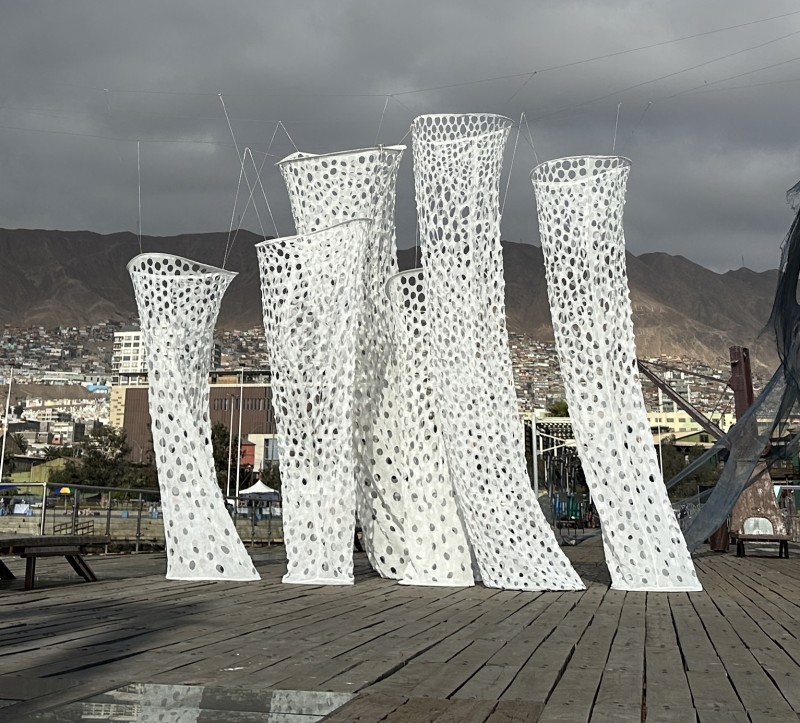
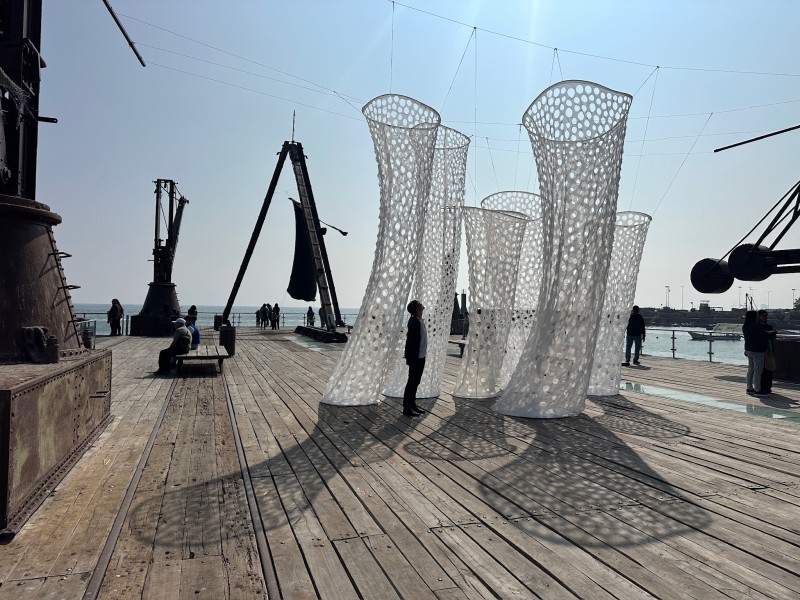
With the challenge of packing her artwork into a suitcase, Wellington creative Debbie Fish touched down in Chile this July with her newest project Glass Sponges. Accepted into the SACO Biennale – a contemporary art exhibition that positions the Atacama Desert as a focal point for the field of art and transdisciplinary research while generating connection and community – she set up her work alongside six other local and international artists on the historic Melbourne Clark Pier in Antofagasta. The result is a larger-than-life tribute to sea sponges that contemplates land impacts on ocean life.
Now back home in Wellington, the artist known for her eagle ray artwork Whai Repo that was exhibited on the capital’s waterfront in 2023 tells me all about her trip to Chile, her inspirations and tribulations, and what’s to come.
Tell me about Chile!
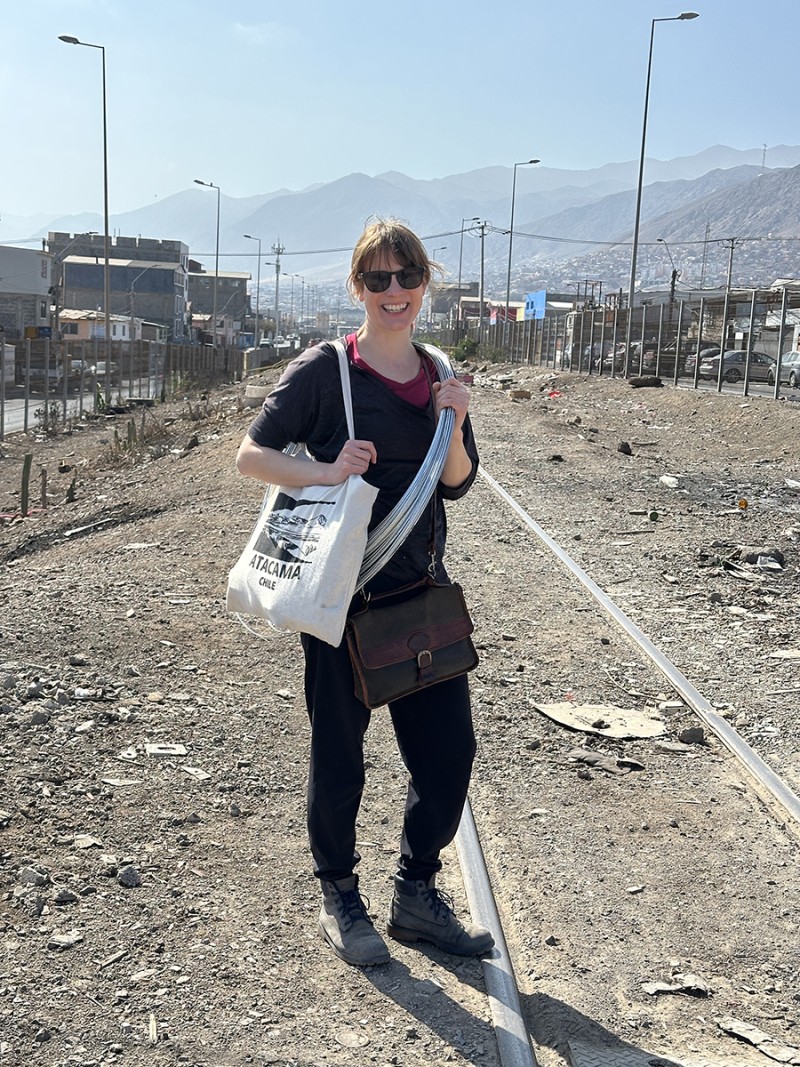
It was amazing! I stopped three days in Santiago looking at the galleries, museums, and street art. Then I went on to Antofagasta and was picked up at the airport, met all the other artists, and had a very action-packed 10 days!
And the festival?
This is an independently started biennale. So Dagmara [Wyskiel], the curator, started it, and it’s just grown into this wonderful… it was so much bigger than I expected! They had so many different artist talks and engagements at different locations across Antofagasta. Biennales are always large, but I was impressed by how much was happening, how smooth everything ran, and the way the different artists engaged with the same theme of Dark Ecosystems. It also had a beautiful way of bringing the audience through these different perspectives on the pier and inviting them in. There was a sound artwork, a graphic work down on the ground, then you looked up and there were the sea sponges, behind that was this giant dress, and then a Mongolian artist who had 99 handmade serpents leading up to the water. It’s so valuable to meet people and talk about their practice and how they make it work, because making art is never easy. Such a special thing to be a part of and I am so very grateful I got to do it.
How did you get selected for the SACO Biennale?
They had an open call under the theme of Dark Ecosystems. The curatorial theme resonated with me because I was already thinking about sea sponges and corals. They also said you had to be able to pack the artwork down in a suitcase, which I thought sounded challenging and interesting. I read on their site that they were interested in circular economies. Because I work in economics, I’m interested in circular economies and in my work I use recycled materials as a way to bring that into the conversation. They selected my work and I had about five months to make it. I cut a whole lot of circles in this shade cloth, which is like a recycled farming material, but it took me a lot of time, so I had to plan a very specific schedule to make sure I could meet the timeline.
How do sea sponges connect to the theme?
When I was reading about the curatorial concept, it had this big, massive pier, so I thought the artwork needed to be big to fill that space. I was reading about Chile and an expedition last year where they found a whole bunch of new species, including of sea sponge, specifically of glass sponge. I looked at a picture and it looked beautiful and intricate and evocative to me. I was interested in the impacts of land and industry on the ocean, so while I was reading about sea sponges and finding out that they’re the oldest creatures, [I learned that] they filter the water, and are currently being used in science and matauranga Māori, and are looking at being used for HIV and cancer treatments. So I was really interested in this story about reciprocity between people and nature specifically around time. So the question I was looking at was, what can we learn from the sea sponges?
That’s such an unexpected angle! What do you hope viewers take away from the work?
I hope they are curious. Because you can see the sea sponges from quite far away, I hope they’re interested in coming along to see what is going on. I hope they’re interested in questions about the ocean and thinking about the deep, deep ocean. There is sometimes a perception that just because we can’t see life or we don’t understand life, that it’s not there, but actually in these places within the desert or the ocean, there’s always life, even if we don’t understand it. So I hope it makes people understand we’re all connected. These sea sponges are not to scale, so making them larger than life makes us like the fish. When you’re walking between the different sponges [we become] part of that world.
I was really happy to see how much people liked the artwork. There were a lot of technical challenges to get it up, but when it was finished, people really loved it. It collaborates well with the elements, so you have the wind moving it as if it’s underwater and the sun coming through and creating these beautiful shadows.
What was the Atacama Desert like?
I was just next to the Atacama in a place called Chiu Chiu. It’s very dry, arid land; a large expanse. We were engaging with communities who live in these spaces. We went to one place which was a settlement from 5000 years ago. They had built this amazing brick structure, and we looked at the different rooms where people would store their food, and one where they could see where the winter solstice and the summer solstice was happening. It was really interesting seeing these native cultures and how they live in the land and with the land in response to these really dry places.
How were you inspired?
The textures, the expansiveness, and also the colour in the desert. There’s no green, but there were purples of mountains, and oranges and yellows, and just a completely different colour palette. I also think the next artwork might be about time. I’m really interested in these ancient cultures that have been living for so long with nature and how we can perceive time in different ways. I don’t know if that’ll happen, but I’m just curious about exploring it!
Are you working on anything at the moment?
My art has been fully focused on Glass Sponges. The next one will be engaging with my youngest daughter’s early education centre in making… I think it’s going to be seaweed. All the centres that I cut out of the sea sponges are circles of shade cloth – I’ve got buckets and buckets of these round things, so I think we’re going to string them on fishing line as part of the kids’ art exhibition happening in November. I’m going to do workshops with them. I am really excited about that and really love engaging kids in the creative process and helping them explore. Art is not always about the finished product, but the process of discovery and questioning, and how you can explore concepts through materiality and using your hands.
View more articles from:
« Issue 249, July 29, 2025