

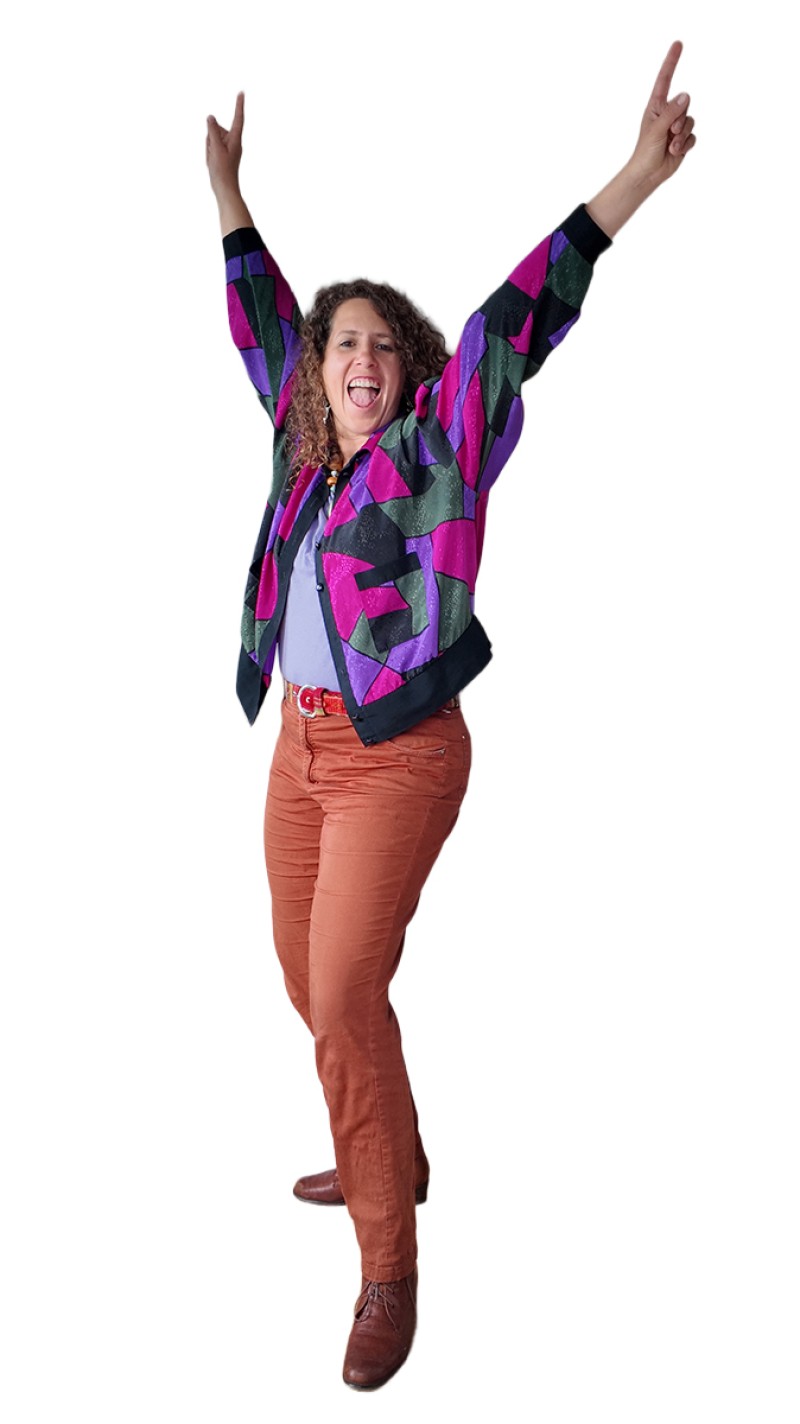
Circles of connection by Madelaine Empson
Music Therapy Week takes place across Aotearoa from the 10th to the 15th of April. Wellington-based registered music therapist Sophie Sabri works with adults with disabilities and community groups across the capital, using music as a way to support communication, self-expression, and connection. We caught up about the practice and exciting projects she facilitates at Evaro, New Zealand’s oldest organisation supporting people with intellectual disabilities.
How and why did you get into music therapy?
I used to work as a community support worker in mental health, and I was using music with people. There came a time when I was looking to expand the impact I could have. I met someone who was doing music therapy and thought it was a perfect combination of what I like doing and what my skills are.
How would you describe music therapy for our readers who might not be familiar with the practice?
It’s the use of music to support wellbeing and growth. People don’t need to be musicians to attend music therapy. It’s like therapy with a psychologist, but rather than talking, we play instruments or make music or write songs together. We have different strategies that can be used to facilitate self-expression and assist with the processing of emotions.
What does your day-to-day look like as a music therapist at Evaro on Cuba Street?
I see people who attend, or I might have private clients at the end of the day in the space. I have a room filled with instruments – lots of percussion, drums, guitars, bass guitars, marimba… I’m a big fan of instruments!
What I do is target specific goals for each person. Each situation will be unique. This morning I helped someone with his pronunciation and we practiced some songs that he really loved. We had a moment of beautiful connection singing a song that turned into laughter, and that laughter became the melody, which became the song itself.
It can be tough; it can be a wild world for some people to try to connect with others, because they don’t have the same ways to communicate that most people have. Someone with a disability maybe doesn’t speak, or does, but with a different accent that can be hard to understand. Music enables people to really feel that connection. To share who they are without the need to use language.
Where do you think music’s therapeutic power lies? Is it in the universality of the language of music?
Definitely. And it touches the emotions and the heart. You can sense, you can feel with music. Let’s say someone bangs a drum in anger. You will see it and hear it in a way that’s different to when they hit it with joy. Or a chord in a major key will bring a sense of happiness, a minor key a sense of sadness.
As well as your one-on-one sessions, what events and groups do you run at Evaro?
I run a group called the Honey Hives that I co-facilitate with one of the participants, an Evaro member who has been attending the group for many years. One of my goals is to bring in more things like that, more facilitating roles, so that people can become more independent and do things without me as well!
I also run a monthly community music circle called Musicking Together, which has been going since 2019 thanks to the funding of Wellington City Council.
We’ve got a band called The Rocking Rainbows. We’ve been quite active in the community, performing for the Newtown Festival and The New Zealand Fringe Festival. Sometimes we go and visit a special school. We’re building connections with other bands as well. I like to invite local bands of musicians who don’t have disabilities, which has been quite interesting. The last couple of these bands played for Battle of the Bands, so the idea is to bring a crowd of people who can support them, but also discover our band, The Rocking Rainbows. I like to create spaces where everyone mingles. I want that inclusive community – mixing circles of connections. It’s the same for Musicking Together; it is about inviting people who don’t have disabilities into our space, so that people can experience the way we all unite with music, whatever our skills and backgrounds.
You’re running a Musicking Together session for Music Therapy Week at Evaro on the 13th of April from 6pm to 7pm?
Yes, and I also have a special event called Inclusive Voices Open Mic Night [at Evaro on the 15th of April from 6pm to 8pm]. For that I will invite adults with disabilities, or anyone with a disability, to come and perform – either play some music or share a poem or a piece of art they created and talk about it.
What are you most looking forward to about Music Therapy Week this year?
Building that sense of community. With Musicking Together, when people gather, there are a lot of familiar faces. We’ve developed those friendships over the years. I’m hoping new people will hear about it, join our music circle, and feel like they can belong and express themselves. It’s really open to everyone. Same for the Open Mic – I’m looking forward to discovering the talent that’s around!
How does the theme Weaving Connections | Te Poutama Hononga speak to you?
That’s the core of the work I enjoy doing. Weaving connections also happens in one-on-ones – getting to meet someone in the core of their being. My job is to ask, ‘Okay, how can I get to know this person? How can I understand how they work, who they are?’ Sometimes they cannot talk or share things about themselves, so I have to figure out ways to meet that person and connect. Music is the tool that facilitates that connection.
In terms of group work, that’s about connecting people to different worlds. People with disabilities don’t have many opportunities to be part of other communities. In my job as a music therapist I like to expand that web of connection so that people from different paths can meet and connect.
What would you say to anyone considering music therapy – either to practice or to partake?
I’d say don’t wonder, do it! Give it a try. In studying it, there is a lot of learning about ourselves. It is a full-on programme; we do a lot of reflection and develop skills that are useful in our daily lives.
As for participants, I think it is important to find the right match, as with any therapist. On the Music Therapy New Zealand website there is a list of therapists. We talk about what we love doing so that people can see who they prefer, who they connect with the most.
And to add, I want people to know about the benefits of music therapy, and to find more funders! One of our challenges is to keep developing our practice – we often rely on funding. So for anyone wanting to invest in meaningful programmes, get in touch with me. I have so many ideas [chuckles].
View more articles from:
« Issue 265, April 7, 2026