

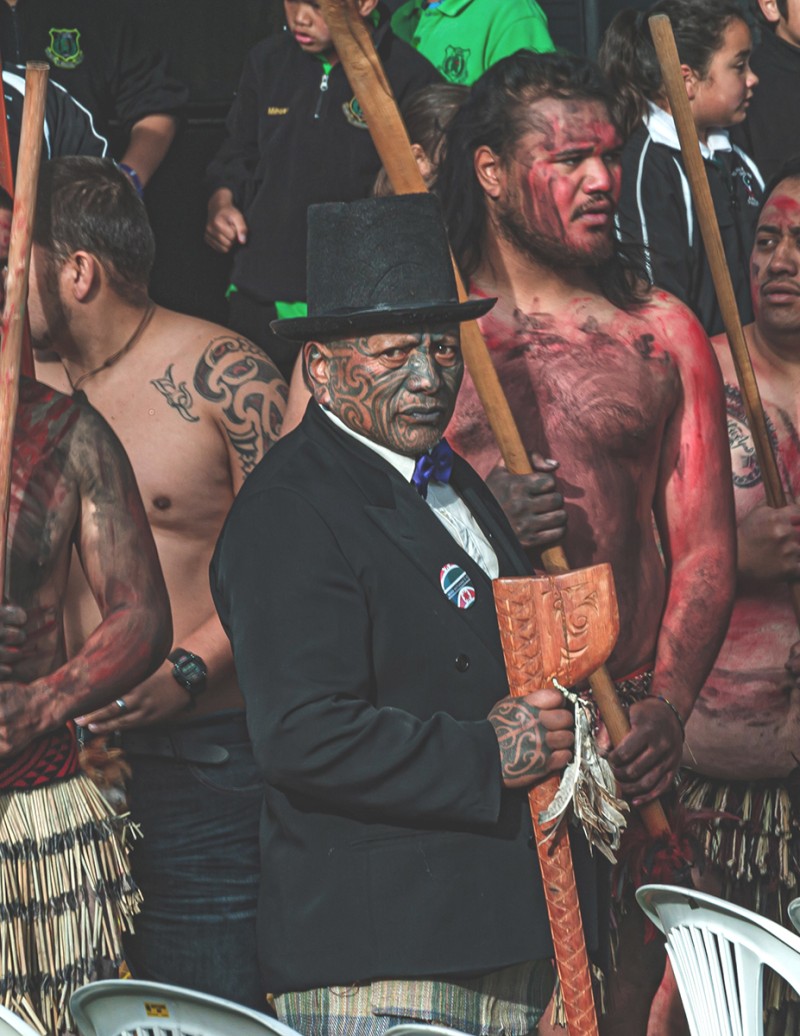
Tuhoe Tame Iti
Photo by Tatsiana Chypsanava
Capturing humanity by Alessia Belsito-Riera
Pushing themselves to the edge in extreme conditions, photojournalists bring news from the frontlines of change. They take the risks so that we have access to news from safe spaces and change the world one photograph at a time.
Every year since 1955, World Press Photo Exhibition acknowledges and champions photojournalism and documentary photography, bringing together award-winning work from photographers and storytellers who capture the pressing social, environmental, and political issues of our time. In 2025, the platform celebrates its 70th anniversary with an exhibition at Tākina Wellington Convention and Exhibition Centre that runs until the 5th of October and features this year’s most powerful, thought-provoking images alongside a retrospective collection, the 90th anniversary exhibition of Photography by Woolf, a collection of works from The Photographic Society of New Zealand and The Nature Photography Society of NZ, and the Woolf Te Papa Collection, as well as several talks, panel discussions, and educational workshops.
Of the 59,320 entries from 3778 photographers across 141 countries, this year’s World Press Photo Exhibition sees 42 winners from 31 countries bringing local and global stories to light and highlighting photography’s role in deepening understanding, promoting dialogue, and inspiring action.
“Photography is definitely an artform that can encapsulate many layers of meaning and emotion in one shot in the hands of an experienced and highly skilled practitioner as we see presented in the World Press each year,” World Press Photo Wellington event director John Dow says. “These top-level photographers can provide viewers with new and unique perspectives, sometimes subtle and at other times confronting, which other mediums struggle to match.”
The powerful images go beyond the daily news cycle, inviting exhibition visitors to reflect on pressing issues such as migration, climate change, war, protest, conflict, family, animals, and sport. Contest categories include Singles, which displays individual photographs that capture pivotal moments; Stories, which presents a series of images that delve into narratives; and Long-Term Projects, which highlight photographers who commit years to documenting complex issues. This year’s featured Long-Term Project by Tatsiana Chypsanava explores the life, culture, and resurgence of the Ngāi Tūhoe people in New Zealand’s Te Urewera region.
The 70th Anniversary Retrospective on the other hand “provides context to how we see and interpret world history”, Dow says. “This secondary exhibition allows us to reflect on iconic moments, landmark stories, and the enduring impact of images that make people stop, feel, think, and act”. It offers a historical journey through the evolving art of photojournalism and marks the era that also gave birth to rock ‘n’ roll.
“World Press Photo has set the standard for excellence in photojournalism, and its 70th anniversary gives us a unique opportunity to reflect on the power of visual storytelling,” NZAFA president Wayne Newman says. “We’re thrilled to welcome visitors of all ages to Tākina for this unparalleled cultural experience.”
Engage with history and humanity at the 2025 World Press Photo Exhibition.
View more articles from:
« Issue 252, September 9, 2025