
Reviews - Regional News | Connecting Wellington

Reviews

NAZA | Regional News

NAZA

(M16)

77 minutes

(5 out of 5)

Reviewed by: Isabella Smith

NAZA is an Israeli military acronym for nezek agavi, a Hebrew term for ‘collateral damage’ that creates an unsettling moral detachment from the realities of mass civilian deaths in Gaza.

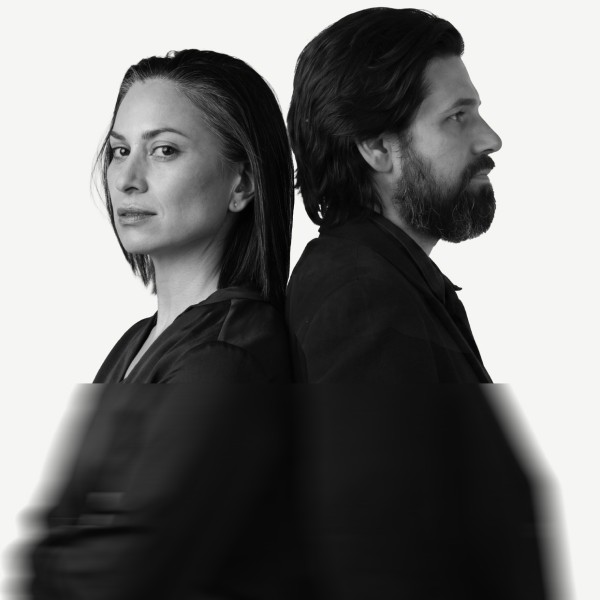
This chilling investigative documentary from Israeli filmmakers Yuval Abraham and Rachel Szor takes place under the cover of night on Tel Aviv rooftops where Abraham carries out clandestine conversations with 24 Israeli Defence Force soldiers and intelligence officers. Produced by The Guardian, the whistleblowers provide testimonies about the military operations in Gaza that have killed over 73,000 people, describing in detail the artificial intelligence tools and complex automated surveillance systems used by the IDF to target homes and buildings and knowingly calculate the number of NAZA that would die as a consequence.

The interviews plunge viewers into 77 minutes of darkness, with the silhouetted profiles of the interviewees set against the lit-up cityscape. This stripping of the senses centres the voices, which have been altered to protect identities. Every now and then a loud plane flies overhead or sirens go off alerting the city of a nearby strike. The documentary is interlaced with footage peering through the windows of apartment buildings where people live out their daily lives, sitting on the couch watching TV or standing in the kitchen cooking dinner. It shows an enormous skyrise building being constructed at pace – a stark contrast to the descriptions of the strategic flattening of entire suburbs and towns just 60 kilometres further down the coast.

Some interviewees draw rudimentary pictures of weapons-screen interfaces and describe the inaccuracies of the AI tools used. Another describes the surveillance of a child’s phone to gather intel on when her suspected father will be home and therefore when to strike. The documentary is impactful in its specificity. It doesn’t attempt to draw a bigger picture, and it reflects the unsettling ways the IDF personnel viewed themselves within the much larger and highly granular war apparatus. One of them describes his role as merely “technical”, another says, “if I didn’t do it, someone else would’ve”.

Never have I experienced such a weighted silence as the credits rolled. The must-see film received the Special Jury Prize at this year’s Venice Film Festival. After its screen run, it will be available for free on The Guardian website in late November.

Big Orb Improv | Regional News

Big Orb Improv

Presented by: Pig Alien Productions

BATS Theatre, 9th Oct 2026

Reviewed by: Numi Stössner

In Big Orb Improv, Caitlin Penhey, Criss Grueber, Ciarán Searle, Trubie-Dylan Smith, and Brendon Bennetts make up stories from audience suggestions, with just one hour to show the titular Big Orb the breadth of human experience. The show is fully booked and a few guests can only attend via standby tickets. A promising start!

The strategy is straightforward: the actors ask questions and use our answers as inspiration for their improv. Questions include the viewers’ biggest childhood dreams and fears, the recollection of a scary event, or the place where one feels most peaceful. The variety of answers leads to a hilarious mix of storylines: a serene surfing trip transforms into a woman (Penhey) getting stuck in her wetsuit while her would-be saviour (Bennetts) is eaten by a whale; meanwhile, a boy (Bennetts) trying to strike a deal with the devil (Searle) to bring back his deceased cat Misty ends up calling Baby Spice of the Spice Girls for guidance.

The more absurd the story gets, the better. It is amazing to witness the group’s ability to transform audience responses into comedic scenes, their success driven by the way they mine us for additional details to draw on. Especially satisfying is the way they bring each plot together at the end, never missing the perfect moment to drop an almost-forgotten reference from earlier on. Throughout, the Big Orb signals its pleasure or displeasure by changing colour. For example and much to our amusement, it glows green when asked whether underage drinking is acceptable.

A highlight is the seamless integration of the pianist Finn McKinlay and the lighting and sound technician Campbell Wright, who shape the plot in many unexpected ways. For instance, McKinlay may randomly change the music, forcing the actors to adapt accordingly, while Wright’s voice resounds as that of an incorporeal entity.

I would be interested to see what would happen if audiences were called upon later in each scene, especially to have a hand in the storyline’s twists and turns. But ultimately, these players from Christchurch’s Court Jesters interpret and integrate our responses in a way I’ve never seen before, resulting in a hilarious show. Go to Big Orb Improv to have a good laugh with friends and see great improvisors doing what they do best.

Revelation Valley | Regional News

Revelation Valley

Written by: Lisa Maule

Kaharore Valley Press

Reviewed by: Margaret Austin

“Can you be underground / When you start writing poetry in your 50s?” asks Lisa Maule, author of Revelation Valley, a collection of poems published to coincide with her performance piece of the same name. This small but impressive book shows that you can!

Maule’s preoccupation with racial matters becomes evident in Dear Future Karori, which begins “In the past this suburb Karori smelt like convolvulus and / micro-racism”. I delighted in similar touches of humour lending lightness to serious subjects. I even enjoyed her overuse of a certain expletive when describing life, and her disgruntled reaction when, as a school pupil, she had Katherine Mansfield shoved down her throat!

I loved The pull of the bull in which Maule humorously describes a bull as a male cow. Hooray! Punning comes into its own: “This doctrine has moved in by stealth / These were Popes humping Westminster”. (A papal decree was known as a papal bull). The poem’s impact is enhanced by such a brutal analogy.

I also loved Inspired by Aoraki, subtitled an ancestor poem, where Maule laments her actual or metaphorical grandmothers thus: “My grandmothers are English and Scottish mountains / They have been mined for coal and ore” and continues in a similar vein describing the exploitation of natural resources occurring everywhere.

Karori is recalled again in Places of conflicted feelings. Maule remembers her family home in images some readers will recognise: “custom made wooden joinery / a fancy Formica bench. A cupboard for trays, a double sink”. These pieces of nostalgia are followed by a series of clever two-liners juxtaposing then and now. I am admiring Maule’s linguistic ability coupled with a lively imagination.

What sets these poems apart is that they signal the likeability of the writer. Maule is not resentful, aggrieved, or angry – emotions that steer writing in a particular direction. Instead, she brings a lightness, a tolerance, humour, and above all, an optimism to her work. This is best signalled in a line from her last poem Jagged and rolling. “Go to the dangerous dark joyous place. Art absorbs / tension.” Her work is an example of just that!

Calle Málaga | Regional News

Calle Málaga

(M)

116 minutes

(4 out of 5)

Reviewed by: Isabella Smith

I’ve recently (accidentally) gone back-to-back with movies ranging from relentlessly bleak and cerebral to horrifically violent and morbid. Watching Calle Málaga, directed by Maryam Touzani, was a tonic for the soul.

Warm and uplifting, it takes place in Tangiers, following the cheeky, defiant, and resourceful widow María Ángeles-Muñoz (Carmen Maura) after her estranged daughter arrives at short notice to alert her that she is selling the apartment María has lived in for over 30 years, giving her the option to come back with her to Madrid or be shipped off to a nearby retirement facility.

Not wanting to leave the streets and community she knows and loves and the cemetery full of friends and family behind, María secretly moves back into her home while the sale is pending. She finds it emptied of all the things she’s collected over a lifetime, all of it sold to an antiques dealer. As she engages enterprising ways to buy back her belongings, her life takes on new colours.

While the script is deft and humorous, there are potent layers of silence too. The best friend and nun Josefa (María Alfonsa Rosso) is a favourite character. She meets María’s hilarious tales with telling facial expressions, while María’s silences in response to her daughter’s betrayal highlight the futility of words and the strength and dignity of remaining quiet.

A thematic undercurrent of fading empire adds its own accent to the film but never quite rears its head. The apartment, bought for a song, is furnished in old-world fashion, and María fondly recalls her days working in the Teatro Cervantes during the golden age of the Spanish protectorate. Her daughter exclaims that she is the last one of her friends to remain in Morocco, the rest having followed their children and grandchildren back to Spain. Yet it is María’s love of Tangiers that defines her, and the rich colours and textures of the ancient city – with its narrow, labyrinthine streets filled with sounds and smells and people – make it a character in its own right.

Other silences in the film were a source of frustration. Threads didn’t get pulled and questions went unanswered that had the potential to adjust the light cast on each character, especially regarding the daughter, who felt quite 2D. When the credits rolled, I felt slightly shortchanged. But then again, those gaps and silences leave space for the imagination.

Black Gold | Regional News

Black Gold

Written by: Mark Pirie

Earl of Seacliff Art Workshop

Reviewed by: Margaret Austin

Black Gold is an evocative title and one that captures the theme and content of this collection. With James K. Baxter as its inspiration, the poems metaphorically dig into the soil of Aotearoa and celebrate the treasures therein. Here are names and places we recognise with nostalgia and praise, poetically framed by writer Mark Pirie.

In the first eponymously titled section, we learn that the author keeps a notebook, just as Clive James did, in which he stores literary tips and gems. “Poets mine for gold,” he says, “of similes, metaphors, symbols, onomatopoeia, rhetoric, metonymy…” Great vocabulary for budding poets.

Closer to home is a homage to poet, publisher, and Paekākāriki railway bookseller Michael O’Leary. In Labouring, Pirie likens O’Leary to poet Hart Crane, who dropped out of school to become a labourer: “Like Crane / you moved between the twin worlds of the academy / and the earthiness of the street.” Such double-sided life experience is recommended: second tip for budding poets!

In the section titled Tangi is a heartfelt tribute to poet Hone Tuwhare and his poetry collection Small Holes in the Silence. In On Reading Small Holes in the Silence, Pirie describes his admiration for Tuwhare thus: “Hone you were a Giant Kauri, / Still are. How would my / small roots be around you?” Memories and tributes to family members also feature.

And what about the section titled Black Sheep? I hadn’t heard of Edward Tregear, a British immigrant, who, the poet tells us “then lived for months with the Māori / never sighting the Pākehā / you left behind.” He wrote several books, plus a dictionary of Māori-Polynesian words and founded the Polynesian Society. “Only imaginative people really live,” Tregear is quoted as saying, and he was surely one of them.

The real black sheep are a bunch of boy racers in a poem of the same name whom Pirie remembers with fondness from his student days. This is a racy account!

James K. Baxter died at just 46. The 46 Pirie poems of Black Gold honour one of our greatest literary figures.

Green Sea: Lost in the New Zealand Bush | Regional News

Green Sea: Lost in the New Zealand Bush

Written by: John Summers

Te Herenga Waka University Press

Reviewed by: Kerry Lee

I still remember when an EC120 helicopter flown by New Zealand businessman Michael Erceg went down in the bush over Raglan in 2005 and was not found for over two weeks. The trees masked the copter so well that searchers at the time said, “It was almost impossible to spot.”

The terrible story elicited morbid fascination amongst the nation. Like everyone else, I wondered how an entire helicopter could simply disappear.

Green Sea: Lost in the New Zealand Bush, the latest book from award-winning author John Summers, takes us on a non-fictional ride into the psychological journey and shows us just how easy it is to get lost in the ‘New Zealand outback’.

Included are interviews from survivors who have been lost, and anecdotes from years past about people who underestimated the bush and paid for it – sometimes with their lives. Through Summers’ writing, we see just how small humans really are in the scheme of things, what being lost actually means, and the savagery of nature in our own backyard.

All at once, the book conveys the beauty of Aotearoa while vividly showcasing how dangerous it can be to the uninitiated. Summers' writing literally took me into the heart of the country, and I was glued until the very end.

The only real downside is that if, like me, you are a life-serving couch potato, Green Sea may not inspire you to set forth into the great unknown – indeed, you might be tempted to lock the doors instead and never venture out! However, don’t let that stop you! If you want something to read that’s insightful and well written, and you are an outdoorsy type who is interested in search and rescue and fascinated by how people get lost – and then found again – then Green Sea is something to look into. Especially as we move into Christmas and the New Year.

The Monk’s Chair | Regional News

The Monk’s Chair

Written by: Margaret Jeune

The Night Press

Reviewed by: Margaret Austin

Margaret Jeune and I have several things in common: we’re both poets, we share the same first name, were born within a decade of each other, and from the first poem in her small but highly readable collection The Monk’s Chair, I felt an affinity involving landmarks and relics from the past that kept me happily reading to the end.

For much younger readers, appeal lies in the title page with enticements such as Glue, Free Speech, Open Mic Poets, and TV News.

I was particularly touched by An Encounter, which describes a meeting with a homeless man on the streets of Wellington surviving on next to nothing and depending on the kindness of strangers. After offering food and conversation, “I am the one who was blessed by the encounter”, remarks the poet.

An interesting question is posed in Free Speech, a mantra I have long been suspicious of, and Cataclysmic carries a justifiable warning about the world’s possible fate. Open Mic Poets also struck a chord. “The poets reveal their personalities / By how they hold the floor” is a sage observation. Take note, open micers!

Mother Nature is just one example of how this writer takes a serious subject and by couching it in accessible language increases its impact. We don’t need the esoteric to explain, illustrate, and warn, especially when it comes to matters of literally world-shaking import. Our poet makes no bones about the all-too-possible fate we and our planet may suffer.

The final poem, appropriately, is Legacies. “When we die, what will our legacies be?” Never think this question is banal – oh, you younger readers! Jeune considers it as we all must and concludes as we all must: the eternal question remains just that.

It’s a fitting note with which to conclude a wistful, thought-provoking collection.

Four Last Songs | Regional News

Four Last Songs

Presented by: New Zealand Symphony Orchestra

Michael Fowler Centre, 2nd Oct 2026

Reviewed by: Tamsin Evans

Sir Donald Runnicles described the first piece in the programme, Der Rosenkavalier Suite by Richard Strauss, as “the Reader’s Digest version” of this four-hour opera. It certainly is a condensed narrative, capturing the core of the opera in five sections. Runnicles brought out the best in the orchestra, producing a beautiful big tone from the horns, wonderfully melded woodwind, and superbly expressive strings. Light and texture seemed to come through sparkling clashes of sound and delicately smooth, shining passages of melody, but then speed and energy brought us all racing downhill, breathless, at the end of the final waltz.

By contrast, Four Last Songs, also by Strauss, is an ode to mortality, acceptance of death after a long life well lived alongside one’s companion. Soprano Madeleine Pierard is so well suited to these songs. Her voice ebbed and flowed with power, intensity, sadness, and control. From poise and elegance in the first song Frühling (Spring), she perfectly conveyed the contemplation of death in September, and the slow sense of time and life passing in Beim Schlafengehen (When Going to Sleep) and Im Abendrot (At Dusk).

Runnicles mused on what would accompany Four Last Songs on the programme and told us Symphony No. 3 by Brahms was chosen because of their shared power and beauty; quiet and peaceful endings over a bittersweet shadow.

The second and third movements, Andante and Poco allegretto, captured this clearly. The relaxed and assured sound of woodwind in the Andante was a gentle folk dance hiding a sense of disquiet, carefully nurtured by Runnicles and excellently resolved by the musicians and the music at the end. The third movement, opened by a wonderful melody in the cellos, moved through tonal and major-minor shifts to lead into the fourth movement which delivered a sparkling peak, with suitably crisp sound from violins and cellos, before settling and reaching its tranquil end.

But Why, Dad? | Regional News

But Why, Dad?

Created by: Tom Knowles and Jeff Parsnips 

Running at Circa Theatre till 10th Oct 2026

Reviewed by: Dani Yourukova

“Why do birds sit on power lines, but if I touched a power line I would be electrocuted?”

The show has not technically started yet, but Tom Knowles and Jeff Parsnips did say that they wanted us to ask questions. So, the young audience member who wants to know about power lines is just following instructions. Gamely, both of the titular dads stop the pre-show in its tracks to give him their full and immediate attention. Jeff works through an explanation about how electricity needs to be grounded before it can complete a circuit. Tom suggests it’s something to do with what bird feet are made of. 

“... Do you think birds’ feet are made out of rubber, Tom?” Jeff asks. 

“Probably.” Tom answers, with the kind of dead-pan earnestness that will be familiar to dad-havers everywhere.

It’s this combination of Tom and Jeff’s genuine engagement with kids’ curiosity, and a riotous side of Kiwi dad humour, that makes But Why, Dad? so very charming. Even more impressively, they mostly deliver the show through the medium of musical comedy. 

The story is loosely centred around a son asking his dad a series of difficult questions, which become prompts for comic songs. Together, Tom and Jeff tackle topics like overwhelming emotions, the power of asking ‘why’, and lesser-known words you could put in an alphabet song (B is for Barracuda!). It’s sweet, goofy, and heartfelt, with tonnes of laughs, loads of opportunities for the kids to join in, and plenty of humour for the parents too. 

The show does have a villain: an AI robot who offers to answer the child’s questions when dad starts to struggle. It speaks from its clinically smooth screen in a clinically smooth American accent, in stark contrast with dad’s stumbling Kiwi bloke mannerisms and mismatched socks. This topical conflict comes down to a delightfully silly resolution, which celebrates the many joys of ‘asking dad’ when you have a question.

Orchids and Camellias | Regional News

Orchids and Camellias

Written by: Sophie Rogers

Flying Books Publishing

Reviewed by: Jo Lucre

In Orchids and Camellias, Ginny Yang is newly widowed and forever looking over her shoulder, held prisoner by a past that assailed both her and her late Chinese husband Deming.

On the run from her father and his cretin-like cronies, Ginny has no choice but to fight a fight she never asked for. Set in Nelson in 1869 and beyond, her sole motivation is to care for her son Liang. Ginny searches far and wide for allies in a world that sees no place for her or her mixed-heritage child.

Forced into a fleeting and transient existence, she moves through Nelson, Wellington, Christchurch, Dunedin, Queenstown, and Arrowtown, navigating each unforgiving and equally unkind landscape set on destroying her soul, removing her voice, and oppressing her child.

Author Sophie Rogers starkly captures the grit and muck that discrimination brings. Fuelled by despair, Liang the child, then young man, is heartbreakingly aware his face is unwanted and unwelcome. Through his very existence alone, he knows there is no escape from the harrowing discrimination thrust upon him and his father years before.

Orchids and Camellias is a vivid historical telling of one woman’s strive for acceptance, played out amidst the backdrop of a time where women were fighting for their voices to be heard and unrest over prohibition was stirring. Ginny’s love and dogged determination to care for her child in the face of much adversity and emotional turmoil is both humbling and wrenching.

In Orchids and Camellias, Rogers conveys a racism so deeply embedded at the time that it is encouraging to follow Ginny and Liang’s search for a place of peace and safety. The novel certainly held my attention to the very end. I was expecting a different ending though; the one I had imagined played out tidily in my head, but it was a great, captivating read all the same.

Social Climbers | Regional News

Social Climbers

Written by: Roger Hall

Directed by: Trudy Dalziel

Gryphon Theatre, 23rd Sep 2026

Reviewed by: Tanya Piejus

Roger Hall’s 1995 comedy is given a gentle facelift in Stagecraft Theatre’s revival. The six disparate personalities and electricity-free DOC hut are the same, but new references to Wi-Fi, charter schools, and former Minister of Education Hekia Parata update the script for a modern audience. It’s a good choice on director Trudy Dalziel’s part as this comedy about a group of female teachers forced to spend a long weekend together with minimal comforts is an evergreen one, displaying Hall’s gift for understanding people with all their virtues and flaws.

Simon Boyes’ authentic set – complete with solid bunks, running water, and a corrugated steel wall visible beyond the door – is an excellent canvas on which the highly adept cast paint their characters. They work smoothly together as a group and are convincing as long-time colleagues, while clearly understanding and relishing the comedy as well as the quieter moments. The opening night pace felt a little slow, but I’m sure it will pick up as the cast settle into the groove of performance and dig even deeper into the bonds between these appealing characters.

Gillian Boyes’ vain and ill-prepared Maxine is a standout with her loud, Fendalton-accented posturing, while engendering sympathy when her closely held secret finally emerges. Liz Gibson is also deeply engaging as put-upon mum and bookworm Emily, which is particularly impressive when it’s the most emotionally demanding role and this is Gibson’s first time on stage in 30 years.

Brian Byas’ sound design nicely bridges the scene changes with soundscapes of birds and relentless rain. Jamie Byas’ accompanying lighting design is particularly effective in the nighttime scene when the deep blue and possum stomping on the roof will bring shivers to anyone who’s attempted sleep in a tramping hut. Cailtin Laurie and Dalziel have done an excellent job with the many tramping-related props.

Revealing the complexities of relationships with humour and warmth, Social Climbers is an enjoyably entertaining way to spend a couple of hours this spring.

Emerging Artists | Regional News

Emerging Artists

Presented by: New Zealand Symphony Orchestra

Conducted by: Hamish McKeich

Michael Fowler Centre, 23rd Sep 2026

Reviewed by: Ruth Corkill

The NZSO’s Emerging Artists programme gives school-age musicians from across Aotearoa the opportunity to perform with the national orchestra. 13 student orchestral instrumentalists are dotted amongst the professional players. Their young faces glow with anticipation and little interactions with the adult players around them suggest that warm, supportive relationships have already formed.

Hosting the evening is Chris Lam Sam, the NZSO’s marvellous music education animateur. His introductions offer musical details to listen for, alongside amusing snippets from interviews with each soloist. Conductor Hamish McKeich draws the musicians together in the opening of Nicholas Brownlie’s Blind is the Gardener and my expectations for the evening are immediately surpassed by this short but cinematic opening.

Our first soloist is violinist Catherine Harrison playing the final movement of Tchaikovsky’s Violin Concerto. Her formidable technical precision carries her through its playful virtuosity before melting into Tchaikovsky’s characteristic bittersweet lyricism. Harrison is simply lovely as she moves through the variations.

Elise Tian follows with my favourite cello concerto, Shostakovich’s first, and astonishes. This ferociously demanding movement requires extraordinary physical and emotional stamina; Tian meets this with assurance, capturing its anguish and emotional complexity while navigating its relentless technical demands.

Next, Alex Wu brings another character entirely to Vaughan Williams’ Oboe Concerto, with a beautifully rounded, reedy tone and an engaging playfulness.

The atmosphere tonight is special. Students and young families fill the Michael Fowler Centre, while a gregarious group of retired music teachers behind us marvel at the soloists’ technique between pieces, swapping memories and war stories of teaching those same skills. During interval, most people remain in their seats or form excited conversation circles in the aisles.

After interval, pianists Jerry Wang, Steven Song, and William Ding tackle Grieg, Prokofiev, and Brahms respectively, maintaining the astonishing standard. I have rarely seen an audience leave a classical concert so happy. If this joyous, generous evening offers a taste of classical music’s future in Aotearoa, we have much to look forward to.

The Hunt for the Canterbury Panther | Regional News

The Hunt for the Canterbury Panther

Written by: Anna Barker and Jack Ellison-Jones

Directed by: Zachary Klein

BATS Theatre, 19th Sep 2026

Reviewed by: Oliver Mander

On the face of it, The Hunt for the Canterbury Panther looks like high-octane theatre aimed at 10 to 14-year-olds. The plot follows the title, drawing on a long-standing legend of a black panther roaming Canterbury, with sightings ranging from Kaiapoi to the Mackenzie Country.

Overall, the show probably has broader age appeal than that suggested by its description. The youngest members of the audience will be dazzled by solo performer Anna Barker’s colour and energy, the mystery panther adds intrigue for the ‘tweens’ audience, and for adults… well, there is plenty of scope for ‘adulting’.

Despite the target age range, there were a number of children younger than 10 in the audience. They were clearly engaged by Barker’s high physical energy on stage, her imaginative use of props, and the inclusion of audience volunteers.

Barker casts the audience as fellow cryptozoologists attending a conference in Wellington; whether the words ‘cryptozoology’ and ‘conference’ feature in an average 10 to 14-year-old’s vocabulary hardly matters when the real appeal is likely that of a mystery big cat roaming around Canterbury!

What surprised me was the extent to which the show offered interest to the adults in the audience, provided through the subtext behind the story.

The Hunt for the Canterbury Panther explores the tension between believing in yourself and how self-belief is perceived by broader society, with a further exploration of the trade-offs we all make between imagination, ambition, reality, and outcome. We should all possess a degree of self-belief, but Barker’s performance reminds us that we need a good dose of integrity to ensure it never overpowers the truth. The well-crafted script explores those tensions and trade-offs, delighting the youngsters while offering plenty of intellectual fodder to pick over for those who want to look deeper.

An appealing, high-energy, and fun show that is worth a watch for kids of all ages (including children aged 30+).

Grassroots | Regional News

Grassroots

Written by: Raureti Ormond

The Hannah, 18th Sep 2026

Reviewed by: Oliver Mander

Many New Zealanders, and Māori in particular, have a spiritual connection with ‘place’. Raureti Ormond’s foundation is Tihoi (near Taupō). For this reviewer, it is the mighty Waimakariri and the rugged mountaintops of inland Canterbury.

Ka kitea e au taku wairua i ngā maunga me tētahi awa wai mātao e rere ana i taku taha: I find my spirit in the mountains with a river of cold rushing water at my side.

Given that Grassroots is billed as a “hilarious and heartfelt odyssey through New Zealand’s rugby culture”, that may seem like an odd place to start. But as Ormond explores finding personal identity within inherited legacy, it is his connection to both whenua and whānau that is the most powerful feature of this must-see show. We all find our ‘greatness’, even if it is different to what has gone before.

Ormond observes that in rugby, to go forward, we are forced to pass the ball backwards. The analogy describes how we learn from both history and our personal background. New Zealand’s rugby history becomes the mere vehicle by which Ormond explores our country’s social and attitudinal evolution towards race, homosexuality, and gender stereotypes.

Grassroots is not really a comedy. Great comedic dialogue and devices help move the story, but the core audience emotions are based on reflection, nostalgia, and relationships. Ormond’s renditions of classic Kiwi tunes within the performance augment the emotion. Comedy allows delivery in an engaging form and helps to manage emotional transitions, but the use of humour feels a touch overdone at times. This wasn’t helped by an over-enthusiastic audience, many of whom clearly knew Ormond. In this context, it wasn’t easy for Ormond to encourage reflection, even when his performance warranted it.

The show’s production values are strong. A simple set (Scott Maxim) supported by multimedia (Maxim, Ormond) facilitates scene and wardrobe changes that keep the story moving.

Grassroots is a uniquely Kiwi experience that had this reviewer in tears. See it whenever and wherever you can.

Mum, I’m Alien Pregnant | Regional News

Mum, I’m Alien Pregnant

(R16)

95 minutes

(4 out of 5)

Reviewed by: Isabella Smith

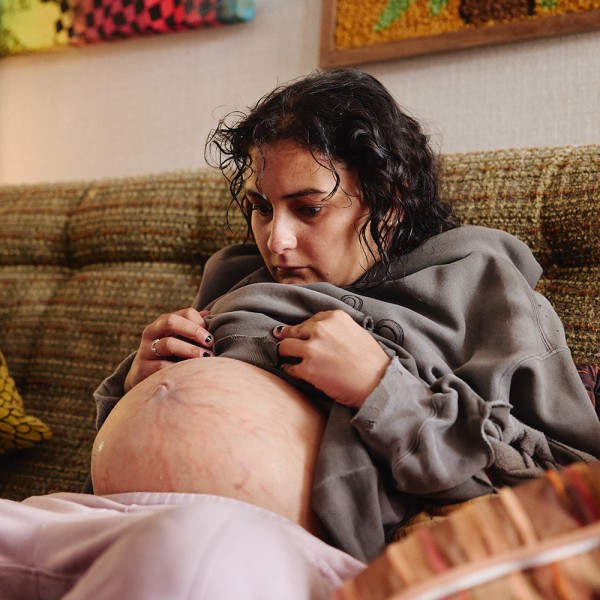
The debut feature film of director duo THUNDERLIPS (Sean Wallace and Jordan Mark Windsor) follows the immaculate conceiver Mary (Hannah Lynch), a millennial rotter living with her overbearing mum Cynthia (Yvette Parsons) in a housing complex. Mary becomes alien pregnant when her nervous and gawky neighbour Boo (Arlo Green), endowed with an extraterrestrial appendage, accidentally fires a cosmic load on her pants after a brief encounter in the shared laundry.

What follows is a stomach-flipping, blood-draining, visceral whirlwind through the hospital system as Mary attempts to put a stop to the turbo-paced growth of the alien parasite. This clever sci-fi body-horror comedy is more than just the exaggerated and violent rearranging of Mary’s body and life as she is rent asunder from the inside out. Beneath the galactic spunk, litres of Powerade-blue vomit, projectile breast milk, and mucus-drenched sheets, it dissects the humiliations that come with the reproductive process and the sudden loss of agency over one’s body when family, religion, doctors, police, and politicians get involved.

The film is riddled with Kiwi deadpan comedy, but the ‘yeah nah’ and ‘she’ll be right’ pleasantries of the doctors, nurses, and police become insidious when paired with their do-nothing attitude. Comments like ‘you asked for it’ and ‘maybe it’s fate’ derail agency, while the lengths Mary takes to abort the alien shines a gruesome light on the dangerous situations people find themselves in when confronted with an unwanted pregnancy and a system built by men who deny their right to choose.

The characterisation and acting are spectacular on all fronts, capturing classic Kiwi types and their role in upholding systemic and societal issues over plenty of cups of tea. A special mention to Jackie van Beek who plays Ann, Boo’s uptight and starchy mum hellbent on protecting her son and keeping the mess off the carpet.

Mum, I’m Alien Pregnant is a must-see, bold, and batty exploration of autonomy and consent. Blending gore, humour, and depth in healthy measures, it highlights the outsized expectations placed on women (and their partners) when they accidentally find themselves up the duff and out on a limb.

A Welly Full of Laughs | Regional News

A Welly Full of Laughs

Presented by: Mon Platon Productions

The Hannah, 13th Sep 2026

Reviewed by: Numi Stössner

After a sold-out January showcase, A Welly Full of Laughs is back at The Hannah for another round of Wellington’s “best comics delivering their best sets”.

According to the queue that is already forming when I approach the theatre on this spring evening, everyone seems to be ready for a good night, and so am I.

The host of tonight’s show is Jerome Chandrahasen, who immediately warms up the crowd by starting a heated discussion on the tension between Upper Hutt and, in his words, the “proper” Hutt, Lower Hutt. What a perfect way to get us going. Over the course of the evening, he introduces and invites 10 of Wellington’s top comedians to deliver compilations of their best bits on a stage as colourful as their performances. Designed by Austin Harrison, who constructed it with Nina Hogg (the pair behind Mon Platon Productions), the bright backdrop consists of dozens of buckets hanging from the ceiling to the floor – a set befitting such varied sets!

Topics range from lesbian awakenings at the Catholic church (Clarissa Chandrahasen), to the uniquely Kiwi “aggressively passive” character of men (Mike Fowler), and the questionable reasons for buying café merch (Hoani Hotene). My favorite set by far is Jak Darling’s, who proudly takes us beyond comedy alone into “thinking territory”. They proceed to dramatically perform a tragic poem of a daddy long-legs trapped in their shower, a story that is as relatable as it is hilarious. The evening ends with a comically bizarre dance performance by JoJo Bellini, in which she invites the crowd to throw ping pong balls at one of the targets fixed on her barely clothed body, all whilst singing Hit Me with Your Best Shot.

While no comedian can be for everyone, A Welly Full of Laughs was a great way to explore what Wellington’s comedy scene has to offer. I laughed, I cringed, and I guarantee that every viewer will have walked out with a different personal favourite, just like I did. An entertaining collection of carefully curated, clever comedy.

Uncle Vanya | Regional News

Uncle Vanya

Written by: Anton Chekhov

Directed by: Andrew Foster

Circa Theatre, 12th Sep 2026

Reviewed by: Tanya Piejus

Circa has brought to new life another theatrical classic for its 50th anniversary. Anton Chekhov’s masterwork of the human condition is this time seen through Andrew Foster’s sensitively creative lens, relocated to a rambling Kiwi farm, and delivered through the languorous dysfunction of contemporary cultural malaise.

The original cast of eight is reduced with aspects of two roles merged into other characters or replaced with soliloquies to the audience. Both are clever decisions and tighten the narrative, while giving talented musician Kali Kopae the opportunity to display her guitar-playing and singing skills as Helena.

As Vanya, Tawhi Thomas is superb: deeply fallible but ultimately empathetic despite his self-described failure at life and tendency to whine about everything and everyone. The other five cast members are equally strong, and all are entirely convincing as a group of people who have known, loved, and irritated each other for years. Cross-casting Sonya as Sonny is a brilliant decision and Andrew Paterson brings fresh longing to the character’s unrequited love for Michael (an excellent Jonny Potts). His final speech to Vanya with his arms wrapped lovingly around Thomas’ leg is devastating. Peter Hambleton’s Alex is wonderfully arrogant and the sort of character you love to hate.

Foster’s set is a long, narrow area between traverse seating rostra with a dark, hazy space beyond it through which the characters move off into the world outside the house. His scene changes are just as watchable as the scenes themselves, as the cast move bits of furniture and props in subdued light while occasionally interacting with each other in character. The final transition in which the stoic Maria (Carmel McGlone) stands alone while others move around her, one gently handing her a scarf, is sublime.

Marcus McShane’s lighting design is lush and warm. A huge disc suspended above the void at the end of the acting area is most often a vibrantly glowing sun, a visual delight that anchors the space. Chris Ward’s sound design complements the lighting beautifully with subtle soundscapes, spot-on effects, and well-chosen music. 

Classic Chekhov for the modern age. Don’t miss it.

Flutter | Regional News

Flutter

Created by: Anna Bailey, Bridget Saunders, Stephanie Cairns, Jen McArthur

Directed by: Bridget Saunders

BATS Theatre, 11th Sep 2026

Reviewed by: Madelaine Empson

As I take my seat at Flutter, a tiny, curious chick hops over to me and… dunk! Takes a sip out of the water glass at my feet! I’m charmed before this kids’ puppet show has even begun.

Pepe the bat is enamoured with regal Moon (composer and onstage musician Stephanie Cairns, who plays accordion, keys, and a toy piano with a delay effect for maximum whimsy). But sometimes Moon is cheeky and hides from Pepe, who is afraid of the dark and what scary creatures might lurk in it. Thankfully, Titi the glowworm falls from the stars and has a light-up butt! The two become fast friends, but a hungry stoat with glowing red eyes is circling...

With help from Erica Duthie (puppet painter/surfaces), TAHI 2026 creative resident Anna Bailey has crafted intricate puppets that crackle with a surreal eccentricity. Titi in particular puts me in mind of a Tim Burton creation. Her characters are magnetic and so fascinating to watch that you forget she is, quite literally, pulling the strings. They glide along Struan Ashby and Roger Sanders’ set, which comprises bright green hills to climb, silken waterfalls to slide down, and little nooks for bedtime. It all makes for magical viewing, especially when Moon floats past a tapestry of stars (electrician and light construction by Joseph Bailey) in her ethereal costume (Sarah Bell).

No doubt kids will walk away wanting to know more about New Zealand wildlife, just like I did. I was inspired to do some research into the nasty stoat and learned that it reportedly mesmerises its prey with a weasel war dance! After the show, Anna chatted with lots of the littlies who wanted to meet the puppets and I heard her telling them all about the introduced predator to many ‘ooh’s and ‘aah’s. It was lovely seeing their curiosity so stimulated, their comfort in large part thanks to the safe environment Anna created – especially by giving cues at the start as to how they could opt out of interaction if they wanted.

Flutter does a marvellous job of sparking the imagination of tamariki… and, safe to say, grownups too!  

Big Low Dream | Regional News

Big Low Dream

Presented by: Footnote New Zealand Dance

Choreographed by Jessie McCall

The Hannah, 10th Sep 2026

Reviewed by: Tanya Piejus

Footnote New Zealand Dance always delight and surprise with their boundary-pushing productions and Big Low Dream is another fine example of that ethos. Described as “an unorthodox homage to Dreams by The Cranberries”, this work is an imaginative reinterpretation of the sentiments expressed in that song’s lyrics. In addition, the pulsing soundtrack by 2025 Wellington Theatre Awards Sound Designer of the Year Thomas Lambert is cleverly constructed wholly from the instrumental and vocal layers of the song.

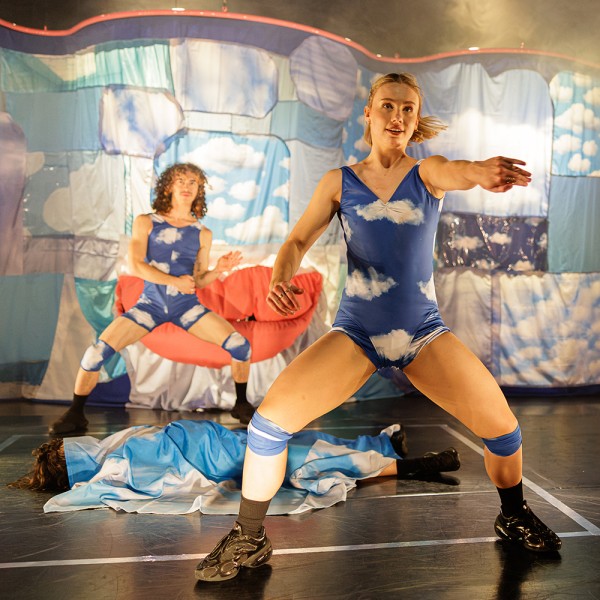
Four young dancers (Airu Matsuda, Sasha Matsumoto, Caleb Heke, and Millie Maden) open with an appropriately 90s set of spunky dance moves to the introductory bars of the song, but these are abruptly cut short by a blackout (lighting design by Tony Black). Then, we are launched into a dream world of moving clouds, drifting smoke, floating gold helium balloons in the shape of letters, and a giant, pink mouth that frequently spits out the performers into new movements and tableaux. The gorgeously patchworked backdrop by Anne de Geus holds this plump-lipped orifice, which the dancers operate to excellent effect.

The four dancers work seamlessly together and apart in a series of short segments, while the handful of floating gold letters spell out reconstituted words: DEATH, DREAM, TEAM, MATE, ART, and so on. These are a creative cue to the vibe and intention of many of the segments and sometimes become part of the choreography as they gently dance above the performers or form part of their tableaux.

The hard-working dancers manage all the other simple, recycled props too. Perspex triangles start as teeth inside the sinisterly gaping mouth, are taped together to become a crown, and are used as daggers. A square of the same stretchy material the dancers’ outfits are made from is a superhero’s cape, a portable backdrop, and finally a shroud.

Like dreams themselves, this new dance work is ever-changing, surreal, and sometimes hilarious. So, slip on your virtual pyjamas and drift into the land of the Sandman with Footnote Dance.

Dinner’s Getting Cold | Regional News

Dinner’s Getting Cold

Written by: Mamaeroa Munn

BATS Theatre, 9th Sep 2026

Reviewed by: Tanya Piejus

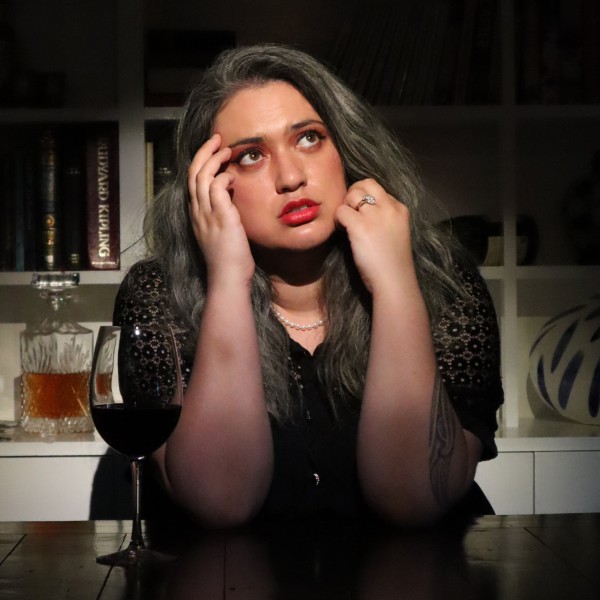
A solo psychological thriller with lashings of dark humour, Dinner’s Getting Cold concerns a woman somewhere in the past played by the production’s writer Mamaeroa (Mo) Munn (Ngāi Tahu, Ngāpuhi) waiting for her husband to come home for dinner.

She starts off confidently telling us about the whirlwind beginnings of their relationship where John swept her off her feet after their eyes met across a smoke-filled office. Romantic dates, gooey compliments, and lavish gifts preceded a quick marriage, house buying, and domestic bliss. This all seems like an unreachable dream come true for “a Maōri girl” who’s always been a klutz and told she’s a disappointment. As the evening wears on, wine is swilled and we learn the twisted truth about the nature of their relationship and why John still hasn’t come home.

Munn is a gifted comedian and able to skilfully draw out the emotional depths of the situation her character is swamped in, both in her writing and her performance. Decades of trauma and abuse are unravelled in seemingly throwaway lines and the sudden realisation of the enormity of what has happened to John occurs through a simple and otherwise innocuous question. Her final image is a uniquely delicious moment of comedy horror.

The semi-realistic setting (production by Quentin Potts (Ngāti Kahungunu), Aroha Faletolu (Ngā Puhi), and Ralph Hilaga) is a retro fanatic’s delight of mid-20th century gorgeousness. Furniture and appliances suggest 50s, pop music suggests 60s, and cultural references suggest 70s. The nebulousness of the exact time we’re in feels deliberate, revealing how trapped within this world our protagonist is and that this story could belong to any woman.

Tough themes often hit hardest when their truth is revealed through cleverly pitched comedy and that’s clearly the case with Dinner’s Getting Cold. Without the laughs, this hour of storytelling could be emotionally torturous for its audience. The healthy dash of mystery also propels it forward to its seemingly inevitable ending.